

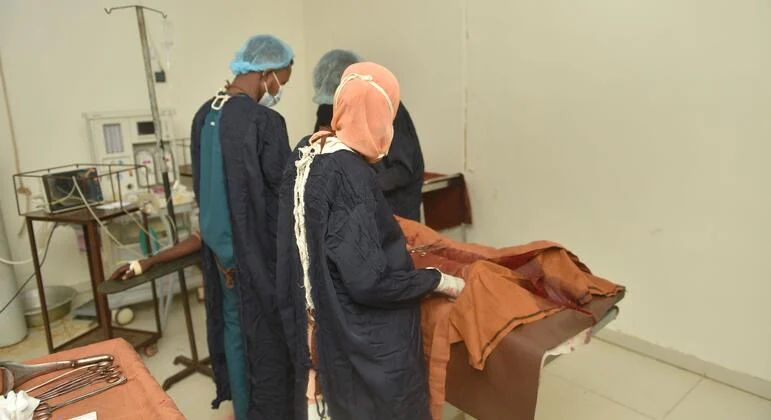
As the brutal conflict between the Sudanese Armed Forces (SAF) and the paramilitary Rapid Support Forces (RSF) enters a harrowing new phase, the city of El Obeid, capital of North Kordofan, has emerged as the latest epicenter of systematic civilian targeting. United Nations officials are sounding a “red alert,” warning that the city faces a fate similar to the catastrophic destruction witnessed in El Fasher last year. With the city encircled and drone strikes raining down on vital infrastructure, the international community is facing intense scrutiny over its failure to intervene in what UN High Commissioner for Human Rights Volker Türk has characterized as a preventable humanitarian catastrophe.
The Reality on the Ground: A City Under Siege
For the more than 600,000 residents and internally displaced persons (IDPs) currently trapped in El Obeid, daily life has been reduced to a desperate struggle for survival. The city, which had become a sanctuary for those fleeing the violence in other parts of the country, is now a cage.
Over a three-week period last month, the UN documented 15 separate drone strikes targeting the city and its surrounding outskirts. These strikes have claimed at least 45 civilian lives, though humanitarian workers on the ground suggest the toll is likely higher. The precision and frequency of these attacks indicate a calculated effort to terrorize the population and dismantle the city’s remaining capacity to function.
Markets, schools, fuel stations, and water infrastructure—the lifeblood of any urban center—have been repeatedly struck by lethal autonomous weapons. By systematically destroying the civilian support network, the warring parties are effectively making the city uninhabitable, forcing residents into impossible choices. Many families have been forced to sell their life’s possessions just to finance a potential escape, only to find that the routes out of the city are death traps. Reports of summary executions, sexual violence, abduction, and torture along exit corridors have created a state of pervasive fear that has effectively locked the population inside.
A Chronology of Atrocity: From El Fasher to El Obeid
The current crisis in El Obeid is not an isolated incident but a recurring pattern in the Sudanese conflict that began in April 2023. To understand the gravity of the situation in North Kordofan, one must look at the precedent set by the destruction of El Fasher in North Darfur.
- October 2023: A three-day rampage in El Fasher resulted in the deaths of 6,000 civilians, an atrocity that served as a grim warning of the tactics being employed by the RSF.
- April 2024: The RSF overran the Zamzam camp, the largest site for displaced persons in North Darfur, demonstrating a consistent strategy of targeting vulnerable populations in humanitarian shelters.
- Late 2024 to Present: The focus shifted toward El Obeid. As the RSF secured control over almost all routes surrounding the city—save for a narrow corridor to the East—the build-up of military assets became visible on social media.
- Current Status: The city is under total siege. Humanitarian aid has been unable to reach residents for over two months, leading to a collapse in basic services.
The strategy employed in El Obeid mirrors the “empty city” doctrine seen elsewhere: by making the conditions of life impossible through constant bombardment, the warring factions force the displacement of the population, thereby gaining territorial control over depopulated urban zones.
Supporting Data: The Scale of Human Suffering
The International Organization for Migration (IOM) recently released data indicating that the number of newly displaced persons across the Kordofan region has surged by nearly 65% in just three months. This rapid escalation underscores the intensity of the current offensive.
- Displacement Frequency: Over the last nine months, the IOM has recorded more than 100 incidents of forced displacement. This averages out to one major crisis event every 48 to 72 hours.
- The Humanitarian Gap: Aid agencies report that families are being uprooted at a pace that far exceeds the humanitarian community’s ability to deliver food, water, and medical supplies.
- Infrastructure Collapse: The destruction of water and power facilities has left the city’s hospitals—already overwhelmed by the influx of wounded—unable to perform basic medical procedures.
- Total Displacement: Nationally, the war has forced more than 13 million people from their homes, driving large swaths of the population toward the brink of famine.
Official Responses: A Plea for Accountability
The UN Human Rights Council in Geneva served as the stage for a series of impassioned pleas this week. Volker Türk, the High Commissioner for Human Rights, did not mince words, characterizing the “red alert” as an urgent, final warning to the international community.
“These crimes were foreseen, with repeated warnings by myself and my Office,” Türk stated. “But they were not prevented.” He argued that the situation in El Obeid is the ultimate justification for limiting the use of the veto power within the UN Security Council, a proposal originally championed by France and Mexico a decade ago. According to Türk, the paralysis of the Security Council due to geopolitical maneuvering has directly contributed to the death toll in Sudan.
Mona Rishmawi, representing the Independent International Fact-Finding Mission for Sudan, echoed these concerns, noting that the fear in El Obeid is "pervasive." She emphasized that the military build-up around the city is not merely a tactical maneuver, but a precursor to further war crimes.
In a poignant display of defiance, Sudan’s representative to the council, Salim Ahmed Ibrahim, spoke personally about the city’s plight. "I am from El Obeid; this wounded city, it will never fall, as long as we are alive," he told his fellow ambassadors, highlighting the deep emotional and social connection residents have to their home, even as they face total destruction.
Implications for the Future of Sudan
The situation in El Obeid represents a critical juncture for both the people of Sudan and the international legal order. Several major implications have emerged from the recent reports:
1. The Normalization of War Crimes
The recurring nature of these attacks suggests that the parties to the conflict no longer fear international repercussions. When mass atrocity crimes are documented in cities like El Fasher and then repeated in El Obeid without a forceful global response, the barrier to committing further crimes is lowered.
2. The Role of the International Criminal Court (ICC)
Volker Türk specifically welcomed the ongoing engagement of the ICC. However, the efficacy of the court is limited by the reality on the ground, where the warring parties continue to operate with near-total impunity. For justice to be meaningful, it must be accompanied by immediate political pressure to halt the violence.
3. Humanitarian Access as a Weapon of War
By blocking humanitarian corridors, both the SAF and the RSF are using starvation and the denial of medical care as weapons of war. The fact that aid workers have been unable to reach residents in El Obeid for two months is a violation of international humanitarian law that requires urgent, possibly coercive, intervention from regional and global powers.
4. The Need for Political Reform
The UN High Commissioner’s call for the limitation of the veto power in the Security Council speaks to a broader failure in the international system. As Sudan descends further into chaos, the inability of the world’s most powerful nations to agree on a path to peace highlights the fragility of the current geopolitical order.
Conclusion
The crisis in El Obeid is a stark, brutal reminder that the war in Sudan has not ended; it has simply evolved into a more lethal and calculated campaign against the civilian population. With millions on the move and the infrastructure of entire cities being dismantled by drone strikes and heavy artillery, the term "humanitarian emergency" no longer captures the gravity of the situation.
As the "red alert" sounds, the question remains whether the international community will move beyond rhetoric and take the decisive actions—such as sanctioning perpetrators, enforcing aid corridors, and prioritizing the protection of civilians over strategic military interests—necessary to prevent a total societal collapse. For the residents of El Obeid, trapped between a brutal military force and a passive international community, every hour of delay is measured in lives lost.
 Lina Hope
 Asro
Asro
 Layla Zulfa
