

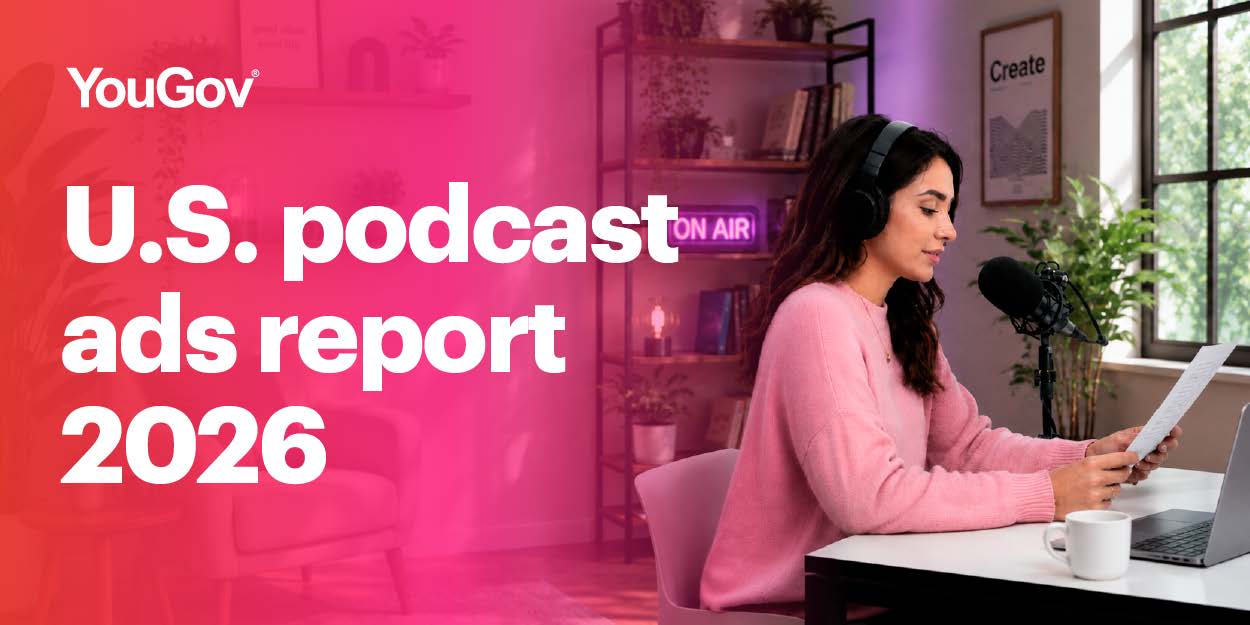
The podcasting landscape has matured into a powerhouse of digital media, yet for many advertisers, it remains a "black box" of performance. For years, the industry has grappled with a fundamental disconnect: while listeners are demonstrably more engaged than audiences on almost any other medium, the mechanics of tracking that engagement—and converting it into tangible ROI—have lagged behind. As we reach the mid-point of 2026, a new report from YouGov sheds light on this persistent friction, moving beyond simple impressions to ask the question that matters most: How do people actually interact with the ads they hear?
The Measurement Paradox
For the better part of a decade, the primary hurdle in podcast advertising has been the "measurement gap." Unlike programmatic display ads or social media clicks, where attribution is often instantaneous, podcast advertising has historically relied on proxy metrics like download numbers and vanity URLs.
Listeners are notoriously difficult to track. Many engage in "lean-back" consumption—listening while driving, cooking, or exercising—which makes the traditional "click-through" model fundamentally incompatible with the medium. Furthermore, the prevalence of skipping and the tendency for listeners to multitask have led some marketers to undervalue the medium. However, the U.S. Podcast Ads Report 2026 suggests that the problem isn’t the medium; it’s the expectation.
By surveying over 1,300 U.S. adults, including a robust cohort of 800 dedicated podcast listeners, the study suggests that we are witnessing a fundamental shift in how audio advertisements are perceived. The report indicates that the "skip button" is no longer the primary enemy; instead, the real barrier is a lack of alignment between ad creative and the unique intimacy of the host-listener relationship.
Chronology of a Shifting Landscape
To understand the current state of podcast advertising, one must look back at the trajectory of the medium’s monetization:
- 2015–2018 (The Direct Response Era): The market was dominated by host-read ads for mattress companies and meal-kit delivery services. Attribution was simple: "Use code PODCAST at checkout."
- 2019–2022 (The Rise of Dynamic Insertion): Technology caught up with scale. Dynamic Ad Insertion (DAI) allowed publishers to swap out ads in real-time, leading to increased inventory but also a perceived dilution of the "host-read" magic that made podcast ads effective in the first place.
- 2023–2025 (The Video Integration): As platforms like Spotify and YouTube pushed hard into video podcasts, the definition of a "podcast ad" blurred. Suddenly, advertisers were buying video spots, pre-roll overlays, and integrated visual branding.
- 2026 (The Era of Behavioral Attribution): We have now arrived at a stage where advertisers are no longer just looking at reach; they are analyzing consumer intent, trust-building, and the "halo effect" of podcast host endorsements.
Supporting Data: What the Listeners Say
The YouGov report provides a granular look at the psychology of the listener. According to the data, 62% of podcast listeners admit that they are more likely to trust a product if it is mentioned by a host they follow. This highlights the "Parasocial Effect"—a psychological phenomenon where listeners develop a one-sided relationship with a creator, leading to a level of trust that traditional television or radio advertising simply cannot replicate.

Interestingly, the report highlights a significant divide between audio-only and video-podcast consumption. Video podcasts, while offering greater visual real estate, often see higher skip rates compared to audio-only formats. The theory, as posited in the report, is that video consumption patterns more closely mirror those of social media, where users are accustomed to quick-scrolling and ad-skipping, whereas audio-only listeners are often "locked in" to an environment (like a commute or a chore) that makes skipping less convenient.
Official Perspectives: The Bumper Score and Industry Standards
The discourse surrounding these findings was further bolstered by industry insights from Bumper’s Dan Misener, recently interviewed on the Sound Off Podcast. Misener, a leading voice on podcast analytics, argues that the industry’s obsession with "standardization" might actually be hindering innovation.

"We’re not trying to create standards," Misener remarked, regarding the push for unified metrics. Instead, he suggests that the market will naturally settle on a model where advertisers agree to buy space based on proven engagement metrics rather than waiting for an industry-wide white paper to dictate the rules.
This sentiment is echoed by many in the industry who argue that "public by default" data—such as that provided by YouTube or Spotify—is changing the way we value shows. When data is transparent, the "hustle" of the podcaster becomes visible. For example, shows like The Daily or The Joe Rogan Experience have maintained their dominance not just through sheer volume, but through the consistent, high-trust engagement they foster with their audiences—metrics that are now being quantified in new, more sophisticated ways.

The Global Pulse: Africa and the Future of Transcription
While the U.S. market grapples with ad effectiveness, other regions are pushing the boundaries of accessibility. Tony Doe’s Into The Podverse recently highlighted the rise of AI transcription tailored for linguistically diverse markets. In Africa, where "code-switching" (the practice of alternating between languages like Hausa, Pidgin, and Yoruba in a single conversation) is standard, traditional Western AI tools have often failed.
The emergence of localized transcription solutions is not just a triumph for accessibility; it is a major win for advertisers. By understanding the nuance of regional language, advertisers can finally tap into these massive, previously "invisible" markets with targeted, culturally relevant messaging. This underscores a broader theme for 2026: the future of podcasting is local, hyper-niche, and technologically inclusive.

Implications for the Future of Advertising
What does this mean for the brand manager or the independent creator? The implications are three-fold:
1. Trust as a Currency
The YouGov data confirms that the host-read ad remains the gold standard. In an age of AI-generated content and deepfakes, the human voice—specifically that of a trusted creator—is becoming the most valuable asset in the marketing mix. Brands should stop chasing "scale" and start chasing "alignment."

2. The Multi-Platform Reality
The "video vs. audio" debate is settling into a nuanced reality. Brands must create assets that work in both worlds. An ad that relies on a visual cue for a video podcast might fall flat in an audio-only feed. The most successful campaigns of 2026 are those that offer a "dual-track" creative strategy.
3. The End of the "Wild West" of Metrics
We are moving away from the era where a download was the only metric that mattered. The industry is pivoting toward "Intent Attribution"—measuring how many listeners searched for the product, visited the site, or engaged with the brand on social media within 48 hours of an episode drop.

Conclusion: Beyond the Skip Button
The narrative that podcast listeners are "tuning out" is fundamentally flawed. In reality, they are tuning in more than ever, but they are becoming increasingly discerning. As the 2026 data shows, the audience is willing to listen to ads, provided those ads respect the context of the content and the relationship they have with the host.
The challenge for the remainder of the year and beyond lies not in forcing the listener to watch or listen, but in creating an advertising experience that is so seamlessly integrated and so genuinely helpful that the skip button becomes irrelevant. As we look at the shifting landscape—from the top-tier charts on Apple and Spotify to the innovative, code-switching podcasts in Africa—it is clear that the medium is not just surviving; it is evolving into the most potent storytelling and marketing vehicle of the decade.

Quick Look: Trending Podcasts to Watch
- All the Books! (Airwave): A masterclass in niche curation, focusing on literary enthusiasm.
- Seemingly Unrelated: Demonstrating the power of intellectual curiosity, connecting topics as disparate as gender studies and ice hockey.
- The Sound Off Podcast: Continues to be the essential resource for the technical and business side of the medium.
For those looking to dive deeper into the metrics, the full U.S. Podcast Ads Report 2026 is currently available for download, providing the essential data needed to navigate this complex and rewarding advertising frontier.
 Asep Darmawan
 Jia Lissa
 Neng Nana
