

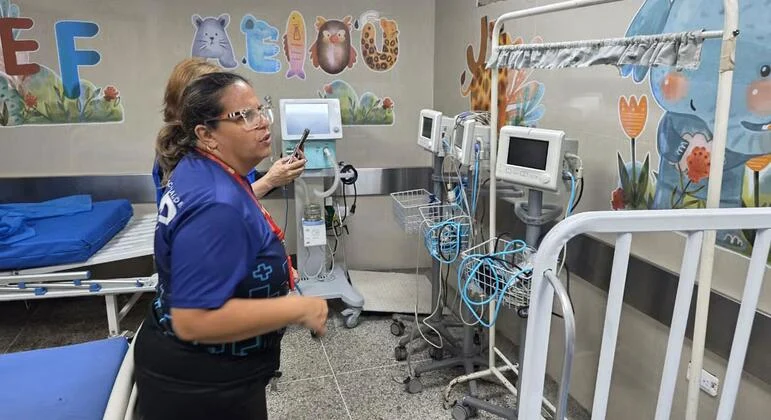
CARACAS/LA GUAIRA — The dual tremors that struck Venezuela on June 24 have transformed an already fragile healthcare landscape into a site of profound humanitarian distress. As the dust settles, a grim reality has emerged: the nation’s hospitals, buckling under years of economic decay and systemic underinvestment, are now at a total breaking point.
An urgent assessment conducted by the Pan American Health Organization (PAHO) has delivered a sobering verdict: all eight major health facilities surveyed across La Guaira, Caracas, and Miranda are in critical need of immediate international intervention. With 2,295 lives lost, over 11,000 injured, and nearly 13,000 people displaced, the capacity to provide basic medical care is being tested against a rising tide of disease, trauma, and logistical collapse.
The Chronology of a Crisis
The disaster began on June 24, when two powerful earthquakes rattled the coastal and central regions of Venezuela. While the seismic activity caused significant structural damage to three major medical facilities, the secondary effects—power outages, supply chain failures, and the displacement of personnel—have proven equally lethal.
- Day 1-2 (Immediate Impact): The tremors caused widespread infrastructure failure. Critical communication lines in La Guaira were severed, leaving hospitals like the Vargas-IVSS isolated.
- Day 3-5 (Assessment Phase): UN-backed health experts, including teams from the World Health Organization (WHO), began mapping the extent of the damage. They found that even facilities not physically destroyed were effectively paralyzed by the lack of electricity and personnel.
- Day 7-Present (Emergency Response): With the realization that the health system was on the verge of collapse, international aid began arriving in waves, starting with 2.18 tonnes of medical supplies delivered by PAHO to La Guaira.
Overwhelmed Wards: A System in Freefall
The state of the Vargas-IVSS hospital in La Guaira serves as a harrowing microcosm of the national emergency. Built to accommodate eight patients in its main ward, the facility is currently struggling to house 96. The scene is one of clinical desperation: the morgue is overflowing, and the blood bank—a critical component of trauma response—is holding a mere 35 units.
The trauma unit, designed to stabilize the most severe earthquake cases, is rendered largely ineffective by a total lack of power, leaving its ventilators idle. The hospital has no functional internet or telephone access, making it impossible for staff to track patients, manage supplies, or coordinate with regional authorities. Water, the most fundamental element of hospital hygiene, must be hand-carried into the building several times a day. Medical waste, a biohazard that threatens to spark secondary infections, has begun to accumulate in the corridors.
The situation at the Rafael Medina Jiménez hospital is similarly dire. Once a cornerstone of regional care, its capacity has been slashed from 108 beds to just 35. Surgeons are facing an ever-growing backlog of cases, while the facility struggles with basic biosecurity failures and a total absence of patient transport, leaving the injured stranded in a facility that can no longer serve them.
Responders Among the Affected
One of the most poignant elements of this tragedy is that the medical workers themselves are victims of the disaster. Ian Clark, who leads the WHO’s Health Emergencies Programme, noted that the bravery of local staff is occurring against a backdrop of personal loss.
"In many cases, those responding at the community and national level are people who are directly affected," Clark told reporters in Geneva. "They are treating patients while their own friends and family members remain missing or injured."
The loss of key medical personnel has created a void in coordination that is now hindering life-saving operations. Among the missing is the official responsible for maternal care in La Guaira. The disappearance of this coordinator has effectively halted the tracking of pregnant women in the region, leaving a vulnerable population without prenatal care or a pathway to safe delivery in a post-earthquake environment.
This human toll is exacerbated by the "brain drain" of the last decade. Following years of financial instability and underinvestment, tens of thousands of health professionals have emigrated from Venezuela. The current crisis has laid bare just how thin the remaining staff is stretched, with many hospitals operating with 37 percent fewer essential medicines than they possessed even before the earthquake hit.
Supporting Data: The Magnitude of the Challenge
The data provided by humanitarian agencies paints a picture of a system that was structurally malnourished before the tectonic plates shifted.
- Mortality and Displacement: 2,295 deaths confirmed; 11,267 injuries; 12,841 individuals displaced.
- Financial Gap: The WHO and PAHO have launched a desperate appeal for $24 million to cover the next six months of essential medical operations.
- The Funding Response: WHO Director-General Tedros Adhanom Ghebreyesus has released $1.5 million from the Contingency Fund for Emergencies, a vital initial step, but one that covers only a fraction of the total need.
- Logistics: While 2.18 tonnes of initial supplies reached La Guaira, and four additional tonnes were sourced from Panama, the scale of the need requires massive, sustained logistics chains from hubs as far away as Dubai.
Official Responses and Humanitarian Mobilization
In the face of these challenges, the international community has begun to mobilize. A 48-bed field hospital, complete with four intensive care stations and two operational theaters, is currently active in La Guaira. This facility is serving as the primary relief valve for the overwhelmed local hospitals.
UNHCR, the UN refugee agency, is simultaneously coordinating an effort to secure $14.85 million to provide shelter, food, and water to the 30,000 individuals projected to require assistance in the coming months. Sports complexes such as the José María Vargas and the César Nieves and Playa Grande stadiums have been repurposed as emergency hubs, housing the displaced and providing basic triage services.
Implications: A Looming Public Health Crisis
The implications of the current crisis extend far beyond the immediate trauma of the earthquakes. With sanitation systems disrupted and hospitals unable to manage biohazardous waste, the risk of waterborne diseases and infections is escalating daily.
Furthermore, the displacement of thousands of families into makeshift shelters in eight different states—including Zulia, Táchira, and Anzoátegui—threatens to spread the medical crisis into areas that have not yet fully felt the earthquake’s impact. The coordination of health services across these states is now a primary objective for the UN humanitarian affairs office, which must manage a fragmented and under-resourced medical infrastructure.
The situation remains fluid. As the global community watches, the primary challenge for Venezuela’s Ministry of Health and its international partners is to prevent the earthquake from becoming a protracted, systemic health catastrophe. The success of these efforts depends not only on the arrival of the next 28 tonnes of medical supplies from Dubai but on the resilience of a medical workforce that is currently operating at the limits of human endurance.
For the people of La Guaira and beyond, the path to recovery will be measured in the slow, agonizing restoration of power to operating theaters, the replenishment of blood banks, and the return of the essential medicines that, until now, were the only barrier between life and death. The international call for $24 million is not merely a request for aid—it is a plea for the survival of a national healthcare system currently standing on the edge of an abyss.
 Azzam Bilal Chamdy
 Pevita Pearce
 Iffa Jayyana
