

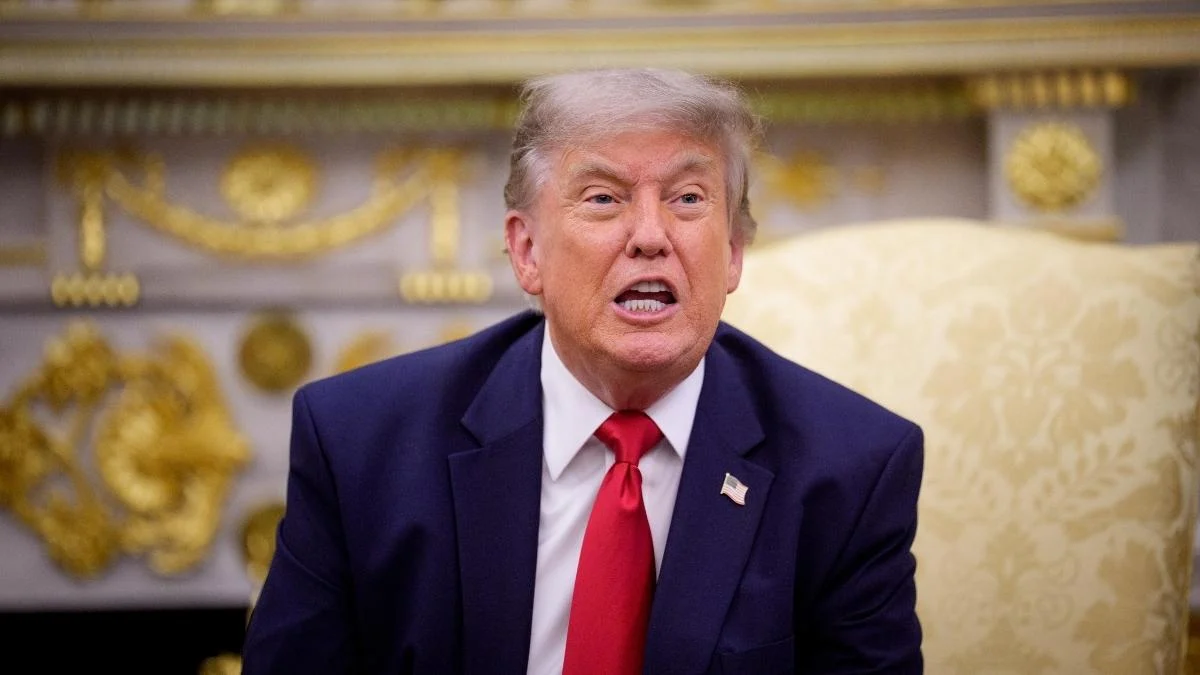
In a departure from traditional political briefings and campaign rallies, former President Donald Trump made a notable appearance on the "Storytime with the Second Lady" podcast this Independence Day. Joining Usha Vance, the wife of Vice President J.D. Vance, for an episode dedicated to American history and literacy, Trump offered a candid and lighthearted perspective on the presidency, historical figures, and his own public persona. The appearance, which featured the reading of Jonathan Pliska’s children’s book Presidents Play!, served as a unique intersection of political discourse and family-friendly engagement.
Main Facts: A Lighthearted Lesson in History
The Independence Day special was designed to promote children’s literacy, a primary mission of the podcast launched by Usha Vance. During the broadcast, Trump navigated through the pages of Presidents Play!, which provides a whimsical look at the personal lives and leisure activities of various American commanders-in-chief.
The conversation shifted frequently between historical trivia and personal anecdotes. Among the most discussed moments was Trump’s assessment of his predecessors. When the book highlighted John F. Kennedy, Trump took a moment to offer his own ranking of presidential aesthetics, famously labeling Kennedy the “second most handsome” president in U.S. history. The comment, delivered with characteristic flair, prompted immediate attention from listeners and media outlets alike, showcasing Trump’s penchant for injecting humor into his public appearances.
Chronology of the Podcast Appearance
The event began with a formal introduction by Usha Vance, who welcomed the former president to discuss the importance of understanding the American story. As the pages of Presidents Play! were turned, the conversation followed the chronological order of the book’s featured figures:
- Early Segment: The duo discussed the gravity of the presidency and the importance of instilling a love of history in younger generations.
- The Kennedy Reflection: As they reached the page dedicated to the 35th president, Trump engaged in a playful critique of historical figures’ appearances, leading to the “second most handsome” remark. He further mused on the narrative surrounding Kennedy’s military service, weaving in his own characteristic, often hyperbolic, style of storytelling.
- The Bathing Suit Quip: Upon reaching an illustration of Gerald Ford, the conversation pivoted to the fitness and physical appearance of presidents. Trump candidly noted his own lack of time for leisure activities like swimming, remarking that he had not worn a bathing suit in “a long time” due to the relentless schedule of political life.
- Historical Trivia: The episode concluded with a brief discussion on William Taft, with Trump identifying him as the heaviest president, followed by a lighthearted hypothetical scenario regarding future social gatherings with political rivals.
Supporting Data: Presidential History and Pop Culture
The intersection of presidential history and pop culture is not new, but this specific podcast episode represents a modern evolution of the genre. Presidents Play! by Jonathan Pliska is intended to humanize historical figures, making them accessible to children. By participating in this, Trump utilized a platform that moves beyond the polarized atmosphere of cable news.
According to reporting by PEOPLE, the episode gained significant traction on social media platforms, highlighting a strategic use of "soft media." In an era where political candidates are increasingly looking to podcasts and long-form digital media to reach audiences directly, the "Storytime with the Second Lady" format provides a controlled environment that allows for a softer, more relatable presentation of a politician’s personality.
The mention of Barack Obama and Joe Biden during the broadcast—specifically the joke about inviting them to a football game—was interpreted by many political analysts as an attempt to project a sense of presidential magnanimity. Trump’s comment that "the press would go wild" served as a meta-commentary on his own contentious relationship with the media, effectively turning his reputation into a punchline.
Official Responses and Public Reaction
The reaction to the podcast appearance has been varied, reflecting the deep partisan divides in the United States. Supporters of the former president praised the appearance as a "refreshing" and "humanizing" look at a man often portrayed solely through the lens of political controversy. They pointed to his willingness to engage in a children’s program as a sign of his dedication to traditional American values and family engagement.
Conversely, critics argued that the segment trivialized the office of the presidency. Some educational advocates expressed concern that the mix of historical facts with self-deprecating humor and political jabs might distract from the goal of literacy. However, the podcast’s production team maintained that the goal was engagement, noting that the spike in listeners for this episode suggests that the "storytime" format is a viable vehicle for political figures to connect with a broader demographic.
Implications for Political Communication
The "Storytime with the Second Lady" episode is highly illustrative of the changing landscape of political communication in the 21st century.
1. The Rise of "Podcast Politics"
Political figures are increasingly bypassing traditional press conferences in favor of niche podcasts. This allows them to control the narrative, avoid hostile questioning, and reach specific demographics that might not consume mainstream news. The informality of a podcast allows for "off-script" moments that humanize the candidate, potentially softening their image among undecided voters.
2. The Use of Humor as a Defensive Tool
Trump’s use of humor during the podcast—specifically regarding his own appearance and his rivalry with other presidents—serves as a defensive and offensive tool. By mocking himself before others can, he preemptively disarms criticism. By jokingly inviting his political rivals to a football game, he creates a narrative of confidence and control.
3. Literacy and National Identity
By choosing a platform dedicated to children’s literacy, Trump and Usha Vance are signaling a focus on "traditional American values." In the context of a culture war, the act of reading historical books to children is a powerful piece of political theater. It asserts a particular version of American history that emphasizes continuity, achievement, and the "greatness" of the past.
4. The "Celebrity President" Archetype
This event further cements the archetype of the "Celebrity President." Trump’s comfort in front of a camera, his focus on aesthetics (as seen in his comments on Kennedy and Ford), and his ability to turn a simple book reading into a media event demonstrate that his background in entertainment remains a core component of his political strategy.
Conclusion: A New Era of Campaigning
As the political climate continues to evolve, the lines between entertainment, education, and campaigning will likely continue to blur. The Independence Day episode of "Storytime with the Second Lady" stands as a case study in modern political branding. Whether the audience viewed it as an educational opportunity or a calculated public relations maneuver, the episode succeeded in its primary objective: keeping the former president in the center of the national conversation.
For those interested in the future of the podcast, Usha Vance has indicated that more guests from the political and cultural spheres are expected in future installments. As the podcast continues to grow, it will remain a critical touchpoint for those looking to understand how political messaging is being adapted for the digital age.
What do you think about Trump’s appearance on the "Storytime with the Second Lady"? Does the integration of political commentary into children’s literacy programs change your perception of the candidates, or is it merely another layer of political theater? Join the conversation and let us know your thoughts on how this shift in media consumption will impact future elections.
 Iffa Jayyana
 Azzam Bilal Chamdy
 Ammar Sabilarrohman
