

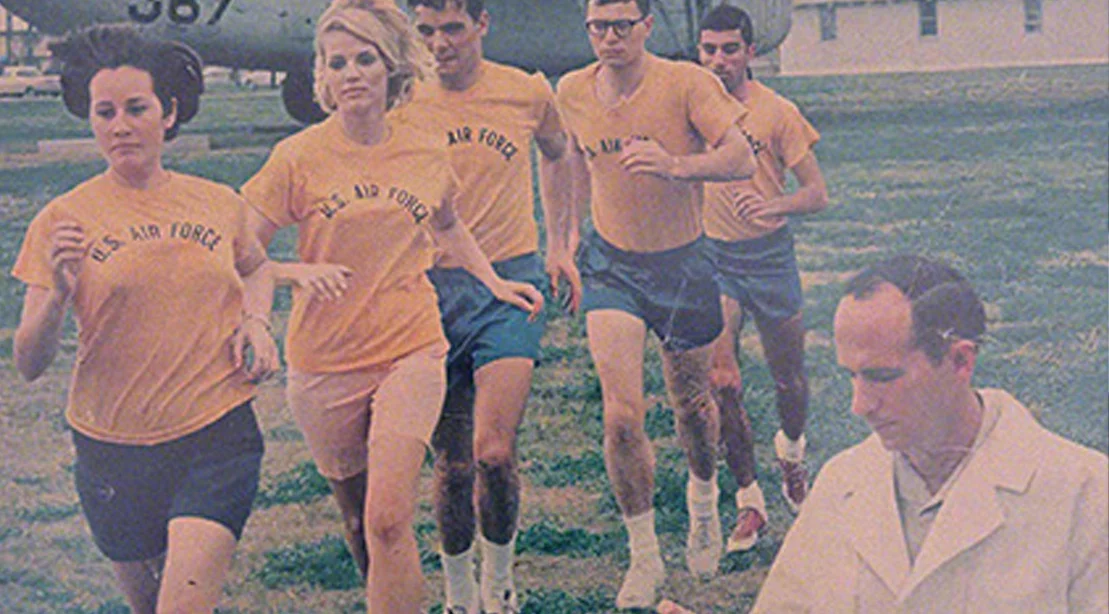
As the world turns its collective gaze toward the 2026 World Cup, the United States has once again positioned itself as the epicenter of global football. Amidst the roar of the crowds in Dallas, Texas—where Argentina secured a decisive 2-0 victory over Austria on June 22—a quiet but profound story of athletic innovation echoes through the history of the sport. While modern fans marvel at the high-intensity, data-driven conditioning of today’s superstars, the foundation for this elite performance was laid decades ago by a man who didn’t just study fitness; he revolutionized it.
Dr. Kenneth Cooper, widely revered as the "Father of Aerobics," holds a unique place in the annals of soccer history. His contributions to the 1970 Brazilian national team—a squad frequently cited as the greatest to ever grace a pitch—serve as a testament to the intersection of medical science and championship-level ambition.
The Architect of the Beautiful Game’s Physicality
The connection between Dr. Cooper and the legendary 1970 Brazil team began in Mexico City, where the team was finalizing their preparations for the World Cup. At the time, the concept of standardized cardiovascular conditioning in professional soccer was in its infancy. Through a series of professional introductions, Cooper met the team’s training staff, who were eager to bridge the gap between technical skill and physical endurance.
Cooper, a former U.S. Air Force flight surgeon, brought with him his groundbreaking "12-minute test"—a metric designed to measure cardiorespiratory fitness. When he applied this test to the Brazilian squad, he discovered they were running approximately 1.86 miles in 12 minutes.
"I had them run 20 miles a week," Cooper recalled. "They were running at a 7-minute pace, running in fragments of 4 to 5 miles to get that 20 miles a week. By the end of that time, a year later, we retested them at 2.3 miles in 12 minutes."
The results were transformative. The squad, anchored by the incomparable Pelé, entered the tournament with an engine that their opponents could not match. By the second half of their matches, Brazil consistently overwhelmed their competition, maintaining a high-tempo press that left opponents winded. Their subsequent World Cup victory wasn’t just a win for Brazil; it was a vindication of Cooper’s scientific approach to human performance.
A Chronology of a Fitness Pioneer
Dr. Kenneth Cooper’s influence extends far beyond the pitch. His career is a roadmap of American innovation, spanning from the cold reaches of space to the grassroots of public health.
- 1956: Cooper graduates from medical school, beginning a journey that would eventually lead to a singular focus on preventative medicine.
- 1960s: As a Lieutenant Colonel in the U.S. Air Force, Cooper serves as a flight surgeon, tasked with maintaining the peak physical status of pilots and astronauts. He works directly with NASA to design the conditioning programs that enabled early American astronauts to withstand the rigors of space flight.
- 1968: Cooper publishes Aerobics, a seminal work that introduces the world to the health benefits of sustained, rhythmic exercise. The term "aerobics" enters the common lexicon.
- 1970: Cooper provides the conditioning blueprint for the Brazilian national soccer team, cementing his reputation as a consultant for elite international sports.
- 1970s–Present: Following his military service, Cooper settles in Dallas, establishing the Cooper Aerobics Health and Wellness center, which becomes a global destination for those seeking a scientific approach to longevity.
- 2026: At 95 years old, Cooper continues to advocate for his principles, proving that his "journey" of fitness is a lifelong commitment.
The Science of Living: Data as a Lifeboat
Dr. Cooper’s philosophy is not rooted in trends, but in long-term, longitudinal data. His medical practice in Dallas serves as a living laboratory. For 45 years, a dedicated group of 20 patients followed his rigorous protocols regarding exercise, nutrition, and lifestyle. The findings were nothing short of extraordinary.
"The men were living 86.5 years, the women 90.4 years," Cooper noted. "That’s an average age of 88.6 years, which is almost exactly ten years longer than the national average."
This longevity is not a result of fad dieting or extreme measures; it is the result of what Cooper calls "discipline." His standard protocol includes 150 minutes of aerobic exercise per week, a diet rich in fruits and vegetables, and a strict limitation on alcohol and tobacco usage.
The Waist-to-Height Ratio: A Vital Indicator
In an era obsessed with the number on a scale, Dr. Cooper argues for a more precise metric: the waist-to-height ratio. He advocates that a person’s waist circumference should not exceed half of their height.
"If you’re 5 feet tall, that’s 60 inches in height; your waist should not exceed 30 inches," Cooper explains. While current military standards allow for a slightly higher percentage (55%), Cooper remains a steadfast proponent of the 50% rule, viewing it as the primary indicator of metabolic health and longevity.
Implications for Future Generations
The Cooper legacy is now being carried forward by the next generation. His son, Tyler Cooper, serves as the President and CEO of the Cooper Aerobics empire, overseeing a multi-faceted organization that includes six distinct businesses and a non-profit foundation. His daughter, Berkley, continues the family tradition of physical excellence, having competed in the Boston Marathon—a feat her father accomplished twice in his own career.
The influence of their work has reached global proportions, with professionals from countries as far away as China seeking to replicate the Cooper model of integrated wellness.
Advice for the Golden Years
At 95, Dr. Cooper is the ultimate example of his own teachings. He remains active, vibrant, and deeply engaged in his work. For those entering their later years, his advice is refreshingly pragmatic: "Fitness is a journey, not a destination. You must keep it up for the rest of your life."
He encourages seniors to adopt walking as a primary form of exercise. His research suggests that if an 80-year-old can walk a mile in 17 minutes, the statistical likelihood of reaching age 90 increases dramatically—by 84% for men and 86% for women.
Conclusion: The Endurance of the Spirit
As the 2026 World Cup continues to captivate the world, the story of Dr. Kenneth Cooper serves as a powerful reminder that the greatest achievements in sports—and in life—are built on a foundation of discipline, scientific rigor, and consistency.
Whether it was helping Pelé secure a world title or guiding a patient through their ninth decade of life, Cooper’s message remains consistent: the human body is designed to move, and the secret to longevity lies in treating fitness as a lifelong, non-negotiable journey. As he stated in his latest book, Grow Healthier as You Grow Older, where there is a will, there is a way to age gracefully, healthily, and with purpose.
Dr. Cooper’s life is a testament to the fact that while we cannot stop the clock, we can certainly determine how we spend the time we are given. His legacy is not just in the medals won on a soccer pitch, but in the millions of lives—both in Brazil and beyond—that have been extended and enriched by the simple, enduring principles of aerobic health.
M&A Senior Military Editor Rob Wilkins contributed to this report.
 Lina Irawan
 Jia Lissa
 Reynand Wu
