

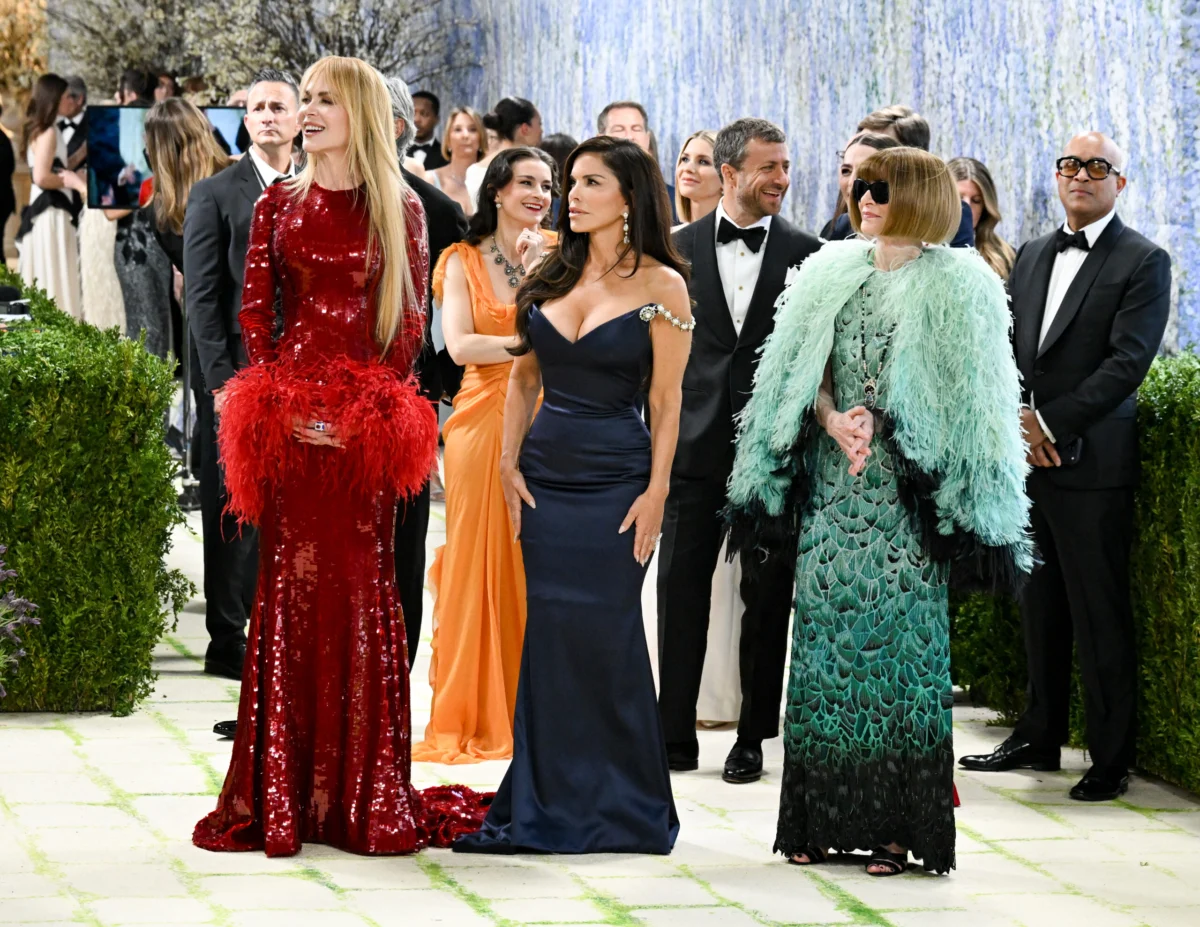
For decades, the first Monday in May served as the high-water mark of the fashion calendar. It was a night of controlled chaos, avant-garde risk-taking, and a rare intersection of high art and celebrity culture. A-listers from every corner of the globe would descend upon the steps of the Metropolitan Museum of Art, turning the institution into a runway for the most exclusive event in the world. However, since the 2021 post-pandemic return, the gala’s prestigious crown has begun to slip, replaced by a climate of performative commercialism and a profound lack of aesthetic daring.
The Shift: From Exclusive to Influenced
The degradation of the Met Gala did not happen overnight. The 2021 and 2022 editions marked a pivotal transition: the integration of social media influencers. While intended to bridge the gap between legacy fashion and the digital generation, the move effectively diluted the event’s aura of exclusivity. The red carpet—once reserved for industry titans, true muses, and master designers—became, in the eyes of many critics, "TikTok fodder."
As the influence of the social media set began to wane, a more formidable, less creative force rose to take its place: the corporate mogul. The shift from "fashion elite" to "business titan" is not merely a change in guest list; it is a fundamental transformation of the gala’s purpose. The event has transitioned from a celebration of the Costume Institute’s scholarship to a high-priced arena for corporate image-laundering.
The Bezos Era: A $10 Million Sponsorship
The most glaring manifestation of this new era arrived this February, when it was announced that Jeff Bezos—the founder, former CEO, and executive chairman of Amazon—and his wife, Lauren Sánchez Bezos, would serve as the evening’s honorary chairs.
The optics were immediate, and the backlash followed shortly after. Reports from Page Six indicated that the couple had shelled out "at least" $10 million to sponsor the event, effectively purchasing their way into the center of the fashion establishment. The Met’s own website now highlights, in prominent, glowing terms, that the current exhibition and gala were "made possible" by the couple.
For many in the fashion industry, this represents a profound irony. Amazon has been the primary architect of the modern fast-fashion ecosystem, a business model that has systematically eroded clothing quality and forced the global consumer—often under duress from economic instability—to prioritize ephemeral, low-cost trends over craftsmanship and ethical labor practices. By inviting the architects of "disposable fashion" to preside over an evening dedicated to the preservation of costume art, the Costume Institute has left itself open to charges of hypocrisy.
Creative Stagnation: The "Fashion is Art" Failure
This year’s theme, "Fashion is Art," was intended to be an invitation for guests to explore the relationship between the dressed body and the broader history of art. The exhibit itself, titled "Costume Art," was lauded by curators for its focus on the "centrality of the dressed body," encompassing diverse forms, from the classical to the aged, the pregnant to the naked.
However, the execution on the red carpet was, to put it charitably, a poorly constructed collage. There exists a golden rule for the Met Gala: if you can comfortably wear your outfit to the Oscars, you aren’t trying hard enough. By that metric, the majority of this year’s attendees failed.
The lack of creative ambition was staggering. Rather than engaging in a nuanced dialogue with art history, many celebrities opted for the lowest-hanging fruit. The reliance on literal, unimaginative references was pervasive. Consider the "Madame X" phenomenon: three separate, high-profile stars—Lauren Sánchez Bezos in Schiaparelli, Claire Foy in Erdem, and Julianne Moore in Bottega Veneta—all arrived wearing iterations of John Singer Sargent’s famous portrait.

Furthermore, the prevalence of sculpture-inspired looks felt less like an homage and more like a trend report. Upwards of 15 stars, including the Jenner sisters (in GapStudio and Schiaparelli), Heidi Klum (in a creature-heavy look by Mike Marino), and Doja Cat (in Saint Laurent), arrived as some form of statuary. The result was a red carpet that felt less like a curated gallery and more like a gift shop collection.
The Exceptions: Who Got It Right?
Despite the sea of homogeneity, there were notable departures from the mundane. A few attendees demonstrated the research and creative rigor the theme demanded.
Bad Bunny arrived in arresting, hyper-realistic "old man" prosthetics, a move that challenged the vanity inherent in the gala while speaking to the "aging body" component of the exhibit. Madonna, appearing in a Saint Laurent piece inspired by Leonora Carrington’s The Temptation of St. Anthony, offered a haunting, surrealist contrast to the standard gown-and-train aesthetic. Beyoncé, draped in an Olivier Rousteing creation that reimagined Caroline Durieux’s The Visitor, provided a masterclass in how to translate high-concept art into a wearable, red-carpet moment.
These three stood in stark contrast to the rest of the attendees, whose preparation for the evening appeared limited to a cursory Google search for "famous art."
Financial Realities and Institutional Implications
While critics lament the loss of the gala’s artistic soul, the financial metrics tell a different story. The Metropolitan Museum of Art’s Costume Institute confirmed a record-breaking fundraising total of $42 million for this year’s event—an $11 million increase over the previous year.
It is impossible to decouple this financial windfall from the involvement of the Bezos family. Their $10 million contribution provided the cushion the museum needed to reach these unprecedented figures. For the Costume Institute, Anna Wintour, and the parent company of Vogue, Condé Nast, the decision is a purely pragmatic one: in an era of declining print media and shifting cultural priorities, the gala must remain solvent.
Yet, there are whispers of deeper, more structural changes on the horizon. Reports surrounding the development of a The Devil Wears Prada 2 film have fueled long-standing rumors that the Bezos couple may be interested in acquiring Condé Nast itself. While purely speculative, such an acquisition would signal the final surrender of the fashion press to the tech-mogul class. If the institution is willing to trade its prestige for a $10 million sponsorship, what is the price of total corporate absorption?
Conclusion: A Future in Flux
The Met Gala currently sits at a crossroads. It is undoubtedly more financially successful than at any point in its history, yet it has never felt more culturally irrelevant. By prioritizing corporate sponsorship over creative risk, and by allowing the red carpet to become a playground for those who view fashion as a transaction rather than an art form, the event risks alienating the very industry it claims to represent.
If the "first Monday in May" is to survive as a cultural touchstone, it must reckon with its own identity. It cannot continue to serve as both the pinnacle of high-fashion scholarship and a vanity project for the ultra-wealthy. Until the curators, designers, and hosts demand more than just a sponsorship check, the gala will continue to be a display of what money can buy, rather than what art can express. The question remains: is the Met Gala a museum fundraiser, or is it simply the world’s most expensive billboard? At present, the answer seems increasingly, and unfortunately, to be the latter.
 Nana
Nana
 Ali Ikhwan
 Iffa Jayyana
