

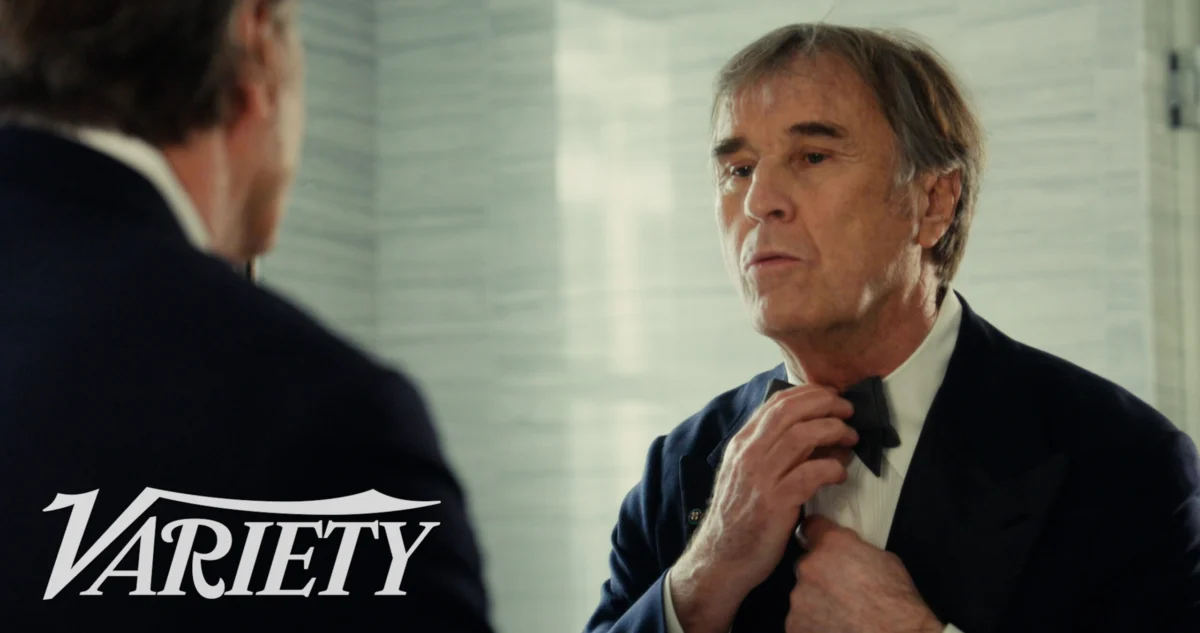
In the quiet, rolling hills of Umbria, Italy, Brunello Cucinelli is often found walking through his vineyards at night. Surrounded by small, controlled fires—a traditional, poetic method to protect his vines from the biting grip of late-season frost—the 70-year-old entrepreneur looks less like a titan of global fashion and more like a steward of the land. This image, which serves as the opening sequence of the new documentary Brunello: The Gracious Visionary, perfectly encapsulates the duality of his life: a man firmly rooted in the rustic traditions of his homeland while simultaneously standing at the helm of a global luxury empire.
Last Tuesday, the setting shifted from the quietude of Solomeo to the frenetic, glittering lights of New York City. The fashion designer, flanked by his family, graced the red carpet for an exclusive gala screening of the documentary, marking the official lead-up to its North American theatrical release. The film, directed by the acclaimed Giuseppe Tornatore, is more than a mere corporate biography; it is a visual manifesto of "humanistic capitalism," a philosophy that has defined Cucinelli’s career since he began crafting high-end cashmere pullovers in 1978.
The Chronology of a Visionary: From Rural Poverty to Global Influence
To understand the man behind the brand, one must look back to the humble, often harsh, realities of his early life. Cucinelli did not inherit a fashion house; he emerged from a poor, rural farm existence in Umbria. His childhood was defined by the simplicity of the Italian countryside and the foundational values of a close-knit family.
The Defining Turning Point
The trajectory of his life changed irrevocably due to a single, painful observation. As a young man, Cucinelli overheard his father complaining about the indignities he suffered in his factory job—the lack of respect, the grueling conditions, and the feeling of being treated as a mere cog in a machine. This moment of realization became the cornerstone of Cucinelli’s professional life. He vowed that if he ever had the power to lead, he would prioritize human dignity above all else.
The Rise of the "King of Cashmere"
In 1978, Cucinelli began his journey in fashion, focusing on vibrant, durable, and impeccably crafted cashmere sweaters. With the support of his wife, Federica, whom he met in his teens, he began to scale his business. Federica was not just a partner in life but a vital entrée into the fashion world, providing the grounding and perspective necessary to build a brand that could withstand the volatility of the industry. Over the decades, he became known as the "King of Cashmere," yet he refused to let his success be defined solely by sales figures or market dominance.
The Solomeo Restoration
Perhaps the most tangible evidence of Cucinelli’s philosophy is the transformation of Solomeo, the small hamlet he calls home. Rather than centralizing his headquarters in a sterile corporate hub, he invested millions into the restoration of an earthquake-damaged castle. This became the heart of his operations, surrounded by parks, a newly renovated church, a theater, and a library housing over 500,000 titles. This wasn’t just corporate social responsibility; it was an attempt to create a "humanist village" where culture, labor, and nature coexist in harmony.
Supporting Data: The Anatomy of Humanistic Capitalism
The business model Cucinelli has pioneered is an anomaly in the high-stakes world of luxury fashion. While most global conglomerates focus on quarterly growth and aggressive cost-cutting, Cucinelli has intentionally cultivated a "creative hive."
- Labor Philosophy: Employees at the Cucinelli headquarters receive wages significantly higher than the industry average.
- The Environment: Work is performed in spaces flooded with natural light, prioritizing the physical and mental well-being of the artisans.
- Communal Living: The company culture emphasizes communal meals, echoing the Italian tradition of the family table, which fosters a sense of unity and shared purpose rather than hierarchical competition.
- The Foundation: The Brunello and Federica Cucinelli Foundation oversees the preservation of their cultural projects, ensuring that the wealth generated by the company is reinvested into the community and the arts.
These metrics of success—measured in the quality of life of the worker and the preservation of heritage—provide a stark contrast to the standard corporate KPIs of the 21st century.
Official Perspectives: A Family and a Legacy
The documentary Brunello: The Gracious Visionary is a collaborative effort, featuring testimonials from friends, family, and industry peers. For Cucinelli, the choice of director was deliberate. "I wanted Giuseppe [Tornatore] to undertake this project because he is a poet, and I believe that poets are the greatest human beings on earth," Cucinelli told Variety.
Federica Cucinelli on a "True Fairytale"
For Federica, who has been by his side for 54 years, the film serves as a testament to their shared journey. "This was intended to be, in a sense, our own personal monument to life," she noted. "I never would have imagined that we would one day see the story of our lives turned into a film."
The Next Generation
The future of the brand lies in the hands of his daughters, Carolina and Camilla, who serve as vice presidents. They represent a seamless transition of values. During the NYC gala, their choices of attire—sophisticated, conceptual, and rooted in the company’s ethos—demonstrated that the brand is in capable hands.
"We feel a profound sense of responsibility toward the company and the people who work alongside us every day," Carolina explained. "We were instilled with the concept of work as a noble pursuit: one free of coercion yet driven by a great passion inherited from our parents."
Global Implications: Guardians of Creation
Cucinelli’s influence extends far beyond the runway. In 2021, he addressed the G20 Summit, where he urged world leaders to view themselves not as owners of the earth, but as "temporary guardians of Creation." This sentiment permeates the documentary, which is designed to serve as a pedagogical tool for future generations.
Bridging the Gap Between Business and Ethics
The film, produced by Brunello Cucinelli S.p.A. and MasiFilm in collaboration with RAI Cinema, is not merely a promotional piece. It is a challenge to the modern business landscape. By documenting his life, Cucinelli hopes to prove that an enterprise can be profitable without being extractive.
"One may inherit ownership, but never the actual capacity for entrepreneurship," Cucinelli says, reflecting on his grandchildren. "Yet they truly love it and this whole idea of being here together… it all possesses a certain charm, a certain poetry."
A Message for the World
As the film prepares for its North American release on July 24, its message is universal. In an era often dominated by anxiety and political polarization, Cucinelli offers a simple, albeit radical, alternative: "Replace fear with hope. Have a dream. Look up at the sky."
Whether he is being referenced in popular culture—from The Devil Wears Prada 2 to Emily in Paris—or speaking to the most powerful leaders in the world, Cucinelli remains steadfast in his message. He encourages individuals to "strive to live as if you were the pro tempore custodians of humanity."
Conclusion: The Enduring Vision
The success of the documentary, which earned over $1 million during its limited seven-day run in Italy, suggests a global hunger for the kind of "gracious" vision Cucinelli promotes. By documenting the intersection of his professional success and his personal commitment to the land and his people, the film provides a blueprint for what a conscious, compassionate future might look like.
As Brunello: The Gracious Visionary arrives in theaters across the U.S. and Canada on July 24, audiences will be invited into a world that feels both distinctly Italian and universally human. It is a story of a man who looked at the world, saw the potential for cruelty in the industrial machine, and decided, instead, to build a sanctuary—one sweater, one stone, and one act of humanism at a time. Through the lens of Tornatore, the legacy of Brunello Cucinelli is no longer just a brand; it is a philosophy for the ages.
 Pevita Pearce
 Jia Lissa
