

SANTA CRUZ DE TENERIFE, Spain — The 9th Ibero-American Animation Quirino Awards concluded in a spectacular ceremony in Tenerife this past Friday, reaffirming the region’s growing dominance and artistic diversity on the global animation stage. The event, which has become a vital nexus for creators across the Iberian Peninsula and Latin America, showcased a breadth of technical prowess and thematic maturity, ultimately crowning Galician auteur Alberto Vázquez as the night’s most decorated artist.
The Reign of Alberto Vázquez: A Master of the Medium
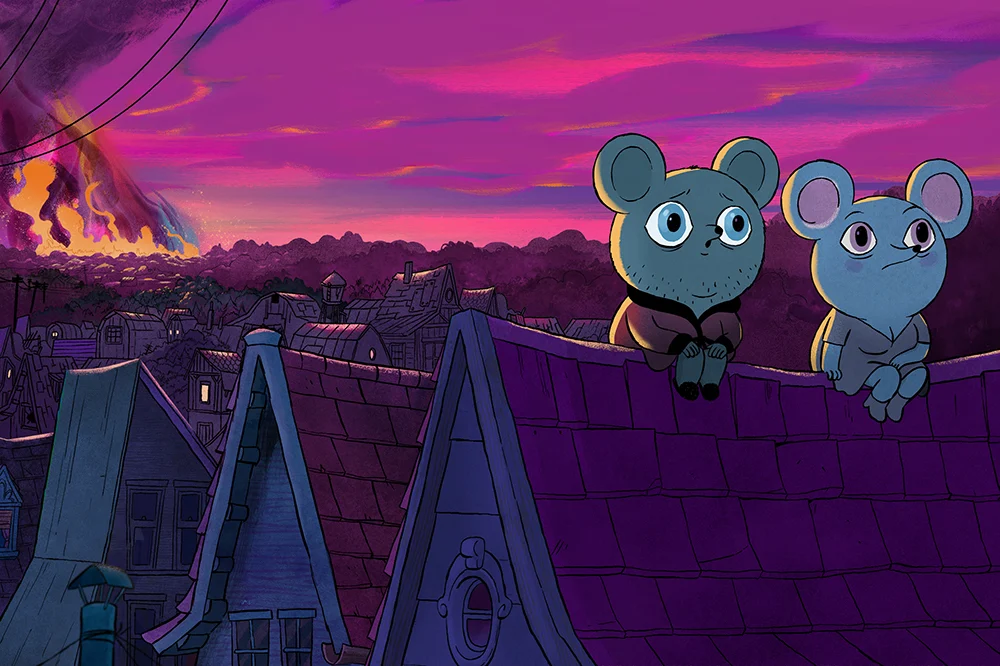
In a career defined by its uncompromising visual style and existential inquiry, Alberto Vázquez once again asserted his status as a titan of independent animation. His latest feature, Decorado, a biting, surreal meditation on identity, societal artifice, and the hollow nature of appearances, secured the prestigious Best Feature Film award.
This victory marks a significant milestone for Vázquez, who has now claimed three Quirino statuettes. His previous triumphs included an award for the 2018 short film version of Decorado and a win for the hauntingly visceral Homeless Home in 2021. The success of Decorado is not an isolated incident; it follows the film’s high-profile recognition at the Goya Awards this past February, where it took home the prize for Best Animated Feature. The production, a massive collaborative effort between Spanish studios María y Arnold AIE, Abano Producións, UniKo, and Glow Animation, alongside Portugal’s Sardinha em Lata, serves as a blueprint for the cross-border co-productions that define the modern Ibero-American animation landscape.
A Chronology of Excellence: From Development to Accolade
The journey of the 9th Quirino Awards began months prior, with a record-breaking submission pool of 265 projects vying for recognition. The selection process, handled by an international jury of industry experts, prioritized not only technical innovation but also the distinct cultural voices emerging from the Ibero-American diaspora.
The ceremony itself was the culmination of a week-long celebration of craft. Throughout the proceedings, the narrative shifted from the grand themes of feature-length cinema to the granular details of technical execution. The awards were distributed with a surprising degree of parity, highlighting the health of animation ecosystems in five distinct nations.
Spain led the medal count with three primary wins, but the true story of the evening was the ascent of Latin American studios. Colombia, Brazil, and Portugal emerged as powerhouses, each claiming two awards, while Argentina secured a notable victory in animation design. This clean five-five split between the Iberian Peninsula and Latin America serves as a testament to the symbiotic relationship fostered by the Quirino organization.
Supporting Data: A Landscape of Global Collaboration
The statistics behind the 9th Quirino Awards offer a window into the current state of the industry. With over 265 submissions reviewed, the competition was fiercer than in previous iterations. The diversity of the winners list illustrates that the "Ibero-American" label is no longer a niche category but a thriving, globalized market.
Geographical Distribution of Wins
- Spain: 3 Wins (Best Feature, Best Video Game Animation, Best Sound/Music)
- Colombia: 2 Wins (Best Series, Best School Short – co-pro)
- Portugal: 2 Wins (Best Short Film, Best Music Video)
- Brazil: 2 Wins (Best Commissioned Film, Best Visual Development)
- Argentina: 1 Win (Best Animation Design – co-pro)
The technical categories provided a granular look at the specialized talent fueling these productions. Brazilian multi-hyphenate Rosana Urbes (Planta Filmes) claimed the Best Visual Development award for Safo, showcasing the depth of artistic talent in Brazil’s independent sector. Meanwhile, the Argentina-Mexico co-production My Gut Friend, directed by José Manuel Lo Bianco and Mariano Andrés Bergara, earned the Animation Design prize, underscoring the success of cross-continental creative partnerships.
Official Responses and Jury Deliberations
The selection committee was chaired by the acclaimed Brazilian producer Cesar Cabral, himself a 2022 Quirino feature winner for the dark and provocative Bob Cuspe – Nós Não Gostamos de Gente. Cabral was joined by an international panel of experts, including Ireland’s Moe Honan (Moetion Films), the Philippines’ Marilyn Montano (PlayLab Animation Studio), Colombian-American industry veteran Martha Sepúlveda (CAKE Entertainment), and Croatia’s Krešimir Zubčić (HRT).
In post-ceremony commentary, jury members noted that the difficulty in selecting winners was not due to a lack of quality, but an abundance of it. The jury emphasized that the winning projects were chosen for their ability to balance high-concept narrative risks with impeccable technical execution.
"The standard of submissions this year was extraordinary," noted a spokesperson for the jury. "We were looking for works that push the boundaries of what animation can say about the human condition. From the existential dread explored in Decorado to the delicate emotional resonance of Dog Alone, these films represent the pinnacle of current global storytelling."
Implications: The Future of Ibero-American Animation
The success of the 9th Quirino Awards suggests a structural shift in the industry. Historically, animation from this region was often relegated to the periphery of major European or North American film markets. However, through initiatives like the Quirino Awards, these creators are now forming a cohesive, self-sustaining network.
The Rise of the "Global-Local" Model
The prevalence of co-productions—such as the Portuguese-French collaboration for Dog Alone or the Spanish-Portuguese effort for Decorado—indicates that creators are increasingly leveraging tax incentives, shared funding pools, and international talent to bypass the limitations of single-country production budgets. This model allows for higher-fidelity production values while maintaining the unique cultural nuances that make Ibero-American stories distinct.
Genre Diversity
The winners list also highlights a shift away from purely children’s programming. While the series category was won by a "suspense-laced kids’ toon" (There Is Something Behind You by Julián Gómez Reyes), other categories featured music videos, complex video games like Stars in the Trash, and short films dealing with heavy themes like loneliness and family trauma. This suggests that investors and distributors are beginning to trust Ibero-American animation to reach adult audiences with sophisticated, darker, and more experimental content.
Impact on Emerging Talent
The "School Short Film" category, won by Ballad of Fishes and Birds (a Colombia-Spain co-production), serves as a critical bridge between academic training and industry integration. By celebrating student work alongside veteran directors, the Quirino Awards are actively building a pipeline for the next generation of animators, ensuring that the momentum gained this year will carry into the next decade.
Conclusion: A Barometer for Success
As the lights dimmed in Santa Cruz de Tenerife, the overarching message of the 9th Quirino Awards was one of confidence. The region is no longer just a source of labor or outsourced animation for larger studios; it is a creative hub producing original intellectual property that resonates with critics and audiences alike.
Whether it is the haunting, philosophical depth of Alberto Vázquez’s work or the technological innovation displayed by the likes of Brazil’s Zombie Studio and Spain’s Valhalla Cats, the trajectory for Ibero-American animation is definitively upward. As the industry looks toward the 10th anniversary of these awards, the foundation laid by this year’s winners ensures that the region will remain at the forefront of the global animation discourse for years to come.
 Nana
Nana
 Ali Ikhwan
