

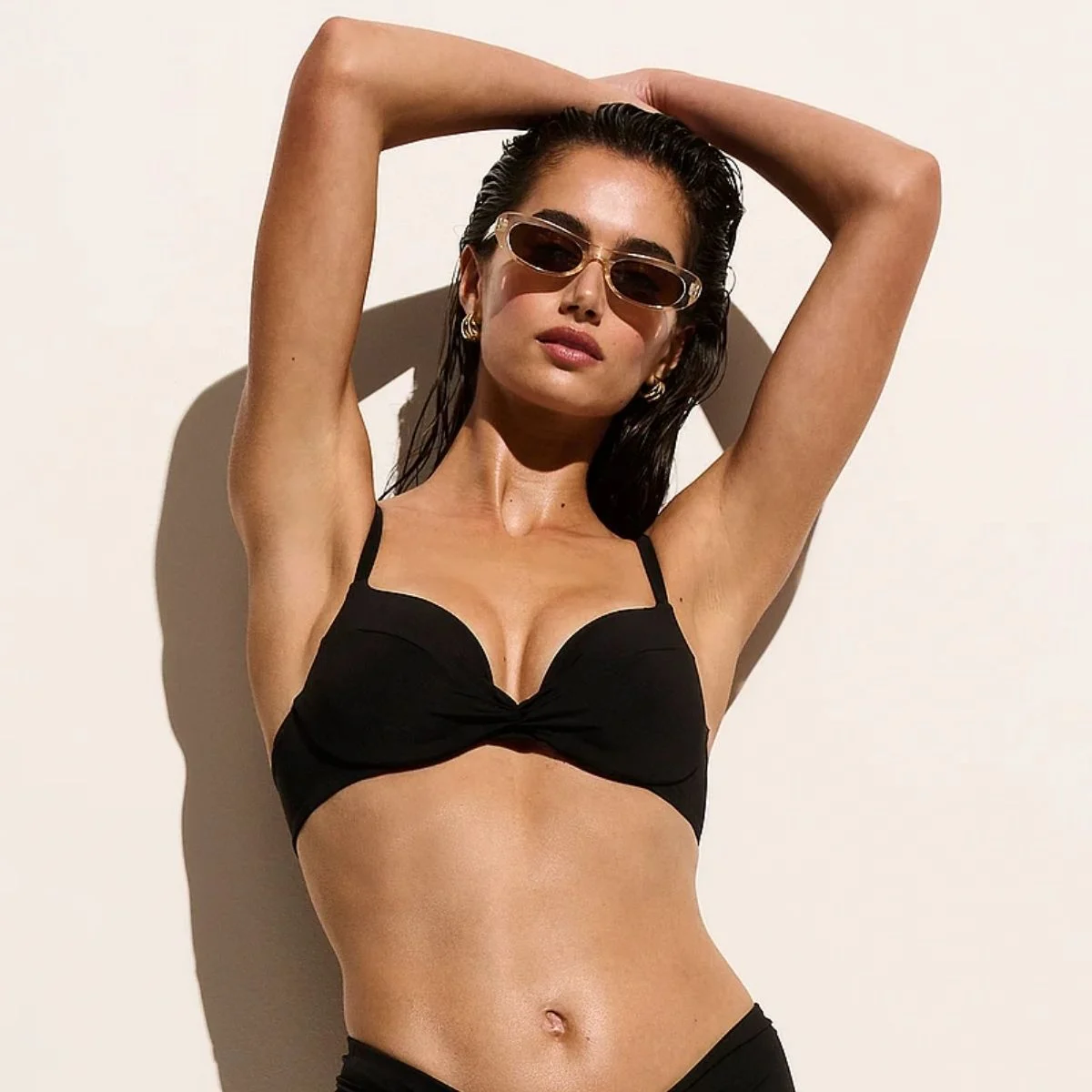
The global swimwear market is undergoing a significant structural shift. Once dominated by standardized, minimally supportive designs, the industry is increasingly prioritizing specialized engineering to cater to diverse body types. Among the most notable developments is the rise of high-performance, bust-enhancing swimwear designed specifically for consumers with smaller chests.
Historically, individuals with smaller busts (typically A to C cups) faced a binary choice: unstructured triangle tops that offered little shape, or heavily padded swimsuits that absorbed water and became weighed down. Today, brands like Victoria’s Secret, Cupshe, and Calzedonia are utilizing advanced lingerie technology—including water-resistant molded cups, ergonomic underwires, and strategic ruching—to offer aesthetic enhancement without sacrificing comfort or performance.
Main Facts: The Demand for Structural Innovation in Swimwear
The search for the ideal swimsuit for smaller chests has transitioned from a niche consumer struggle to a major driver of retail innovation. The primary consumer demand in this segment is the illusion of a fuller bust combined with secure, comfortable lift. To achieve this, modern swimwear design has increasingly borrowed blueprints from the intimate apparel sector.
Key design features defining this category include:
- Molded Push-Up Padding: Rather than relying on removable foam inserts—which are prone to shifting, folding, and absorbing excessive water—leading brands are integrating permanent, molded push-up padding directly into the cups. This ensures consistent shaping both in and out of the water.
- Lifting Underwires and Balconette Cuts: Underwires provide a rigid, supportive semi-circle that lifts the breast tissue upward and inward, maximizing natural cleavage. Balconette styles offer slightly less top coverage, showcasing the lifted silhouette.
- Strategic Fabric Manipulation: Features such as twist-front designs, shirring, and horizontal ruching create optical depth, making the bust area appear fuller.
- Customizable Fit Architecture: Multi-slot hook closures, adjustable criss-cross back straps, and halter ties allow consumers to tension the garment precisely, optimizing the lift based on their unique torso measurements.
A prominent example of this engineering trend is the Victoria’s Secret Swim Twist Push-Up Bikini Top, which has garnered widespread consumer attention for its claim to instantly boost the bust by a full cup size. This product, alongside competitors from Cupshe and specialized Amazon brands, highlights a broader commercial movement: the commodification of structured, confidence-boosting resort wear.
Chronology: The Evolution of Swimwear Engineering for Smaller Busts
To understand the current state of bust-enhancing swimwear, it is necessary to trace how fabric technology and consumer expectations have evolved over the past several decades.
[1970s–1980s] -> Minimalist, unstructured triangle tops dominate; focus is on tanning, not support or shaping.
       |
[1990s–2000s] -> Introduction of heavy, removable foam pads; pads absorb water, lose shape, and shift during activity.
       |
[2010s]       -> Lingerie brands enter the swim market en masse, translating bra-sizing and underwire tech to swimwear.
       |
[Present]     -> High-tech molded polyurethane cups, water-wicking fabrics, and strategic structural tailoring define the market.
The Era of Unstructured Minimalism (1970s–1980s)
During the late 20th century, the bikini market was dominated by unstructured designs, such as basic string bikinis and bandeau tops. These styles relied entirely on the wearer’s natural shape, offering zero lift or contouring. For consumers with smaller chests, these garments often flattened the torso further.
The Inefficient Padding Era (1990s–2000s)
As consumer demand for enhanced cleavage grew—fueled by the cultural prominence of push-up bras in mainstream fashion—swimwear manufacturers began inserting removable foam pads into bikini tops. However, this solution was highly flawed. The foam inserts frequently slipped out of place during swimming, absorbed large volumes of water, and took hours to dry, causing the garment to sag.
The Lingerie-Swimwear Convergence (2010s–Present)
The real breakthrough occurred when major intimate apparel retailers began applying professional bra-construction techniques to swimwear. Designers replaced cheap foam inserts with integrated, molded polyurethane cups that resist water absorption. They also introduced precise cup-and-band sizing to replace the generic "Small/Medium/Large" matrix. Today, consumers expect swimwear to perform with the same structural integrity as high-end lingerie.
Supporting Data: Comparative Analysis of Leading Push-Up Swimsuits
To identify the most effective cleavage-enhancing options on the market, retail analysts and product testers evaluated several top-performing swimsuits based on their structural design, adjustability, and value.

| Brand & Product Name | Structural Mechanism | Key Feature | Sizing & Styling Pairing |
|---|---|---|---|
| Victoria’s Secret Twist Push-Up Bikini Top | Molded push-up padding, lifting underwire | Flattering twist-front detail, multi-slot hook closure | Solos/Mix-and-match bottoms; currently featured in seasonal promotional sales (up to 50% off select colors) |
| Cupshe Violet Garden Floral Bikini Set | Halter neck lift, integrated bust-enhancing support | Vibrantly patterned floral print | Comes as a complete set with cheeky, high-waisted bottoms |
| RELLECIGA Women’s Underwire Bikini Top | Molded cups, heavy underwire support | Adjustable criss-cross back straps | Standalone top; highly rated for customized tensioning |
| Calzedonia Premium Fit Super Push-Up | Maximum push-up padding, underwire | Plunge-style twist front | Premium Italian fabric; designed for dramatic cleavage enhancement |
| Cupshe Coastal Club Floral Bikini Set | Wireless molded cups | Wide, comfortable shoulder straps | Includes matching high-rise floral bottoms; ideal for those who dislike underwire |
| Body Glove Smoothies Molded Push-Up | Soft molded cups within a triangle frame | Adjustable front-tie closure | Hybrid design combining classic triangle aesthetics with modern support |
| Cupshe Flower Hour Tummy Control Set | Shirred fabric overlay, lifting cups | High-waisted tummy control bottoms | Comprehensive body-shaping set |
| Abercrombie Balconette Underwire Top | Demi-cup balconette underwire | Lower-coverage neckline | Minimalist, modern aesthetic designed to show off natural lift |
| Yonique Two-Piece Bathing Suit | Halter-neck tensioning, molded padding | Vintage-inspired silhouette | Highly supportive, secure fit for active beachwear |
Market Pricing and Accessibility Data
Retail data shows that brands are leveraging aggressive pricing strategies to capture market share in this competitive segment. For instance, Victoria’s Secret frequently discounts select colors of its signature Twist Push-Up Bikini Top by up to 50%, alongside buy-one-get-one-free promotions. This dynamic pricing model lowers the barrier to entry for consumers looking to invest in high-quality, structured swimwear.
Official Responses and Expert Insights
Industry professionals emphasize that creating an effective push-up swimsuit requires a delicate balance of physics, textile science, and ergonomics.
"Designing a push-up swimsuit is significantly more challenging than designing a standard push-up bra," explains a senior swimwear designer. "Lingerie doesn’t have to withstand chlorine, saltwater, high UV exposure, and heavy saturation. The materials we use must remain lightweight and maintain their lifting properties even when completely submerged."
The Mechanics of Lift
According to apparel engineers, the illusion of a fuller bust on a small chest relies on three structural pillars:
- Inward Projection: Pushing the breast tissue toward the center of the chest. This is achieved through angled, graduated padding (often thicker at the bottom and outer sides of the cup).
- Vertical Elevation: Lifting the tissue upward. This requires a stable anchor, which is provided by a snug, non-slip under-bust band and adjustable shoulder or halter straps.
- Visual Framing: Creating depth through surface texture. A smooth, flat fabric can make a small chest look flat, whereas twist-front details, vertical ribbing, or gathered fabric (shirring) trick the eye into perceiving more volume.
Implications: The Future of Swimwear and Consumer Empowerment
The proliferation of highly engineered, bust-enhancing swimwear has broad implications for both the fashion industry and consumer purchasing behavior.
1. Reduction in Online Return Rates
One of the costliest challenges for e-commerce apparel retailers is the high rate of returns due to poor fit. By incorporating highly adjustable features—such as multi-slot back hooks, tie-fronts, and adjustable shoulder straps—brands can accommodate a wider variety of sister sizes and torso lengths. This level of customization leads to higher initial fit satisfaction and lower return rates.
2. The Evolution of Body Positivity and Choice
The modern body-positivity movement has evolved to embrace personal agency and choice. Consumers are no longer forced to accept ill-fitting garments. The availability of diverse swimwear styles—ranging from unpadded, natural-fit tops to dramatic, cup-boosting push-ups—allows individuals to curate their presentation based on their personal comfort and aesthetic preferences.
3. Increased Competition and Technological Spillovers
As mid-market brands like Cupshe successfully replicate high-end lingerie construction at accessible price points, legacy brands are forced to innovate continuously. This competition drives down prices for the end consumer while accelerating the adoption of premium, durable materials—such as chlorine-resistant Lycra and quick-drying memory foam—across the entire swimwear industry. Ultimately, the engineering of lift has elevated the standard of swimwear for everyone, proving that functional support and high fashion are no longer mutually exclusive.
 Nana Wu
 Sagoh
Sagoh
 Iffa Jayyana
