

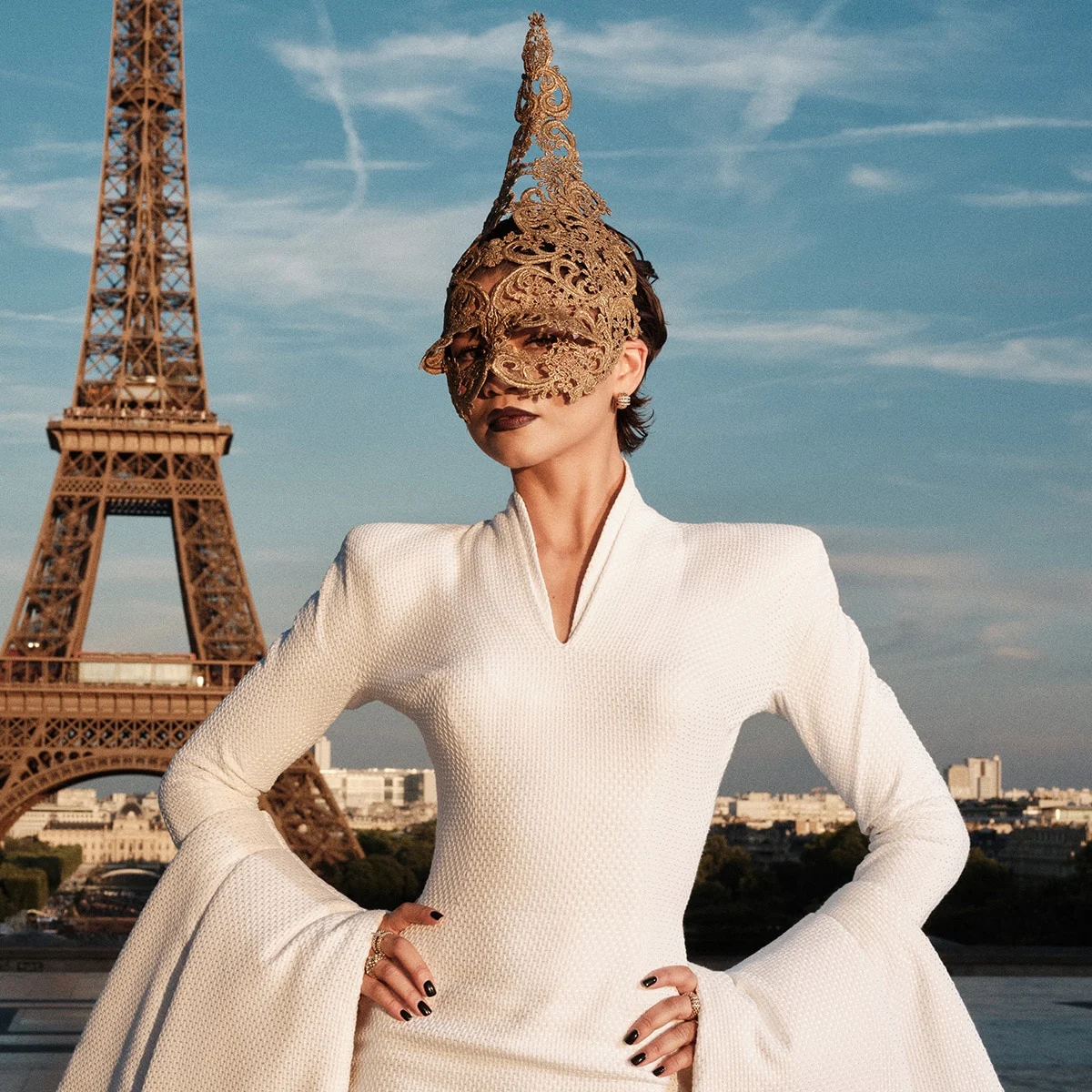
PARIS — In the intersection of cinema, classical mythology, and fashion history, few contemporary figures command the red carpet with the narrative precision of Zendaya. On July 7, the 29-year-old actress solidified her status as a global style icon during the Paris photocall for Christopher Nolan’s highly anticipated cinematic epic, The Odyssey.
Standing against the iconic backdrop of the Eiffel Tower, Zendaya wore a monument of fashion history: a vintage Givenchy Haute Couture gown from the Spring/Summer 1997 collection, designed by the late Alexander McQueen, complete with an original, sculptural headpiece by master milliner Philip Treacy.
The choice was far from a mere aesthetic triumph. It represented a masterclass in "method dressing"—the practice of aligning promotional wardrobes with the thematic, historical, or narrative elements of a film. In The Odyssey, Nolan’s grand adaptation of Homer’s ancient Greek epic, Zendaya stars as Athena, the goddess of wisdom, handicraft, and warfare. By donning a gown from a collection explicitly inspired by Greek mythology, Zendaya and her longtime image architect, Law Roach, bridged a 27-year-old fashion landmark with one of the most anticipated cinematic releases of the decade.
Main Facts: The Intersection of Myth, Cinema, and Couture
The Paris event served as a critical promotional milestone for Christopher Nolan’s The Odyssey, a project that has garnered intense industry attention. The film represents Nolan’s first foray into classical antiquity, translating Homer’s epic poem into a high-concept visual spectacle. Zendaya’s casting as Athena—a deity characterized by her strategic brilliance, strength, and divine authority—set high expectations for her promotional appearances.
To meet the gravity of the role, stylist Law Roach bypassed contemporary custom designs in favor of fashion preservation, sourcing an archival look from Givenchy’s Spring/Summer 1997 Haute Couture collection. The collection, titled "The Search for the Golden Fleece," was Alexander McQueen’s debut couture presentation for the historic French fashion house, drawing direct inspiration from the myth of Jason and the Argonauts.
Key Look Elements
- The Gown: A form-fitting, floor-length white column dress featuring structured, padded shoulders and dramatic, oversized cuff sleeves.
- The Silhouette: Highly tailored, mimicking the clean lines of classical Hellenistic sculpture and the defensive structure of ancient armor.
- The Headpiece: An original 1997 gold filigree mask by Philip Treacy, which begins at the cheeks and rises into a dramatic, cone-shaped peak above the head.
- Accessories: White Christian Louboutin "So Kate" leather pumps and refined fine jewelry from Italian brand Fope.
Chronology: From the 1997 Runway to the 2024 Paris Photocall
To understand the cultural weight of Zendaya’s appearance, one must trace the chronological journey of both the garment and the cinematic project that prompted its revival.
[January 1997] McQueen debuts "The Search for the Golden Fleece" at Givenchy
       │
[March 2024] Law Roach hints at a "symbiotic" archival project with Zendaya
       │
[June 2024] Christopher Nolan wraps production on "The Odyssey" in Europe
       │
[July 7, 2024] Zendaya debuts the S/S 1997 Givenchy look at the Paris Photocall
January 1997: McQueen’s Rite of Passage
In late 1996, a young Alexander McQueen was appointed creative director of Givenchy, succeeding John Galliano. His debut haute couture collection, presented in January 1997 at the École Nationale Supérieure des Beaux-Arts in Paris, was a highly anticipated but controversial event. Titled "The Search for the Golden Fleece," the collection utilized a strict color palette of white and gold.
McQueen sought to merge the elegance of founder Hubert de Givenchy with his own provocative, mythologically charged sensibilities. The runway featured models styled as modern-day Greek gods, goddesses, and mythological beasts, adorned with golden horns, wings, and intricate headpieces crafted by Philip Treacy.
March 2024: The Blueprint of a Style Partnership
In an interview with E! News ahead of the Spring 2024 fashion cycle, Law Roach discussed the meticulous planning that goes into Zendaya’s red-carpet appearances. Describing their working relationship as highly intuitive, Roach noted, "Our relationship is so symbiotic that it could be one dress, it could be a thousand dresses. You just never know." Behind the scenes, Roach and Zendaya had already begun researching archival garments that could conceptually match the grandeur of Christopher Nolan’s upcoming film.
July 7, 2024: The Reveal in Paris
The culmination of this research manifested at the Paris photocall. Zendaya emerged in the exact styling presented on the 1997 runway. Rather than modernizing or altering the archival piece, Roach chose to preserve McQueen’s original vision. The white structured gown, the Philip Treacy gold mask, and the stark styling remained intact, presenting Zendaya not just as an actress promoting a film, but as the physical manifestation of Athena overlooking Paris.
Supporting Data: Design Breakdown and Stylistic Analysis
The success of Zendaya’s Paris look lies in its structural and symbolic details. Both the gown and the headpiece serve as visual metaphors for her character, Athena.
The Gown’s Architectural Power
Alexander McQueen’s tailoring was renowned for its subversion of traditional feminine silhouettes, often incorporating elements of armor. The white Givenchy gown features:
- Padded Shoulders: Creating a sharp, imposing silhouette that evokes the stature of a warrior deity.
- Cuffed Sleeves: Large, structural cuffs that draw attention to the hands, symbolizing the craftsmanship and creation associated with Athena.
- Form-Fitting Crepe: The fabric clings to the body like wet drapery on classical Greek statues (such as the Winged Victory of Samothrace), bridging historical sculpture with high fashion.
| Design Element | Historical/Mythological Reference | Cinematic Significance (Athena) |
|---|---|---|
| White Crepe Silhouette | Classical Greek marble statues / Hellenistic drapery | Divine purity, wisdom, and timelessness |
| Padded Shoulders | Medieval and ancient plate armor | Goddess of strategic warfare and protection |
| Gold Filigree Mask | Corinthian helmets / Divine halos | The hidden, majestic, and intimidating nature of a deity |
The Philip Treacy Mask
The centerpiece of the ensemble was the gold filigree mask designed by Philip Treacy. The piece begins at the jawline, framing the face in intricate gold metalwork that mimics both a protective helmet and a divine crown. It tapers upward into a sharp, cone-shaped point. In the context of The Odyssey, this headpiece functions as a stylized interpretation of a classical Greek helmet, reflecting Athena’s role as a protector of heroes like Odysseus.
Official Responses and Public Reaction
The reaction to Zendaya’s appearance was instantaneous, dominating social media platforms and earning widespread praise from fashion critics, historians, and fans alike.
Social Media and Public Reception
Upon Law Roach sharing a video reel of the look on Instagram, the post quickly went viral, accumulating millions of views and thousands of comments within hours.
Fans highlighted the dramatic juxtaposition of the gold headpiece against the Parisian skyline:
- "We need a second, bro. Honestly, it’s too much!" wrote one user, expressing awe at the complexity of the archival pull.
- Another fan commented on the cinematic staging of the photocall: "The headpiece in front of the Eiffel Tower!!! Are you kidding me?"
- A third commentator summarized the cultural impact of the stylist-muse dynamic: "You’ve simply set the bar too high. I audibly gasped. Who else is doing it like these two?"
Fashion Industry and Critical Acclaim
Fashion critics lauded the look as a rare example of archival fashion executed with historical accuracy and thematic relevance. Industry analysts pointed out that securing a pristine look from McQueen’s debut Givenchy collection—complete with the original runway accessories—requires immense cultural capital and trust from fashion archivists.
By presenting the look exactly as it was shown in 1997, Zendaya and Roach respected the historical integrity of McQueen’s work while proving its timelessness in a modern promotional cycle.
Implications: The Evolution of Red Carpet Promotion
Zendaya’s Paris appearance highlights several shifting paradigms within the entertainment and fashion industries.
The Supremacy of "Method Dressing"
Once a novelty, thematic or "method" dressing has become the standard for major Hollywood press tours. Zendaya and Law Roach have pioneered this movement over the past several years:
- The Dune Press Tours: Incorporating sci-fi-inspired, metallic, and post-apocalyptic designs, including the archival Thierry Mugler 1995 robot suit.
- The Challengers Press Tour: Utilizing custom Loewe and Thom Browne designs that incorporated tennis motifs, pleated skirts, and tennis ball heels.
- The Odyssey Press Tour: Leaning into classical antiquities, drapery, and mythological armor.
This strategy transforms a standard press tour into an extension of the film’s narrative, generating organic press coverage and cultivating deeper engagement from audiences before the film even debuts in theaters.
The Cultural Capital of Archival Fashion
As environmental concerns and appreciation for fashion history grow, the red carpet has increasingly shifted toward archival preservation. Wearing museum-quality vintage pieces from historic collections has become the ultimate signifier of taste and industry status.
By pulling from Givenchy’s 1997 Spring/Summer collection, Roach demonstrated that the most impactful fashion statements do not always require manufacturing something new. Instead, they require the curation of existing masterpieces that can be recontextualized to tell new stories.
The Stylist as an Auteur
The public reaction to the Paris photocall emphasizes the shifting perception of the celebrity stylist. Law Roach is no longer viewed merely as a behind-the-scenes coordinator, but as an artist and co-creator of Zendaya’s public persona. Their 13-year collaboration has redefined how celebrity images are constructed, demonstrating that a successful red carpet appearance can carry the same narrative weight, artistic depth, and cultural impact as the cinematic projects they are designed to promote.
 Sagoh
Sagoh
 Siti Muinah
 Nana
Nana
