

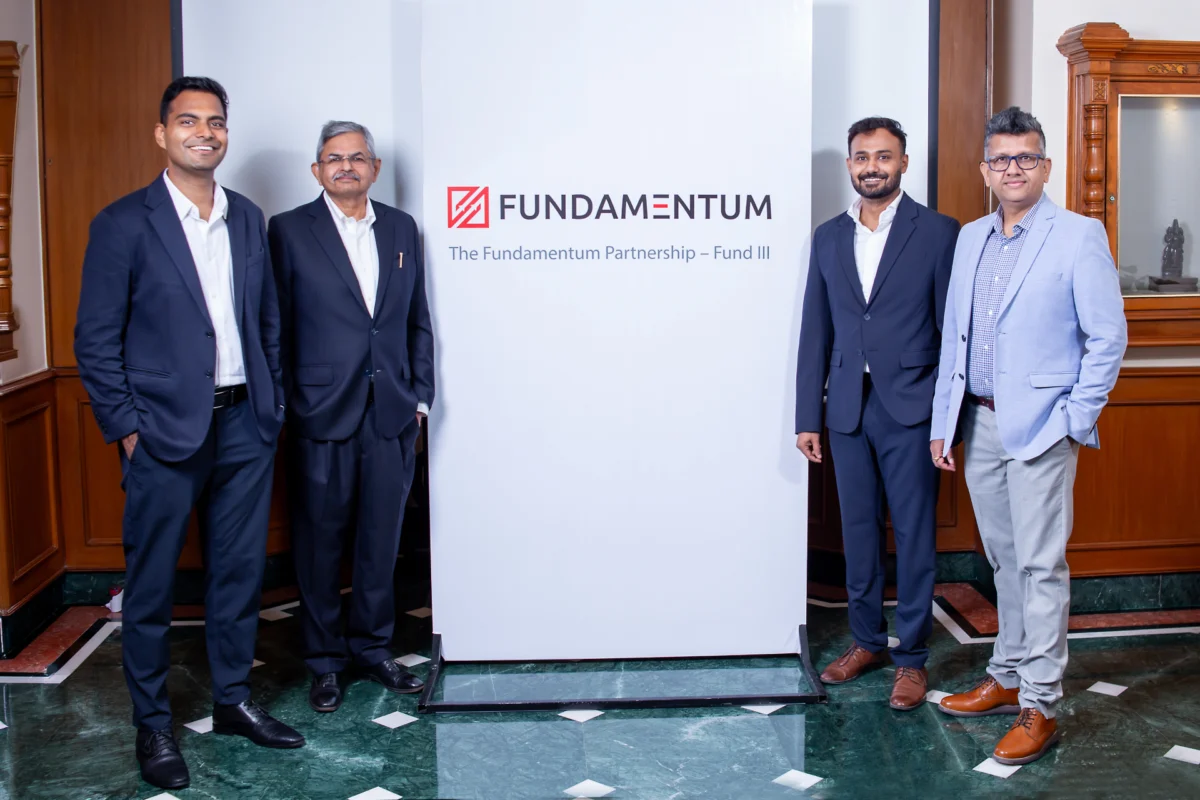
In a significant leadership evolution for one of India’s most prominent venture capital firms, Nandan Nilekani, the co-founder of IT titan Infosys and a towering figure in India’s digital transformation, is stepping down from his role as a general partner at Fundamentum Partnership. The transition coincides with the firm’s official launch of its third fund, which aims to raise approximately $200 million to fuel the next wave of Indian innovation.
Despite stepping back from the day-to-day responsibilities of a general partner, Nilekani will maintain a profound connection to the firm. He will serve as the anchor investor for Fund III and will continue to provide high-level strategic counsel, while maintaining his cherished role as a mentor to the founders within the firm’s portfolio.
The Strategic Shift: A New Chapter for Fundamentum
The move, described by co-founder Sanjeev Aggarwal as “just a title thing,” signals a maturation of the firm’s governance rather than a withdrawal of support. Nilekani, now 71, has spent the better part of the last decade balancing his public service—spearheading India’s digital public infrastructure—with the rigors of venture capital. By shifting to an advisory and anchor investor capacity, Nilekani is effectively institutionalizing his mentorship role, allowing the firm’s operational leadership to expand while ensuring his strategic vision remains a bedrock of the partnership.
“He is an integral part of our firm,” Aggarwal stated in an interview. “The one thing that he enjoys the most is mentoring the teams that we back, and he will continue to do so in Fund III. His involvement remains undiminished; he is simply recalibrating his focus to where he provides the most value—strategic guidance and founder development.”
A Legacy of Digital Transformation
To understand the weight of Nilekani’s involvement in the Indian startup ecosystem, one must look at his unparalleled track record. Beyond his foundational role at Infosys, which helped put India on the global IT map, Nilekani has been the architect of India’s digital backbone.
His leadership in the creation of Aadhaar—the world’s largest biometric identity system—provided the identity layer that enabled financial inclusion for hundreds of millions. This was followed by his tireless advocacy for the Unified Payments Interface (UPI), a real-time, interoperable payment network that has fundamentally altered how India transacts. More recently, he has championed the Open Network for Digital Commerce (ONDC), an initiative designed to break the silos of e-commerce and foster a more open, competitive digital marketplace.
His transition at Fundamentum does not signal an exit from the ecosystem he helped build, but rather a shift toward a legacy-building phase, where his decades of experience serve as a lighthouse for the next generation of Series B and beyond entrepreneurs.
Chronology and Evolution of the Firm
Fundamentum Partnership was founded in 2017 by Nilekani and Sanjeev Aggarwal, the latter having previously played a pivotal role in the success of Helion Venture Partners. The firm was built on a specific thesis: to back high-growth Indian startups at the Series B stage and beyond, providing not just capital but the institutional scaffolding necessary for companies to scale into market leaders.
Over the last seven years, the firm has built a robust portfolio that reads like a who’s who of India’s consumer and digital revolution:
- Spinny: The high-growth used-car marketplace.
- PharmEasy: A leader in the digital healthcare and pharmacy space.
- Kuku FM: A pioneer in the audio storytelling and creator economy.
- AppsForBharat: The company behind the rapidly growing devotional app, Sri Mandir.
The firm has successfully navigated two funds, making 17 strategic investments. According to Aggarwal, the firm has already returned approximately half of the capital from its first fund to its limited partners, a strong indicator of its disciplined investment approach. Fund II is currently in its harvest and follow-on phase, while the newly minted Fund III is designed to capture the next wave of market opportunities.
Broadening the Horizon: The Leadership Team for Fund III
The transition of Nilekani coincides with a strategic expansion of the firm’s leadership. While Aggarwal continues to lead the charge, the weight of the firm’s investment decisions is being distributed among a seasoned cohort of senior partners:
- Prateek Jain: A stalwart who joined Fundamentum at its inception in 2017.
- Mayank Kachhwaha: A fintech expert who joined the firm ahead of Fund II.
- Sanjay Chaturvedi: The firm’s finance chief, who has provided operational stability for nearly a decade.
This expanded leadership team reflects a transition from a founder-led boutique firm to an institutionalized venture capital platform capable of sustaining long-term operations beyond the tenure of its original architects.

The $200 Million Mandate: AI and Consumer Tech
Fund III is setting its sights on eight to ten high-potential startups. The investment mandate is clear: focus on early-stage and growth-stage companies building consumer technology, fintech, and AI-driven products. The firm intends to issue initial checks in the range of ₹100 crore (approximately $10.5 million) per investment.
While the firm has not yet announced a first close, capital deployment has already commenced. Aggarwal anticipates that the full fundraising process will span the next 12 to 18 months, navigating a global environment where capital is increasingly selective.
A crucial distinction in Fund III’s strategy is its focus on the "application layer" of AI. Unlike the U.S. or China, where billions are flowing into the development of foundational large language models (LLMs), Fundamentum believes the greatest opportunity in India lies in building specialized applications on top of existing global models. This includes vertical-specific AI for financial services, content creation, and vernacular language interfaces tailored for the diverse Indian consumer base.
The Maturation of Domestic Capital
The fundraising strategy for Fund III serves as a microcosm for the evolution of the Indian venture capital landscape. Aggarwal notes that the composition of their capital base has shifted dramatically since he started in the mid-2000s.
“When we launched Helion, there was no domestic capital in the country; all the capital was raised from the U.S.,” Aggarwal recalled. “Over the last five years, we are experiencing very strong interest from Indian investors to back venture capital firms. Today, you can build a venture firm with domestic capital.”
Fund III expects to raise roughly half of its $200 million target from international markets, with the remainder sourced from Indian institutions, family offices, and a network of successful founders. This shift indicates a profound increase in the sophistication and risk appetite of the Indian domestic investor class, which now views venture capital as a viable, long-term asset class.
Navigating Departures and Independent Ventures
The transition at the top also follows the departure of general partner Ashish Kumar. Kumar has recently launched an independent venture firm, Fundamentum Frontier Advisors (F2A), with a massive ₹3,000 crore corpus focused specifically on the AI sector.
Significantly, Nilekani is also an anchor investor in F2A, reinforcing his commitment to the AI vertical without being operationally tied to the day-to-day management of the fund. Aggarwal was quick to clarify that F2A is a distinct entity with no operational or structural connection to Fundamentum, and that Kumar is not involved in the management or strategy of Fund III. This clarification highlights the clean break and the specialized focus of the two entities moving forward.
Implications for the Indian Startup Ecosystem
The move by Nandan Nilekani to step back from the general partnership at Fundamentum Partnership is more than a simple corporate restructure; it is a sign of an maturing ecosystem. When founders of Nilekani’s stature transition from active management to "anchor and mentor" roles, it frees up space for the next generation of investment talent to step into the spotlight.
For the startups in the Fundamentum portfolio, the change is likely to be positive. Nilekani’s influence was never predicated on his title; it was rooted in his ability to open doors, provide a strategic vision for digital scale, and act as a sounding board for complex, nation-building problems. By shedding the administrative and fiduciary constraints of a general partner, he may well find more time to engage with the very problems that keep portfolio founders awake at night.
As Fund III begins its deployment, the firm is positioning itself as a hybrid: maintaining the deep, storied expertise of its founding partners while scaling its team to meet the demands of a $200 million fund. With the rise of domestic capital and a clear focus on the application layer of AI, Fundamentum appears well-prepared to navigate the complexities of the next decade of Indian innovation.
Ultimately, Nilekani’s role as the "anchor" provides the stability and credibility that international and domestic LPs seek, while his transition allows the firm to demonstrate that it has built a sustainable institution—one that thrives on collective expertise rather than the presence of a single individual. As the Indian startup landscape continues its rapid evolution, Fundamentum’s latest chapter will likely be viewed as a masterclass in succession and strategic positioning.
 Ammar Sabilarrohman
 Ali Ikhwan
 rifanmuazin
