

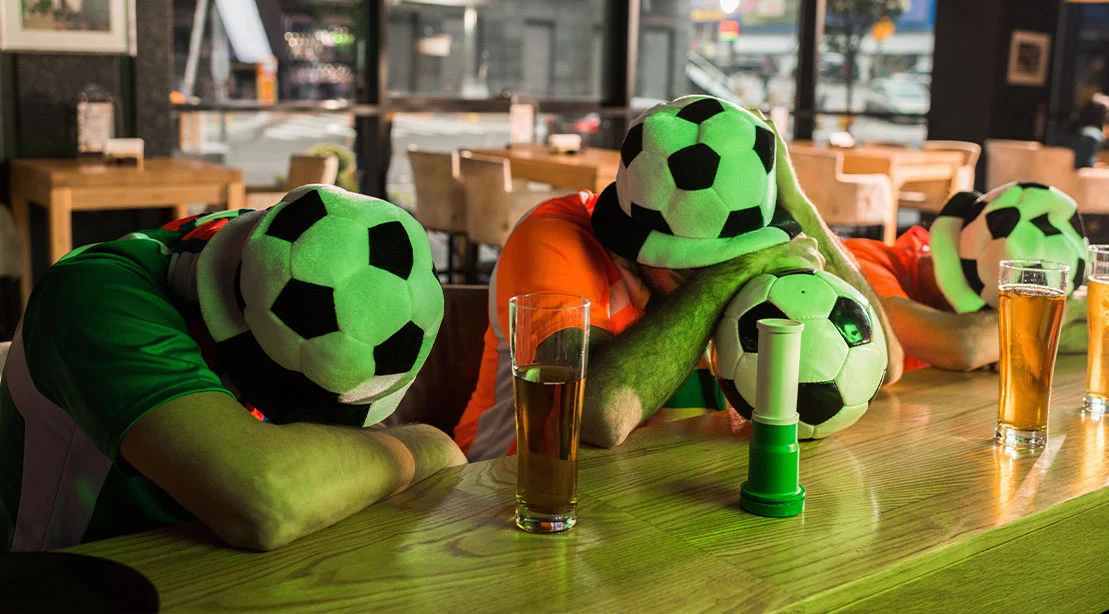
As the 2026 FIFA World Cup grips North America, the continent has become the epicenter of a global sporting phenomenon. With host cities spanning the time zones of Canada, Mexico, and the United States, the tournament has transformed from a mere athletic contest into a 24-hour cycle of exhilaration and exhaustion. While fans in the host nation enjoy prime-time broadcasts, a different reality is unfolding for millions of supporters across the globe. For many, the passion for their national teams is coming at a significant physical cost: a profound and persistent sleep deficit.
The challenge of navigating the clock has become the unofficial "second tournament" of 2026. As supporters in North Africa, the Middle East, and Europe struggle to balance their professional and personal lives with the demands of the world’s most watched sporting event, the question remains: who is sacrificing the most to witness their local heroes chase glory?
The Metrics of Exhaustion: Analyzing the Sleep Deficit
To quantify the impact of the tournament on global sleep patterns, statisticians at LiveScore.com conducted an extensive analysis of the 48 teams competing in the group stage. The objective was to measure the "sleep opportunity lost" for fans following their national teams from afar.
The methodology utilized a standardized 11:00 p.m. to 7:00 a.m. sleep window for each country. Researchers then subtracted 2 hours and 45 minutes for every game that overlapped with this nocturnal window. This specific time frame was calculated to account for the 15-minute pre-match buildup, the two-hour regulation match, and a 30-minute post-match window for commentary and analysis. For nations spanning multiple time zones, researchers utilized the average of the primary civil time zone.
While these figures represent a "potential" loss of sleep rather than a confirmed medical diagnosis of insomnia, the data provides a compelling look at the logistical burden placed on fans. The result is a ranking of national fanbases that have essentially been living in a state of chronic jet lag for the sake of the beautiful game.
The Rankings: Algeria Leads the Charge of the Sleep-Deprived
The data reveals a stark disparity in how different regions have experienced the tournament. Topping the list for the most disrupted sleep is Algeria, whose supporters faced a staggering 8.25 hours of lost sleep during the group stage.
Top Nations by Sleep Opportunity Lost
| Rank | Team | Group | Disrupted Sleeps | Total Sleep Opportunity Lost |
|---|---|---|---|---|
| 1 | Algeria | J | 3 | 8.25 hours |
| 2 | Tunisia | F | 2 | 7.75 hours |
| 3 | Iraq | I | 2 | 7.00 hours |
| 4 | Norway | I | 2 | 6.00 hours |
| 5 | Czechia | A | 2 | 5.50 hours |
| 6 | Sweden | F | 2 | 5.50 hours |
| 7 | DR Congo | K | 2 | 5.50 hours |
| 8 | Saudi Arabia | H | 2 | 5.50 hours |
For Algerian fans, the scheduling was particularly unforgiving. All three of their group-stage matches fell during the deepest hours of the night in local time. This meant that for a dedicated fan, the tournament was not merely a passive viewing experience but an active exercise in endurance, requiring them to set alarms and sacrifice their circadian rhythms to support the "Fennecs."
Following closely behind are Tunisia (7.75 hours) and Iraq (7 hours), both of which saw their fanbases face significant, multi-night disruptions. A further seven nations—including Scotland, Norway, and Saudi Arabia—endured two nights of severely compromised rest. Across the board, 14 other nations saw their supporters sacrifice at least one full night of sleep, proving that for the global football community, the 2026 World Cup is as much a test of stamina as it is a celebration of skill.
The Geography of Advantage: Winners and Losers of the Clock
Not every international fan faced the same struggle. Interestingly, the geography of the tournament created a strange paradox where being on the "opposite side" of the world was often an advantage.
While countries in Europe and Africa bore the brunt of the "middle-of-the-night" kickoff times, fans in Australia, New Zealand, and South Korea were arguably better off. Because of their significant time offset from North America, many matches that were aired in the middle of the night for the Middle East and Africa landed during the late morning or early afternoon in the Asia-Pacific region. Consequently, these supporters were able to tune in without the need to sacrifice their REM cycles.
This creates a fascinating, if unintentional, "geographical divide" in the fan experience. The tournament has essentially created a tiered system of engagement: those who watch in real-time at the cost of their health, and those who benefit from the serendipity of their time zone.
The Knockout Stage: A Higher Stakes Endurance Test
As the tournament progresses, the stakes for the fans are only rising. While teams like Tunisia and Iraq have been eliminated, sparing their supporters further sleep loss, the journey continues for others.
The knockout phase introduces a more erratic schedule, with matches often occurring at times that are even less convenient for international viewers. A prime example is the Round of 32 clash between Algeria and Switzerland. Scheduled for Friday, July 3, at 8:00 p.m. Vancouver time, the match will kickoff at 4:00 a.m. in Algiers. For the Algerian faithful, this represents the ultimate test of loyalty—to wake up in the pitch-black pre-dawn hours, fueled by caffeine and national pride, to watch their team attempt to secure a spot in the final 16.
Sports physiologists have long warned about the dangers of such erratic sleep patterns. During a tournament of this magnitude, the cumulative effect of broken sleep can lead to decreased cognitive function, heightened irritability, and even a weakened immune system. Yet, when asked about the toll, fans remain undeterred. The collective identity forged through the World Cup is, for many, worth the price of a few weeks of exhaustion.
Implications: The Future of Global Sporting Events
The 2026 World Cup serves as a masterclass in the complexities of hosting a truly global event in a hyper-connected world. As FIFA continues to expand the tournament, the logistical challenges regarding time zones will only grow more pronounced.
The "sleep deficit" issue has become a talking point for media outlets and public health officials alike. While it is unlikely that scheduling will ever satisfy every timezone, the 2026 experience is forcing a conversation about how we consume global content. Are we moving toward a future where professional work schedules are adjusted to accommodate the "World Cup season"? Or will the digital age, with its on-demand highlights and replays, eventually replace the tradition of the live, real-time viewing experience?
For now, the consensus among fans is clear: there is no substitute for the live experience. Despite the heavy eyelids, the cold coffee, and the bleary-eyed morning commutes, the thrill of a last-minute goal or a penalty shootout victory in real-time remains the gold standard of sports fandom.
Conclusion: A Labor of Love
As the 2026 World Cup pushes toward its climax, the tournament remains a testament to the enduring power of football. It is a spectacle that defies borders, languages, and—most notably—the limitations of the human clock.
For the millions of fans in Algeria, Tunisia, Iraq, and beyond, the sleep lost is not considered a sacrifice, but a badge of honor. It is a physical manifestation of their commitment to their teams. While the data from LiveScore.com paints a clear picture of the physical toll of this tournament, it fails to capture the intangible joy that thousands of fans feel when they see their team prevail on the world stage.
Whether it is at 2:00 a.m. or 4:00 a.m., when the whistle blows and the ball hits the back of the net, the exhaustion fades. For a brief, glorious moment, the global fan is not tired, not frustrated by the schedule, and not concerned with the next day’s work. They are simply part of a global conversation, united by the beautiful game, proving that for true supporters, the World Cup is not just a sport—it is a way of life that knows no time zone.
 Lina Irawan
 Lina Hope
 rifanmuazin
