

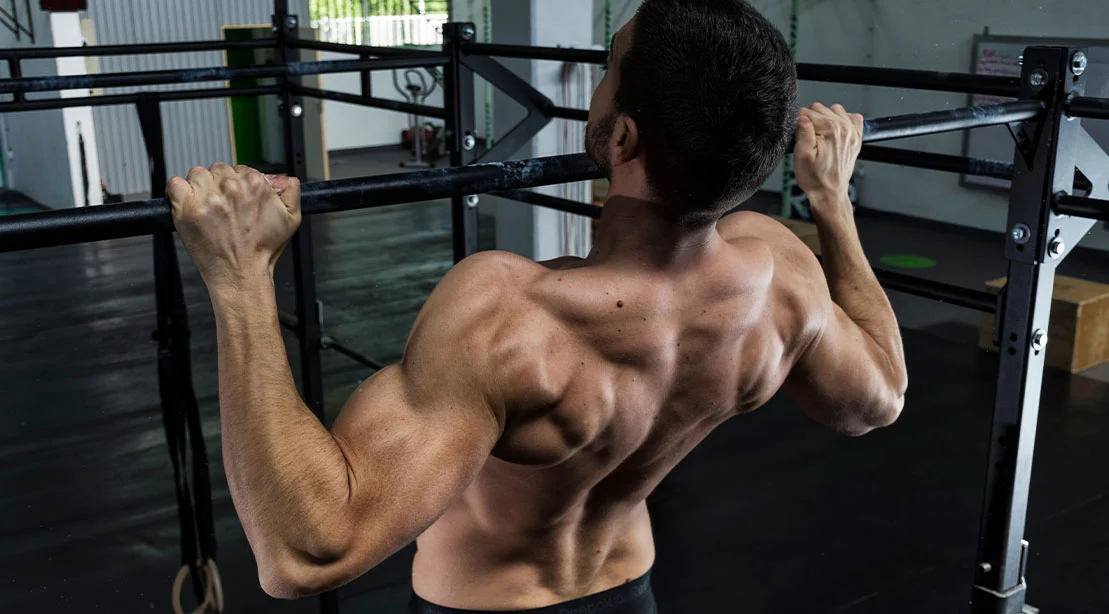
The pull-up and chin-up occupy a hallowed space in the pantheon of strength training. Often referred to as the "upper-body squat," these movements are the ultimate litmus test for relative strength, demanding that an athlete hoist their entire body weight against the relentless pull of gravity. Beyond their utility as a measure of power, they serve as the gold standard for developing a wide, V-tapered back, dense biceps, and a crushing, vice-like grip.
However, a recurring issue plagues the gym floor: many lifters treat the pull-up as a purely arm-centric movement. By focusing solely on pulling with the biceps and forearms, they inadvertently "leak" energy, sacrifice mechanical advantage, and plateau prematurely. To unlock the full potential of these exercises, one must shift the perspective: the rep does not begin when the elbows bend; it begins the moment the hands contact the steel.
The Foundation: Why Setup Dictates Success
In professional strength and conditioning circles, the "first rep" is a misnomer. The true first rep is the setup. Elite gymnasts and bodybuilders understand that a sloppy start leads to a compromised ascent. Without an active hang, a braced core, and engaged glutes, the body behaves like a wet noodle, losing force production through unnecessary oscillations and mechanical inefficiency.
When you treat your body as a single, rigid lever, you ensure that every ounce of force generated by your lats is transferred directly into vertical displacement. Mastering this setup is the difference between struggling for five mediocre reps and performing ten high-quality, hypertrophy-inducing repetitions.
The Seven-Step Protocol for Mechanical Mastery
To optimize your pull-up and chin-up mechanics, follow this structured, seven-step blueprint. By standardizing your approach, you turn a complex movement into a predictable, repeatable process.
Step 1: Strategic Grip Selection
Your grip is your connection to the bar. While the pull-up (pronated, overhand grip) primarily targets the latissimus dorsi and the middle trapezius, the chin-up (supinated, underhand grip) shifts a significant portion of the load onto the biceps brachii.
- The Intent: Do not simply hold the bar; own it. Apply the "intent" cue by squeezing the bar as hard as humanly possible for two seconds before initiating movement. This "irradiation" effect—where force generated in the hands increases neural drive throughout the entire upper body—primes the nervous system for the impending load.
Step 2: Optimizing Hand Position and Width
A common fallacy in fitness culture is that a wider grip equals a wider back. While extreme width can increase the distance between your hands, it also forces the shoulders into a mechanically disadvantageous position, often leading to internal rotation and impingement. A shoulder-width grip, or one just slightly wider, allows for a full range of motion while keeping the shoulder girdle in a stable, healthy alignment.
- The Cue: Think "knuckles to the ceiling." By rotating your knuckles upward, you keep your wrists in a neutral, powerful position, preventing the "soft" wrist syndrome that often leads to early fatigue in the forearms.
Step 3: Rooting and Tension
In powerlifting, "rooting" involves creating tension through the feet to stabilize the body. In pull-ups, you must root through your hands. By pulling the bar "apart," you activate the musculature of the rotator cuff and the serratus anterior. This stability provides a solid foundation from which the lats can exert maximum force.
Step 4: The Active Hang
Many lifters start their reps from a "dead hang," where the shoulders are shrugged up near the ears. This is a dangerous position for the glenohumeral joint. Instead, initiate an "active hang."
- Scapular Depression: Visualize putting your shoulder blades into your back pockets. This movement preloads the lats. By depressing the scapulae before you even begin to pull, you move your shoulders away from your ears, creating the space necessary for the lats to function as the primary movers.
Step 5: Establishing the Kinetic Chain (Core and Glutes)
The core and glutes are the stabilizers that prevent energy leaks. If your legs are dangling, your body is effectively losing tension that could have been used to propel you upward.
- The Plank Method: Brace your abdominals as if you are about to be punched and squeeze your glutes forcefully. This turns your entire body into a rigid plank. If you find your legs swinging, it is an immediate diagnostic indicator that your core engagement has failed.
Step 6: Cervical Spine Alignment
Head position is often overlooked, but it dictates the alignment of the entire spine. Tucking the chin or hyper-extending the neck can lead to rib flare and lower back arching, which shifts the stress away from the lats. Maintain a "neutral spine," keeping your neck in line with your torso. The goal is to drive the chest to the bar, not the chin.
Step 7: The Green Light Checklist
Before the initiation of the pull, pause for one second. Ask yourself:
- Are my shoulders packed?
- Is my core braced?
- Are my glutes engaged?
- Is my grip firm?
If the answer is yes, you have a "green light" to execute the rep.
Implications of Poor Form: Why Most Lifters Fail
Research into biomechanics suggests that when form breaks down, the "Big Muscles" (the lats) yield to the "Small Muscles" (the biceps and forearms). This is why many lifters find their forearms burning long before their back is fatigued.
The Myth of "Chin Over the Bar"
A major contributor to injury and inefficiency is the obsession with "getting the chin over the bar." This often results in the athlete craning their neck, which places significant stress on the cervical spine and leads to "cheating" reps. By focusing on driving the elbows down toward the ribs, the chest naturally rises. When your chest reaches the level of the bar, your chin will have cleared it as a byproduct of perfect mechanics.
The Momentum Problem
Momentum is the enemy of hypertrophy. "Kipping" or using "body English" (swinging the legs) to facilitate the pull reduces the time under tension for the target muscle groups. While these techniques have a place in competitive functional fitness, they have no place in a hypertrophy-focused program. Every rep should begin from a dead stop, utilizing only the contractile force of the back and biceps.
Official Perspectives: The Expert Consensus
Leading strength coaches and physical therapists agree that the longevity of an athlete’s shoulders is directly tied to their ability to maintain scapular control during pulling movements. The "active hang" is not merely a performance hack; it is a clinical necessity for shoulder health. By preventing the humerus from jamming into the acromion during the start of the pull, athletes can sustain high-volume training without the chronic inflammation associated with improper pulling mechanics.
Supporting Data: Why Tension Equals Growth
Mechanical tension is the primary driver of muscle hypertrophy. When you create full-body tension, you increase the amount of force the lats must generate to move your body mass. By eliminating the "leaks" caused by a loose core or swinging legs, you maximize the workload on the muscle fibers themselves.
Studies in electromyography (EMG) consistently show that when the scapulae are depressed and the core is braced, recruitment of the latissimus dorsi increases significantly compared to a loose, dead-hang start. Essentially, the tighter you make your body, the more "weight" your back muscles are forced to move, leading to greater metabolic stress and superior muscle fiber recruitment.
Conclusion: The Path to a Wider Back
The pull-up is an art form. It requires a synthesis of grip strength, core stability, and scapular mobility. By moving away from the "just pull" mentality and adopting the seven-step setup, you transform the exercise from a simple vertical pull into a sophisticated tool for back development.
Remember, the goal is not just to get your body to the bar; the goal is to build a back that commands respect. Master the setup, control the tension, and let the results speak for themselves. The wings you desire are not built by the reps you rush, but by the precision with which you execute every single movement from the moment your hands touch the steel.
 Lina Hope
 rifanmuazin
 Laily UPN
