

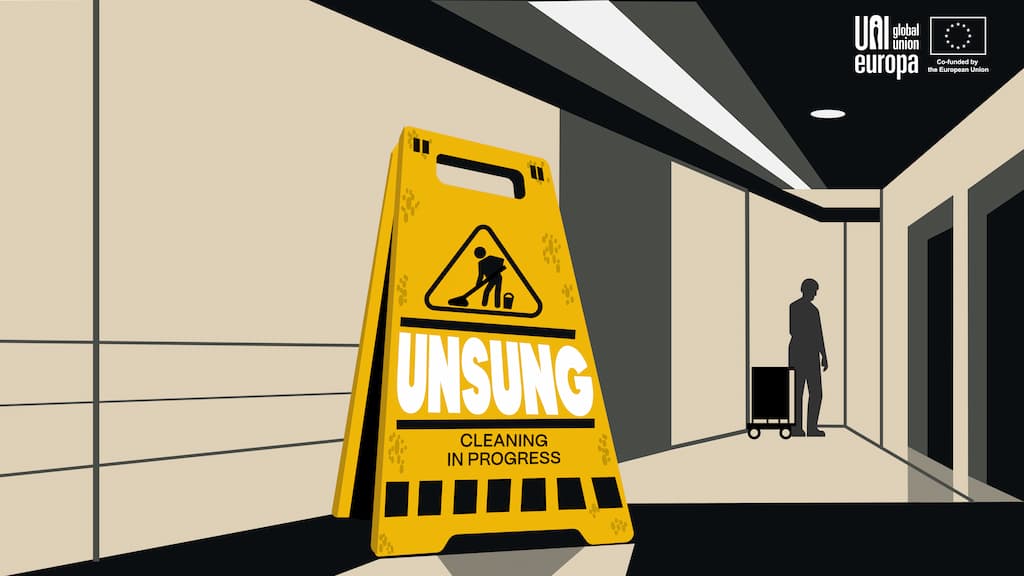
In the modern European economy, there exists a massive, yet profoundly overlooked, professional class: the cleaners. They are the individuals who sanitize our hospitals, maintain the sterile corridors of the European Parliament, and ensure that public infrastructure remains functional. Despite their critical role in maintaining societal health and order, they often remain invisible to the public eye.
A new documentary podcast, Unsung: Cleaners, produced by UNI Europa and co-funded by the European Commission, seeks to change this narrative. By platforming the raw, unfiltered voices of these workers, the series highlights the systemic challenges facing millions, from the precarious nature of night shifts to the structural discrimination embedded in public procurement.
Main Facts: The Voices of the Frontline
Unsung: Cleaners is a four-part audio journey that moves beyond statistics to capture the lived experiences of those who keep Europe running. The podcast serves as an oral history of a labor force that is frequently treated as an afterthought in policy discussions.
Among the featured voices is Hayat Elhore, a cleaner at the European Parliament in Brussels. Her story provides a rare glimpse into the intense, high-security environment of the EU’s legislative hub, where the labor is essential but the recognition is sparse. Similarly, the podcast features Lisa Stenson, an Irish hospital cleaner whose experience on the front lines of the COVID-19 pandemic underscores the literal life-or-death nature of cleaning work.
These stories are not merely personal anecdotes; they represent a broader pattern of "invisible labor." The podcast argues that the dignity of these workers is often compromised by the very systems that employ them, which often prioritize the lowest bidder over the well-being of the staff.
Chronology: The Catalyst for the Podcast
The release of Unsung: Cleaners arrives at a pivotal juncture in European labor history.

- Pre-2026: For decades, cleaning services have been characterized by fragmented labor, with many workers employed through subcontractors. This has led to a race-to-the-bottom in terms of wages and benefits.
- Early 2026: The European Union began a comprehensive overhaul of its public procurement rules. These regulations govern an estimated €2,000 billion in annual public spending.
- Mid-2026: UNI Europa, a federation representing services workers, identified this policy window as a critical moment to advocate for better working conditions.
- July 9, 2026: The official launch of Unsung: Cleaners. The podcast was timed to coincide with ongoing debates within the European Commission regarding how public contracts should be awarded, explicitly aiming to influence the discourse toward social responsibility.
Supporting Data: The Demographics of Disadvantage
The documentary sheds light on a staggering reality: a disproportionate number of European cleaners are from migrant backgrounds. This is not an accidental outcome of the labor market, but rather a direct result of historical and contemporary policy failures.
The Impact of Structural Barriers
The podcast details how several factors contribute to this demographic concentration:

- Discriminatory Immigration Policies: Restrictive visa and residency laws often limit the employment avenues for newcomers, pushing them toward low-barrier entry jobs like cleaning.
- Failure of Qualification Recognition: Many cleaners are highly educated professionals in their countries of origin, but their degrees and certifications remain unrecognized in Europe. This "brain waste" forces skilled workers into low-wage manual labor.
- Labor Market Segmentation: The systematic exclusion of migrant workers from other sectors creates a captive labor pool for the cleaning industry, which can then depress wages without fear of high turnover.
These factors form a cycle that traps workers in a cycle of economic instability. The data presented throughout the four-part series underscores that the "essential" status of these workers, famously lauded during the pandemic, has not translated into the professional recognition or the living wages they deserve.
Official Responses and Labor Advocacy
UNI Europa’s initiative is not merely a journalistic exercise; it is an advocacy tool. By highlighting the connection between public procurement rules and the lived experience of the worker, the union is putting pressure on policymakers to mandate "social clauses" in all public contracts.

These clauses would require private companies bidding for public work to adhere to strict standards regarding fair pay, secure hours, and the right to collective bargaining. The European Commission’s funding of the project signals a growing, albeit slow, recognition within Brussels that the current model of outsourced labor is unsustainable and potentially incompatible with the EU’s stated values of social inclusion.
Implications: Reshaping the Future of Work
The implications of the Unsung: Cleaners project reach far beyond the cleaning industry. It challenges the broader European public to reconsider the value we place on essential, low-visibility labor.

The Procurement Shift
If the EU successfully overhauls its procurement rules to prioritize worker welfare, it could set a global precedent. Moving from "cheapest price" to "best value including social impact" would fundamentally shift how private contractors operate. It would force a transition from high-turnover, low-wage business models to those that prioritize training, retention, and employee well-being.
The Societal Reckoning
The podcast forces a confrontation with the "invisibility" of the worker. When we enter a clean office or a sterile hospital room, the labor that made that environment possible is almost always hidden from view. By putting names and voices to these roles, the project forces listeners to acknowledge the humanity of those who perform the labor we take for granted.

A Call to Action for Listeners
The podcast is available on Spotify and other major platforms, often appearing alongside industry-specific discourse on the "Macrodose" podcast network. The creators hope that by increasing public awareness, they can mobilize a coalition of consumers and voters who demand that public money is spent in a way that respects the dignity of every worker.
The Broader Podcast Landscape
The release of Unsung comes amidst a diverse week in the audio industry. While the documentary serves as a serious call to social action, other sectors of the podcasting world continue to thrive with niche, informative, and entertainment-focused content.

- Cybersecurity Awareness: Security Now, hosted by industry veterans Leo Laporte and Steve Gibson, continues to lead the tech space, providing essential guidance on modern threats like "paste protect."
- Specialized Advocacy: New entries like Senior Pet Talk, hosted by Dr. Amanda Steffen, showcase the rise of highly specialized, service-oriented audio content that helps listeners navigate complex life transitions.
- Cultural Analysis: The success of shows like The Five Star Weekend Official Podcast demonstrates the enduring power of transmedia storytelling, where popular literature is translated into immersive audio experiences.
- Political Engagement: Occupy! An Unfinished Uprising serves as a reminder of the power of collective action, mirroring the themes of the Unsung project by looking at historical movements that sought to change the status quo.
Conclusion: The Path Forward
The story of the cleaning workforce is a story about the foundations of our society. Every hospital, school, and government building functions only because these individuals arrive early, stay late, and perform the work that others avoid.
As the European Union moves toward a new era of procurement reform, the voices in Unsung: Cleaners serve as a vital reminder that policy is not just about euros and efficiency—it is about the people whose lives are dictated by those rules. By giving these workers a platform, UNI Europa is not just telling their stories; they are demanding a future where "essential" work is finally met with essential respect.

As listeners engage with these stories, the hope is that they will carry the message into their own communities: that the most important work is often the quietest, and that those who clean our world deserve a seat at the table where its future is decided.
 Asep Darmawan
 Jia Lissa
 Neng Nana
