

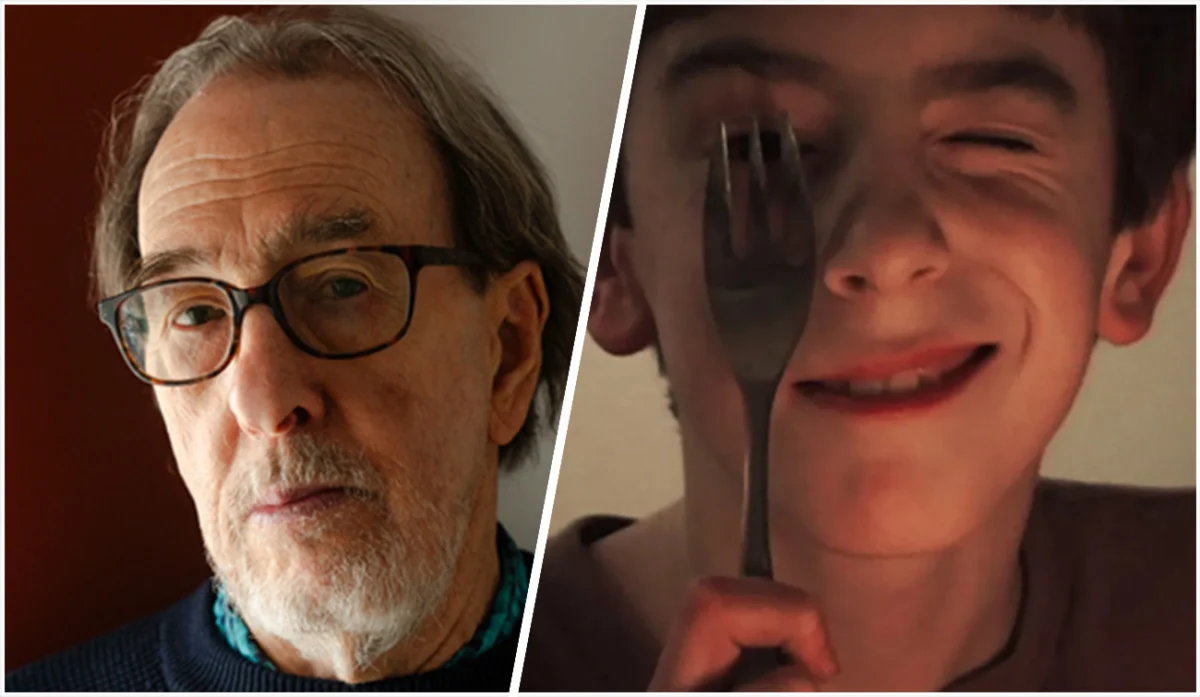
Forty years after its original release, Ross McElwee’s Sherman’s March remains a seminal artifact of American documentary filmmaking. Often cited as the definitive text of "confessional cinema," the film—which began as a straightforward attempt to retrace the path of General William Tecumseh Sherman’s Civil War campaign—devolved into a deeply personal, meandering exploration of the filmmaker’s own romantic insecurities.
As the film receives a 4K restoration and a nationwide theatrical re-release this year, its legacy feels more relevant than ever. In an era defined by the digital "selfie" and the perpetual, curated documentation of one’s daily existence, McElwee’s 1986 masterpiece stands as a progenitor of the genre. Yet, the milestone is not merely a celebration of the past; it is the prologue to a much more harrowing chapter in the director’s life. With the release of his latest film, Remake, McElwee bridges the gap between his youthful search for love and the devastating reality of middle age, marked by the tragic death of his son, Adrian, to fentanyl abuse.
The Genesis of an Introspective Style
Ross McElwee’s career has always been defined by a refusal to separate the filmmaker from the subject. A North Carolina native, he cut his teeth on short films like Charleen and Backyard, which focused on his immediate social circle. These early projects established a technique that would define his later work: using his own voice and presence from behind the camera to filter the lives of those around him.

"I was trying to find a way as a young filmmaker of taking things I liked about cinema vérité, direct cinema, and adapting them to something I felt more comfortable with," McElwee told Gold Derby in a recent interview. By forgoing a formal sound crew or a large production team, McElwee was able to move through his subjects’ lives with an intimacy that felt organic rather than staged. This approach allowed him to capture the Southern congeniality of his subjects while maintaining the artistic rigor of a street photographer.
When he set out to make Sherman’s March, he had no intention of making himself the protagonist. However, as the film progressed, his lack of direction—both geographically and romantically—became the narrative itself. The film’s success, which included the 1987 Grand Jury Prize at the Sundance Film Festival and eventual preservation in the U.S. National Film Registry, proved that audiences were hungry for a documentarian who was willing to admit his own confusion.
Chronology: From the Civil War to the Crucible of Grief
The connection between Sherman’s March and Remake is not merely one of theme, but of structure. Both films follow a pattern of "one thing leading to another," a hallmark of the observational style that McElwee credits to masters like Frederick Wiseman.

In Sherman’s March, the "march to the sea" became a metaphor for his search for a life partner. In Remake, the narrative is more fractured and painful. The film began as a chronicle of a proposed Hollywood adaptation of Sherman’s March, but the production was derailed by the sudden and senseless death of his 27-year-old son, Adrian.
The transition from the lighthearted, romantic desperation of the 1980s to the visceral, grief-stricken reality of the present creates a jarring, powerful double feature. While Sherman’s March looks forward, brimming with the possibilities of a life yet lived, Remake looks backward, attempting to reconcile the memories of a child with the tragic end that awaited him.
Supporting Data: The Weight of Personal Documentary
The technical evolution between these two projects highlights the shift in McElwee’s perspective. Sherman’s March was shot on 16mm film, a medium that required discipline due to the limited amount of footage available. Remake, by contrast, is a digital endeavor, allowing for a more fluid, albeit more obsessive, look at his personal archives.

The film includes a poignant, emotionally charged montage—conceived by editor Joe Bini—that alternates angles between McElwee and his son, Adrian. This sequence, born from a period of profound artistic and personal blockage, serves as the emotional anchor of Remake.
"I think I was somehow on autopilot as I was filming all of this," McElwee reflected. "Of course, after he died and when I looked at the footage, I’m thinking, ‘This is so moving and so incredible that he could be so articulate and hopeful about where he was headed, and yet look where he’s ended up.’"
Official Perspectives and the Ethics of Observation
The central tension of Remake lies in the question of whether the act of documentation is a benefit or a burden. McElwee grapples with whether his own profession as a documentarian might have influenced his son’s worldview. Did the constant presence of the camera create a distance between father and son? Or did it serve as a bridge?

McElwee admits that in his final interactions with Adrian—who asked his father to film him as he attempted to document his own struggle with addiction—he remained "perhaps naively assuming that eventually he’ll be fine." This second-guessing of his own perception is what gives Remake its devastating weight.
Despite the tragedy, McElwee maintains a cautious hope that the film might serve a purpose for the millions of families currently affected by the opioid and fentanyl crisis. "I did hope there would be some way that if they wanted to see this film, they would find some solace in it or something telling them, ‘You’re not alone,’" he said.
Implications for the Future of Documentary Cinema
The dual release of these films prompts a broader discussion about the role of the filmmaker in the digital age. In a world where everyone is a documentarian of their own life via social media, McElwee’s work is a reminder that the truth is rarely found in the frame, but in the space between the camera and the heart.

His willingness to show the "errors of judgment" and the "comic intent" of his earlier years provides a masterclass in honesty. When asked if the process of making and discussing Remake has brought him comfort or catharsis, McElwee is hesitant. "Every time I go to the screening of Remake, it’s just reliving the whole horror of losing him over again," he admits.
Yet, there is a sense of completion in his reflection on his career. Having once famously pursued Burt Reynolds as part of his narrative—a subplot that became legendary in documentary circles—McElwee has moved from the peripheral search for celebrity to the central, harrowing search for meaning. As he looks back on his body of work, he acknowledges that the journey has been long and often painful, but it has granted him a unique clarity.
"It’s made my life and enabled me to keep going as a filmmaker," McElwee said. "I’ve done that. Now I can do whatever I want to do."

As audiences sit with the 40-year arc of these two films, they are invited to consider not just the history of the American South or the history of a family, but the history of the self. Ross McElwee has shown that while the "march" may never truly end, the act of filming it is the only way to ensure the journey is never forgotten.
 Iffa Jayyana
 Dwi Wanna
