

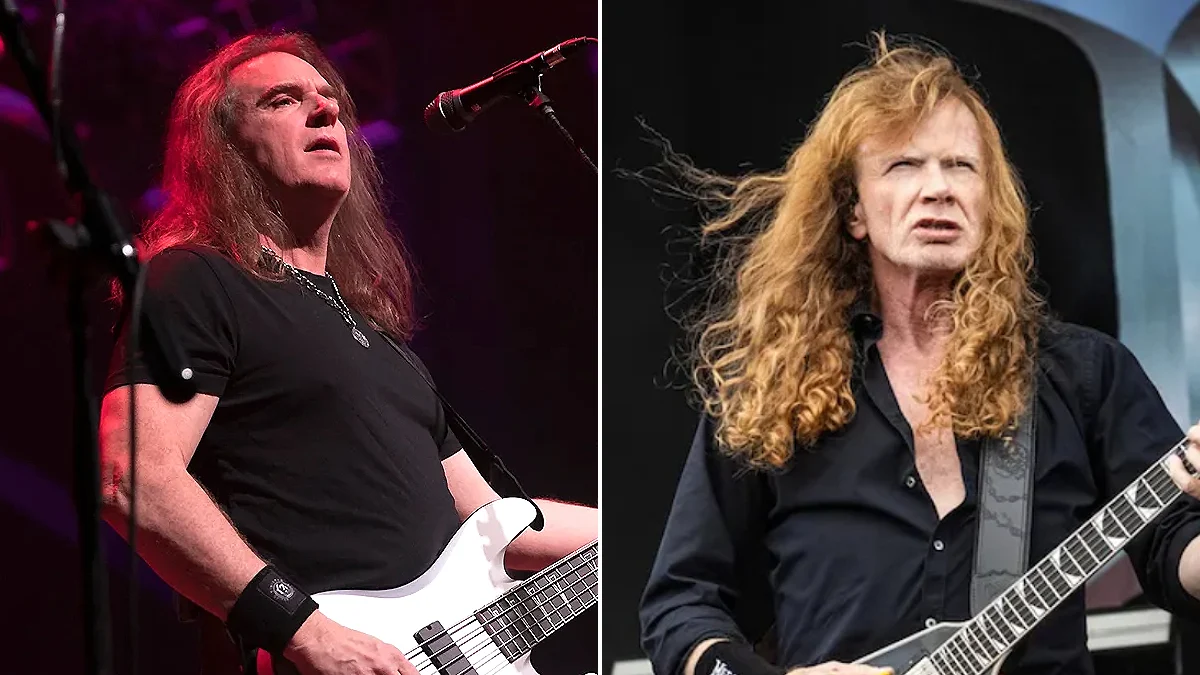
The history of heavy metal is littered with fractured partnerships and the dissolution of iconic lineups, but few narratives are as complex or as enduring as the dynamic between Dave Mustaine and David Ellefson. For decades, the two served as the dual heartbeat of Megadeth, the thrash metal juggernaut that defined a generation. However, following his 2021 departure, bassist David Ellefson has offered a candid assessment of the band’s trajectory, suggesting that in his absence, the entity known as Megadeth has effectively transformed into a vehicle for Dave Mustaine’s solo vision.
The Nature of the Partnership
In a recent, wide-ranging interview with SiriusXM host Eddie Trunk, Ellefson addressed the elephant in the room: the possibility of a return to the band that made him a household name. When asked about his perspective on the current state of Megadeth, Ellefson’s response was measured yet pointed.
"When I’m not in Megadeth, I always look at it like it’s Dave Mustaine’s solo band," Ellefson stated. "That’s just how I look at it. And not that it’s good, bad, or otherwise; it’s just different. To me, it just is a different feel than the Megadeth of Ellefson and Mustaine together."
This distinction highlights the nuance of the "Megadeth sound." For fans, the interplay between Mustaine’s jagged, technical riffing and Ellefson’s melodic, grounded bass work formed the bedrock of classics like Rust in Peace and Countdown to Extinction. By framing the current iteration as a solo project, Ellefson isn’t necessarily critiquing the musical proficiency of the current lineup, but rather emphasizing the chemical synergy that he believes defined the band’s most fertile periods.
A Chronology of Conflict and Reconciliation
To understand the weight of these comments, one must look at the turbulent history shared by the two men. Their relationship has been defined by a cyclical pattern of collaboration, acrimony, and reconciliation.
The Formative Years (1983–2002)
Formed in Los Angeles in the wake of Mustaine’s departure from Metallica, Megadeth was built on the foundation of the Mustaine-Ellefson partnership. Through the 80s and 90s, they navigated the highs of global superstardom and the lows of internal strife. However, the first major fracture occurred in 2002, when the band officially disbanded due to Mustaine’s arm injury and subsequent burnout.
The First Pivot (2004)
When Mustaine began the process of reassembling the band in 2004, the air was thick with the hope of a full Rust in Peace lineup reunion. That reunion did not materialize, leading to a period where Mustaine utilized a rotating cast of musicians. It was during this period that Ellefson first began to perceive the band as a solo project. "When Dave put the group back together… I said to Dave in 2004, which was the first time trying to put it back together as a band, which really kind of turned out to be more of a solo [project]," he reflected to Trunk.
The Second Era (2010–2021)
In 2010, the "prodigal son" returned. Ellefson’s homecoming was celebrated by the metal community as a restoration of the band’s true identity. For over a decade, the duo toured the globe, solidifying the Megadeth legacy. This era, however, ended abruptly in May 2021, when the band announced they were parting ways with the bassist following the leak of sexually explicit private videos online—an event Ellefson later described as a deeply embarrassing personal ordeal.
Supporting Data: The "Solo Record" Critique
Ellefson’s recent interview is not an isolated instance of him questioning the band’s identity. In February 2026, during an episode of his podcast, Ellefson provided a critique of the final Megadeth album. He noted that, to his ears, the composition lacked the collaborative tension that historically fueled the band’s output.
From an industry perspective, the term "solo project" often carries specific weight. In the context of metal, it implies a move toward a more centralized creative control, where the primary songwriter—in this case, Mustaine—retains absolute authority over the direction, lyrics, and production. Whether or not this has resulted in a decline in quality is a matter of intense debate among the fan base, with many pointing to the band’s continued success on the charts as evidence that the "Megadeth brand" remains strong regardless of the personnel involved.
Official Stances and The Farewell Tour
The current climate between the two musicians remains cold. Following his departure, Mustaine has been vocal about his desire to move forward, effectively closing the door on the possibility of a "classic" reunion for the band’s current farewell tour.
In January 2026, Mustaine explicitly stated that he did not intend to bring back former members for the final run of shows. This decision reflects a desire to curate a specific, controlled legacy for the band’s conclusion. While fans often clamor for the "O.G." lineup, the management of Megadeth has consistently prioritized a streamlined, current-lineup approach.
Implications for the Metal Landscape
The discourse surrounding Ellefson and Mustaine underscores a larger trend in legacy acts: the struggle to define the "soul" of a band when its primary architect remains while its long-term collaborators are swapped out.
The "Brand vs. Band" Dilemma
When a band reaches the status of Megadeth, it becomes more than a collection of musicians; it becomes a brand. The implication of Ellefson’s "solo band" comment is that the brand has overtaken the collaborative spirit. If the audience perceives the current Megadeth as Mustaine’s solo project, does it change their consumption habits? Evidence suggests that for most, the name on the marquee is sufficient. However, for purists, the absence of the "Ellefson/Mustaine" dynamic represents a fundamental shift in the band’s artistic output.
The Future of the Participants
As both parties move into new chapters, their paths have diverged significantly:
- David Ellefson: Having joined the veteran metal act Metal Church, Ellefson is currently focusing on his own creative renewal. The release of Dead to Rights in April 2026 marks a new beginning for him, and the upcoming North American tour with Armored Saint suggests a desire to remain relevant within the scene that defined his career.
- Megadeth: As they prepare for the "Run For Your Lives" tour alongside Iron Maiden and Anthrax, Megadeth is solidifying its place in the history books. By aligning with other titans of the "Big Four," they are emphasizing their status as a foundational pillar of thrash metal, regardless of the internal lineup changes that have occurred over the decades.
Conclusion
The dialogue between Dave Mustaine and David Ellefson is more than just a public spat; it is a meditation on the nature of creative ownership. Ellefson’s admission that he views the current iteration of Megadeth as a "solo project" is an honest assessment of his own displacement. It speaks to the reality that in the world of high-stakes, legendary rock bands, the line between a collective effort and an individual’s vision can become irrevocably blurred.
As Megadeth enters its final stages, the legacy of the band will likely be measured by the music it produced during its most collaborative years. Whether fans view the modern era as a continuation or a departure, the undeniable truth remains: the interplay between the architect, Dave Mustaine, and his longtime foil, David Ellefson, was the spark that ignited one of the most influential careers in heavy metal history. As they move forward on separate paths, they leave behind a catalog that ensures their names will be forever intertwined, even if the stage they share is now a thing of the past.
 Pevita Pearce
 Asro
Asro
 Lina Irawan
