

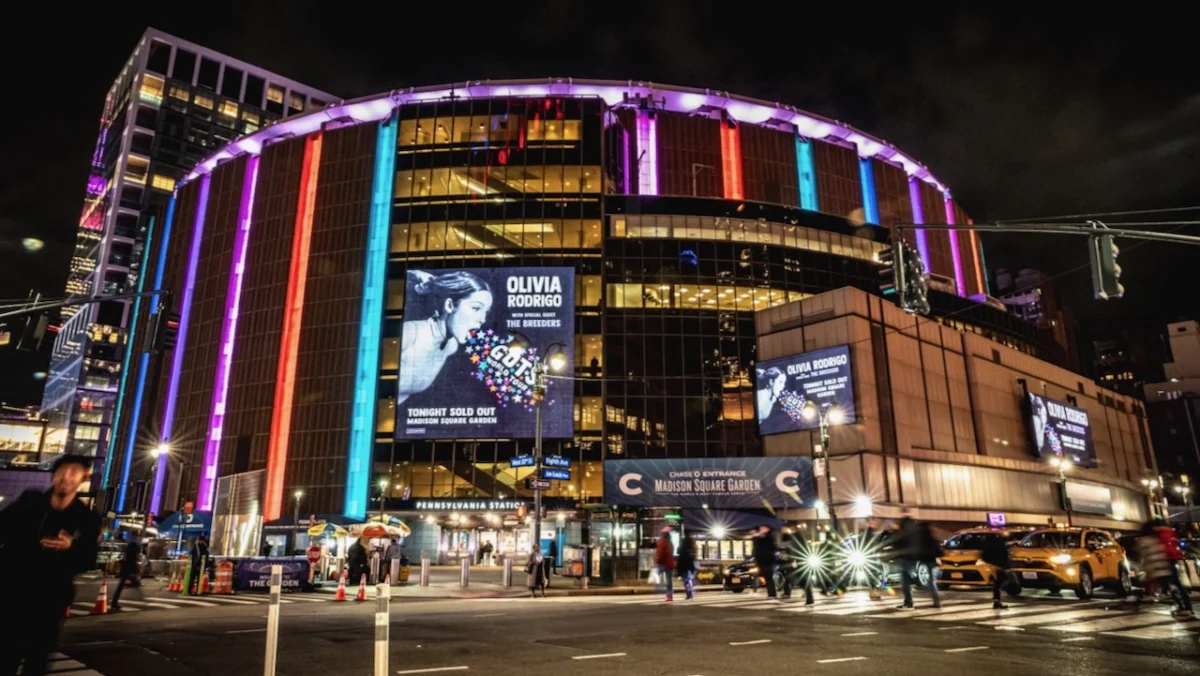
In a revelation that has sent shockwaves through the entertainment industry and civil rights advocacy groups, it has been disclosed that Madison Square Garden (MSG)—the world’s most famous arena—has been maintaining an extensive internal database that categorizes celebrities, musicians, and public figures based on perceived "risk" levels. The database, which reportedly encompasses nearly 40,000 individuals, goes beyond simple security logistics, extending into the controversial cataloging of personal characteristics, including race, gender, and sexual orientation.
The existence of this "talent" database, which also extends to the Sphere in Las Vegas—another property under the umbrella of James Dolan’s MSG Entertainment—was unearthed following a massive data breach. Hackers, having successfully compromised the company’s internal servers, ransomed the sensitive information, leading to the public disclosure of a system that appears to treat high-profile guests as potential liabilities.
The Architecture of the “Risk” List
According to an exhaustive report by WIRED, the MSG database is not merely a list of names; it is a granular tracking system that assigns individuals into specific, tiered risk categories. These designations range from "flagged" to "low," "medium," and "high" risk.
The criteria for these labels remain opaque, yet the list includes a dizzying array of talent. "High risk" designations have been applied to prominent hip-hop artists such as Freddie Gibbs, Lil Jon, DaBaby, and A Boogie Wit da Hoodie. Meanwhile, "medium risk" tags were assigned to cultural icons including Vogue editor-in-chief Anna Wintour, actor David Harbour, and musicians Lily Allen and Morgan Wallen. Even legendary New York hip-hop fixtures like Jadakiss and Fat Joe—both of whom are vocal, long-standing supporters of the New York Knicks—found themselves labeled as "medium risk."
The "low risk" category, while seemingly benign, includes a wide spectrum of the A-list, ranging from NFL personality Michael Strahan and actress Mariska Hargitay to pop sensations like Ice Spice and Selena Gomez. Further down the hierarchy, the database contains individuals who are simply "flagged," such as Daisy Jones and the Six actor Will Harrison, or included without any specific risk designation at all, such as the members of The Lox.
The Documentation of Personal Identity
Perhaps the most disconcerting aspect of the database is its inclusion of sensitive demographic data. In addition to risk tiers, the system explicitly tagged individuals with an "LGBTQIA" designation. This list includes 92 individuals, among them Ricky Martin, singer-songwriter Phoebe Bridgers, and Emily Green of the band Geese.
The systematic recording of sexual orientation within a corporate security database raises significant ethical and potential legal questions. While MSG has yet to provide a comprehensive explanation for why such data points were deemed necessary for venue management or security, the inclusion of this information suggests a level of surveillance that far exceeds the standard requirements for crowd control or VIP hospitality.
A Chronology of Surveillance and Controversy
The current scandal is not an isolated incident; rather, it represents the latest chapter in a long-standing pattern of behavior at Madison Square Garden under the leadership of James Dolan.
- 2023: Madison Square Garden made national headlines for its aggressive use of facial recognition technology. The arena utilized the software to identify and eject attorneys from law firms that were currently involved in litigation against the venue. The practice was widely condemned by civil liberties groups as a "weaponization" of technology to stifle legal accountability.
- 2023–2025: While the legal challenges regarding the use of facial recognition were eventually decided in favor of MSG, the public sentiment toward the arena’s security practices remained fractured.
- July 2026: The current "risk list" controversy erupts following the data breach. The disclosure reveals that the surveillance practices were not limited to lawyers in litigation, but extended to a vast database of the cultural elite.
- July 2026 (Ongoing): As the news spreads, various celebrities mentioned in the database have begun to react. Freddie Gibbs took to social media, expressing confusion over his inclusion, while questions continue to mount regarding the legal standing of maintaining such a database.
Decoding the Motivations: Criticism and Retaliation
The "risk" labels appear, in some instances, to be a direct response to public criticism of MSG management. The database features a specific designation of "not to be hosted" or "do not host," which effectively denies individuals complimentary tickets to events.
Among those blacklisted from complimentary access are actress Julia Fox, comedian Adam Pally, and producer Pete Rock. The common denominator among these individuals is their public criticism of James Dolan and the management of the New York Knicks.
For instance, Pally’s file in the database allegedly includes a memo explicitly citing "previous comments" as the reason for his status. Similarly, Pete Rock has been a vocal proponent of boycotting the arena due to his dissatisfaction with the ownership. When questioned on the apparent irony of labeling loyal fans as "risks," industry analysts have suggested that the database functions as a mechanism of control, designed to punish dissenters and maintain a sanitized environment around the venue’s ownership.
However, the logic remains inconsistent. Fat Joe, for example, was labeled "medium risk" despite being a staunch defender of the organization and participating in the Knicks’ 2026 championship victory parade. This inconsistency suggests that the list may be a byproduct of a broader, poorly managed data collection effort, or that the criteria for "risk" are fluid and subjective.
The Implications of Corporate “Talent” Management
The fallout from this leak invites a broader conversation about the state of privacy in the entertainment industry. When a private corporation creates a massive, searchable database of the public—including their sexual orientation, their political stances, and their social standing—it shifts the power dynamic between the venue and the individual.
Legal and Ethical Concerns
From a privacy perspective, the collection of sexual orientation data by a private corporation is arguably a violation of the implicit trust between a venue and its patrons. While the legality of such lists in New York may be shielded by private property rights, the moral implications are significant. If venues can systematically blacklist those who criticize their owners, it threatens to silence public figures who might otherwise use their platform to call for institutional change.
The Normalization of Surveillance
The use of facial recognition in 2023 was the "canary in the coal mine." Now, the "risk list" demonstrates that surveillance is not just about physical security; it is about ideological and behavioral monitoring. For the artists who perform at MSG, this creates an environment where they are effectively "auditioning" for the venue’s approval even when they are off the clock.
Conclusion: A Reputation in Question
The revelation of the Madison Square Garden risk database has cast a long shadow over the venue’s reputation. While the arena remains a cultural institution, the disclosure that it maintains a 40,000-name database—complete with demographic tracking and arbitrary risk labels—has alienated fans, celebrities, and privacy advocates alike.
As the industry grapples with the aftermath of the breach, the burden of proof rests on MSG Entertainment to justify the necessity of these records. For now, the "Risk List" stands as a grim reminder that in the modern era of high-tech venue management, the audience is no longer just watching the show—the arena is watching them back.
Whether this will lead to legislative action or a change in the corporate governance of Madison Square Garden remains to be seen. However, one thing is clear: the relationship between the world’s most famous arena and the people who fill its seats has been fundamentally altered. For those on the "high risk" list, the question is no longer when they will next perform at the Garden, but whether they would ever want to step foot inside again.
 Pevita Pearce
 Asro
Asro
 Lina Irawan
