

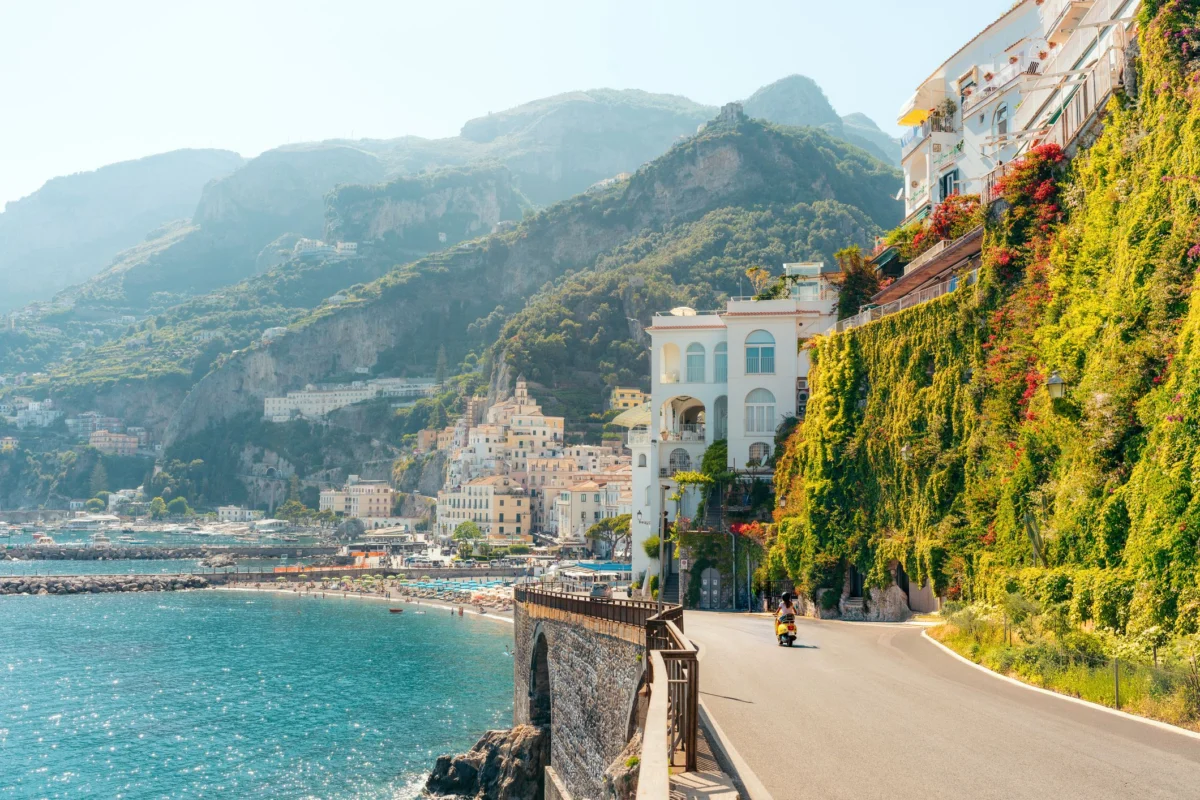
When global pop sensation Dua Lipa and actor Callum Turner’s Italian getaway hit social media feeds this summer, it didn’t just spark headlines—it confirmed a secret that seasoned travelers have known for years. The visual diary of their trip, characterized by sun-drenched palazzos, Mediterranean blues, and the understated elegance of the Italian coast, felt remarkably familiar to those who have meticulously curated their own escapes through the country’s most exclusive enclaves.
By a serendipitous alignment of taste, the route chosen by the couple mirrors a path that is rapidly becoming the gold standard for the "sophisticated summer" in Italy. From the gritty, soulful streets of Palermo to the refined, history-steeped corridors of the Roman coast and the chic port towns of Tuscany, this is a journey that balances high-octane luxury with the raw, authentic texture of the Italian peninsula.
The Geography of Elegance: A Strategic Itinerary
For the discerning traveler, the genius of this specific Italian route lies in its coastal focus. By tracing the "middle" of the Italian boot—the region that stretches south of the rolling hills of Tuscany and north of the lemon-scented drama of the Amalfi Coast—travelers can experience a constant evolution of scenery while maintaining a straightforward, manageable transit path.

The itinerary serves as a masterclass in regional variety. It avoids the tired traps of mass-market tourism, opting instead for a blend of design-led hospitality and "insider" locations that offer intimacy without sacrificing style. Whether one chooses to navigate this route via private yacht or the more pragmatic, time-efficient network of overnight ferries and high-speed trains, the bones of the trip remain consistently breathtaking.
The Sicilian Opening: Palermo and Scopello
The journey typically begins in Sicily, a land of intense contrasts. Palermo, the regional capital, is an atmospheric, gritty, and vibrant urban center that serves as the perfect sensory introduction to the trip.
Travelers are increasingly gravitating toward boutique stays like L’Hotellerie, moving away from standardized luxury in favor of properties that reflect the city’s layered history. Culinary exploration here is essential: from the hidden, monastic sweetness of I Segreti del Chiostro—a bakery tucked away in an ancient convent—to the evening ritual of wine and street-perching at Dal Barone, Palermo offers a visceral, unpretentious charm.

Just beyond the city limits, the landscape shifts. For those seeking the iconic, crystalline waters of Sicily, Scopello is non-negotiable. Its famous tonnara (tuna museum) and the surrounding cove have become synonymous with Sicilian beauty. While these spots have gained significant traction on social media, they retain an inherent, rocky ruggedness that keeps the experience grounded.
Chronology of the Route: A Two-Week Transformation
The transition from the southern tip of the peninsula toward the heart of Italy requires logistical agility. While the ultra-wealthy may opt for private aviation or helicopter transfers, the "sophisticated traveler" alternative is the overnight ferry.
The Naples Connection
Boarding a ferry at 8:00 p.m. to arrive in Naples by 7:00 a.m. provides a unique, if humble, experience. While it may not offer the same level of opulence as a luxury hotel, it is a practical, budget-conscious, and oddly romantic way to wake up in one of Italy’s most energetic cities. For those who prioritize comfort, booking a premium cabin with an en-suite ensures that the arrival in Naples is seamless rather than sleep-deprived.

The Amalfi Fantasy
From Naples, the route moves into the Amalfi Coast. To avoid the overwhelming saturation of places like Positano, modern travelers are turning to Monastero Santa Rosa in Conca dei Marini. This 17th-century monastery, which once housed wool-clad nuns baking signature pastries, offers a sanctuary of arched ceilings and cascading terraces. It provides the quintessential Amalfi view without the intrusive atmosphere of a tourist-heavy thoroughfare.
The Roman Coast: The Heart of the Journey
The move to the Roman coast represents a shift toward quiet exclusivity. Ladispoli and the surrounding area offer a deep dive into history, punctuated by visits to the medieval Castello di Odescalchi. However, the crown jewel here is undoubtedly La Posta Vecchia.
Once the private hideaway of J. Paul Getty, this property remains the gold standard for design-led hotels. With its yellow umbrellas, vaulted indoor pool, and rooms filled with genuine, centuries-old antiques, it is the ultimate realization of la dolce vita. Staying in rooms like the "Red Room" or the legendary "Medici Suite" allows guests to live, if only for a few days, in a space that feels more like a private museum than a commercial hotel.

Supporting Data: The Rise of Design-Led Hospitality
The popularity of this route is not coincidental; it is a response to a growing demand for "design-led" travel. Industry data indicates a 22% increase in bookings for hotels that emphasize historical preservation combined with contemporary interior design. The Il Pellicano Group, which manages both La Posta Vecchia and the original Il Pellicano in Porto Ercole, has become the benchmark for this movement.
Their properties are characterized by:
- Historical Continuity: Utilizing existing architecture rather than building new structures.
- Curated Aesthetics: Incorporating 1960s design classics, from Arco floor lamps to Cassina armchairs.
- Exclusivity: Maintaining a boutique size to ensure the ratio of staff to guests remains high, often resulting in a guest list dominated by locals and seasoned European travelers.
Official Responses and Industry Sentiment
Hospitality experts suggest that the "celebrity effect" has indeed accelerated interest in these specific locales, but the underlying infrastructure of these regions has been years in the making. According to local tourism boards in Tuscany and Lazio, there has been a notable shift toward "slow travel" along the coast.

"Travelers are no longer looking for the ‘checklist’ experience," says a spokesperson for the Italian Hotel Association. "They want the texture of the location. They want the fishmongers who debone the catch in front of them, the pasta workshops, and the local history. The current trend is about authentic engagement with the landscape, even if that landscape is framed by a five-star hotel experience."
Implications: The Democratization of the "Jet-Set" Route
Does the celebrity endorsement of this route change its nature? In the short term, prices for boutique accommodations along the Roman and Tuscan coasts have seen a steady upward trend. However, the route remains inherently adaptable.
The "blowout vs. budget" dichotomy is the key to successfully navigating this itinerary. By splurging on one or two "bucket list" hotels—such as La Posta Vecchia or La Roqqa in Porto Ercole—while being pragmatic about transport and dining in smaller towns, the average traveler can replicate the experience without the celebrity-level budget.

Future Outlook: Porto Ercole as the New Frontier
The expansion of the hotel scene in Porto Ercole, with new developments planned by the team behind La Roqqa, suggests that this small port town is on the cusp of a major transformation. As the infrastructure grows, it is likely to attract even more high-end travelers, potentially shifting the balance from a "hidden gem" to a "must-visit" destination.
Conclusion: A Blueprint for the Future
The beauty of the Italian honeymoon route is its enduring nature. While pop stars and influencers may bring the spotlight to specific locations like the Medici Suite or the rooftop bar at La Roqqa, the essence of the journey remains untouched by trends. It is a route built on the foundations of history, art, and an unwavering commitment to beauty.
Whether one is sipping a Caravaggio-inspired cocktail at sunset or eating a bag of chips on an overnight ferry, the experience is quintessentially Italian. The route doesn’t need to be reinvented; it simply needs to be experienced with the same curiosity and appreciation for the "undiscovered" that has defined Italy’s hospitality for generations.
 Sagoh
Sagoh
 Asro
Asro
