

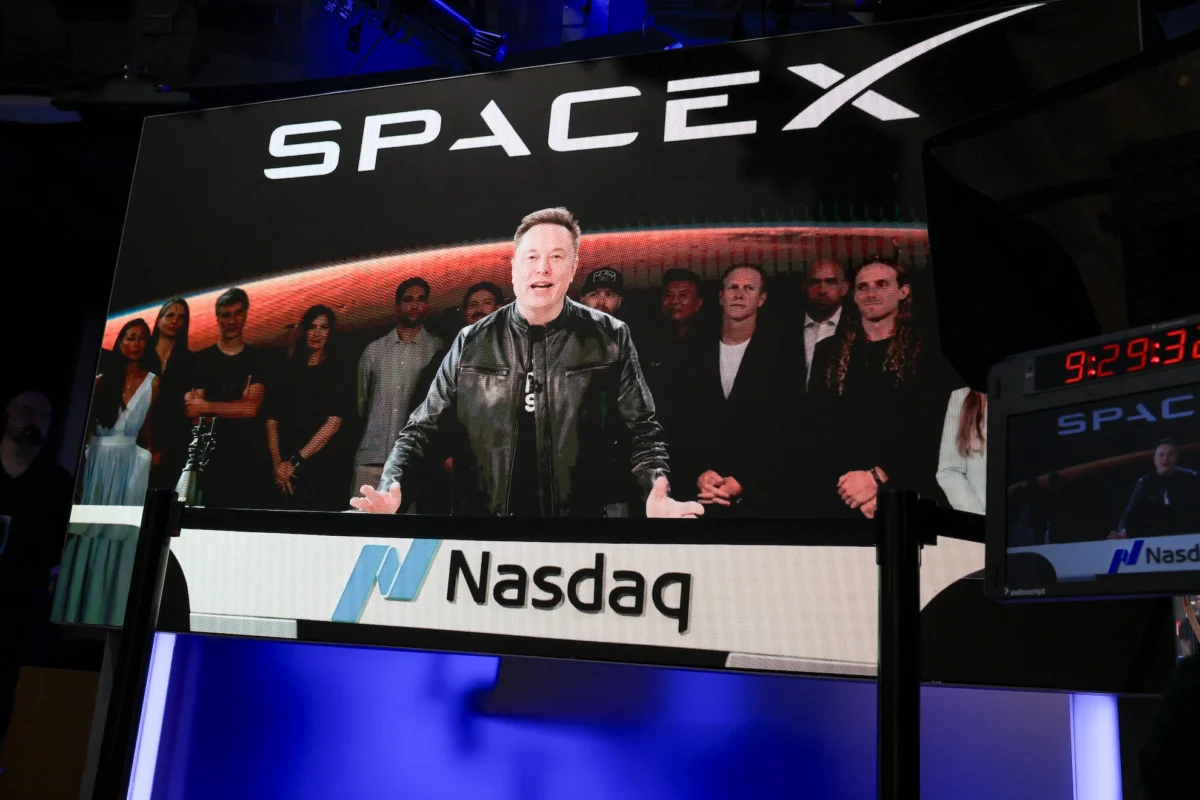
In the wake of the highly anticipated SpaceX initial public offering, the financial narrative surrounding Elon Musk has shifted. For years, the story was one of unparalleled wealth creation, a rags-to-riches odyssey that transformed early SpaceX employees and venture capitalists into multi-millionaires. However, a new, contrarian trend has emerged on Wall Street: an investment strategy defined not by participation in Musk’s empire, but by the deliberate exclusion of it.
Capitalizing on growing public discomfort with Musk’s political maneuvering, his controversial tenure at X (formerly Twitter), and his polarizing public appearances, an exchange-traded fund (ETF) creator has launched a pair of products designed specifically to allow investors to profit from the markets while actively avoiding the world’s wealthiest individual.
Main Facts: The Rise of the Anti-Musk Portfolio
Subversive Capital, an firm known for its provocative, headline-grabbing financial products, has filed to register two new ETFs: the Nasdaq-100 Ex-Elon Enterprises ETF (QQNE) and the S&P 500 Ex-Elon Enterprises ETF (SPNE). These funds, legally registered by Tidal Trust I under the brand Subversive Markets Lab LLC, represent a unique intersection of social sentiment and portfolio management.
The core premise of these funds is straightforward: they track the performance of the Nasdaq-100 and S&P 500 indices, respectively, but systematically strip out any equity associated with Elon Musk. As of the current prospectus, this mandate explicitly targets Tesla (TSLA) and SpaceX (SPCX). However, the filing includes a broad discretionary clause, allowing the fund managers to divest from any company that becomes "closely associated" with Musk, potentially including future ventures or entities where he exerts significant control or influence.
This move marks a significant departure from traditional passive investing. For the average investor, avoiding Musk has become increasingly difficult. As Musk’s companies have matured, they have been absorbed into the foundational indices of the global economy. SpaceX’s recent inclusion in the Nasdaq 100, combined with Tesla’s status as a staple in large-cap growth funds, means that millions of Americans have been—often unwittingly—heavily exposed to Musk’s volatility and personal brand.
A Chronology of Disenchantment
The catalyst for these "Ex-Elon" financial instruments is not merely performance-based; it is deeply rooted in a series of events that have alienated segments of the investing public.
- 2023–2024: Musk’s aggressive restructuring of X and his increasingly vocal political alignment begin to create friction with institutional ESG (Environmental, Social, and Governance) mandates.
- Early 2026: The lead-up to the SpaceX IPO creates a media frenzy. While the market celebrates the technological achievement, the public discourse begins to sour on Musk’s role in the Department of Government Efficiency (DOGE).
- Mid-2026: The turning point arrives during Donald Trump’s inauguration. A gesture made by Musk—widely perceived by observers as a Nazi salute—triggers a massive wave of public backlash. This event is viewed by many market analysts as the moment "brand Musk" shifted from "disruptive visionary" to "social liability."
- July 2026: Subversive Markets Lab files the prospectus with the SEC, formally introducing the concept of an "Ex-Elon" investment vehicle to the financial markets.
Supporting Data: The Concentration Risk of "The Musk Premium"
The challenge for the modern investor lies in the sheer weight of Musk’s companies within major indices. Because Tesla is a constituent of the S&P 500 and the Nasdaq 100, any investor who buys a standard S&P 500 index fund is automatically buying a slice of Musk’s leadership.
According to market data, Tesla’s market capitalization, combined with the post-IPO valuation of SpaceX, creates a "Musk Premium" that is difficult to hedge against. For investors who wish to maintain exposure to the broader market—the S&P 500’s growth, its dividends, and its stability—the current system offers no "opt-out" clause.
Subversive Capital’s prospectus notes that the objective of these ETFs is to provide "capital appreciation through exposure to a broad universe of large-capitalization U.S. equity securities, while excluding the equity securities of companies that are founded, controlled, or led by Elon Musk, or with which Mr. Musk is otherwise primarily associated."
For the risk-averse, this is an insurance policy against the "Elon Factor." The volatility inherent in Musk’s companies—often driven by his erratic social media usage and political advocacy—has historically resulted in significant price swings that are disconnected from traditional earnings reports. By stripping these variables out, QQNE and SPNE aim to provide a smoother ride for the ideological investor.
Official Responses and Regulatory Perspective
The U.S. Securities and Exchange Commission (SEC) has received the filings, and while the agency rarely comments on the "morality" of an investment product, the structure of the funds is standard. The innovation here is not in the technology of the ETF, but in the filtering criteria.
Subversive Capital has gained a reputation for being the "gadfly" of the asset management world. Before the Ex-Elon funds, the firm made waves with its "Congressional" ETFs, which track the stock trades of Democratic and Republican members of Congress. Their philosophy is clear: identify where the public interest is focused and create a product that mirrors or exploits that sentiment.
While Subversive has not issued a formal press release explaining the "Ex-Elon" strategy beyond the regulatory filings, their history suggests a firm that understands that in the age of social media, sentiment is an asset class. Investors are no longer just looking for the best return on investment; they are looking for their portfolio to reflect their values—or at least to avoid reflecting the values of figures they despise.
Implications: The Future of "Values-Based" Investing
The introduction of QQNE and SPNE signals a larger shift in the financial landscape. We are moving away from the era of "blind index tracking" toward an era of "curated indexing."
1. The Weaponization of Divestment
By creating a formal, tradable vehicle to avoid Musk, Subversive Capital is effectively weaponizing divestment. If these ETFs gain traction, it could create a feedback loop where institutional investors feel pressure to mirror these "Ex-Elon" strategies to avoid alienating clients who have grown weary of Musk’s extracurricular activities.
2. The "Short-Seller" Dynamic
Elon Musk has a well-documented, legendary hostility toward short sellers. Throughout his tenure at Tesla, he has frequently lashed out at those who bet against his companies. The "Ex-Elon" funds are not technically shorting his companies—they are simply omitting them—but the psychological effect on Musk may be identical. By actively excluding him, the funds represent a high-profile "vote of no confidence" that is likely to grate on a CEO who views his stock price as a proxy for his own ego.
3. The Fragmentation of the Index
If we accept the premise that an investor can demand an "Ex-Elon" version of the S&P 500, why stop there? We may soon see "Ex-Tech," "Ex-Fossil Fuel," or "Ex-Political" indices. This fragmentation could eventually dilute the power of the major indices, as more capital flows into "customized" versions of the market rather than the broad-based trackers that have dominated the last thirty years.
Conclusion: A Barometer of Public Sentiment
Whether or not the Ex-Elon ETFs perform well compared to their traditional counterparts remains to be seen. It is possible that by excluding Tesla and SpaceX, these funds will miss out on the next great rally, potentially underperforming the S&P 500. However, the success of these ETFs will likely not be measured solely by alpha—the excess return over a benchmark—but by their ability to capture the zeitgeist.
Investors are increasingly aware that their capital is a form of speech. By launching these products, Subversive Capital has provided a platform for that speech. For those who find Musk’s behavior, his political stance, or his influence over global infrastructure to be untenable, these ETFs offer more than just a portfolio—they offer a way to opt out of the Musk era entirely.
As we look toward the future of the market, the existence of QQNE and SPNE suggests that Wall Street has finally realized that for a growing segment of the population, the cost of doing business with Elon Musk has become far too high. Whether this is a niche trend or the beginning of a broader movement to democratize index customization, one thing is certain: the market is now officially betting against the man who once seemed to own the future.
 Ammar Sabilarrohman
 Ali Ikhwan
 rifanmuazin
