

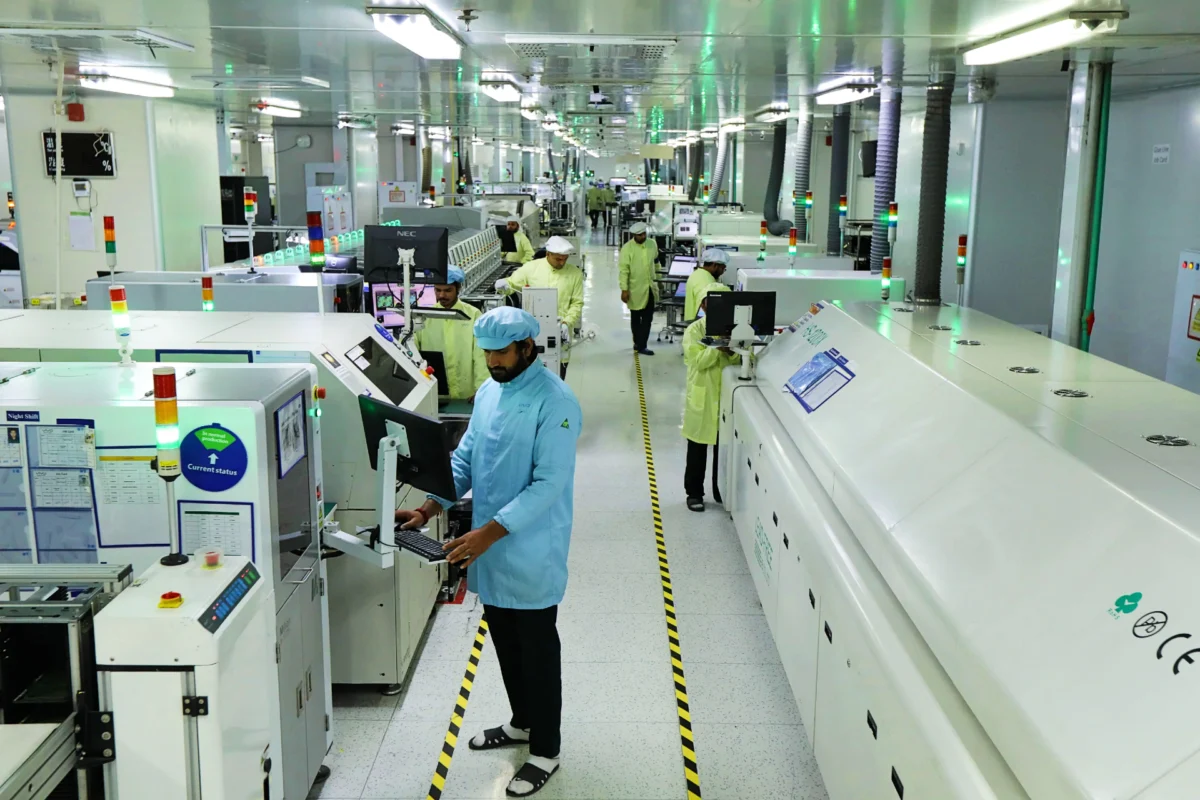
In a move that signals a significant shift in India’s industrial landscape, the Indian government has officially approved a manufacturing joint venture between Chinese smartphone giant Vivo and homegrown electronics manufacturer Dixon Technologies. This partnership, which has been in the works since late 2024, represents more than just a business deal; it serves as a litmus test for the future of Chinese investment in India’s burgeoning electronics sector.
The collaboration, which grants a majority 51% stake to Noida-based Dixon Technologies, marks a departure from the traditional wholly-owned subsidiary models that previously defined the entry of Chinese tech firms into the Indian market. As India strives to position itself as a global alternative to China for electronics manufacturing, this joint venture may provide a scalable template for other multinational corporations looking to navigate a complex regulatory and geopolitical environment.
The Core Agreement: A Strategic Alignment
Under the terms of the approved venture, the entity will assume control of specific manufacturing assets previously held by Vivo. While Vivo will retain a 49% stake, the operational majority rests with Dixon. The facility is expected to produce a significant portion of Vivo’s smartphone output for the Indian market, while also possessing the capacity to manufacture electronic products for third-party brands.
For Dixon Technologies, this is a transformative development. Managing Director Atul Lall has indicated that the partnership could add between 20 million and 22 million units to the company’s annual manufacturing volume. For a firm that has already cemented its status as a primary partner for brands like Xiaomi, the Vivo deal solidifies its role as the backbone of India’s contract manufacturing ecosystem.
A Chronology of the Deal: From Friction to Approval
The road to this partnership was paved with regulatory scrutiny. Since the 2020 border tensions between India and China, the Indian government has implemented stringent oversight mechanisms for foreign direct investment (FDI) originating from countries sharing a land border with India.
- Mid-2020: Following border clashes, India introduces "Press Note 3," a policy requiring government approval for any FDI from neighboring countries, aimed at curbing opportunistic takeovers of domestic firms and tightening scrutiny on Chinese capital.
- 2022–2023: Several Chinese smartphone vendors, including Vivo, Xiaomi, and Oppo, face intense regulatory heat in India. Investigations into tax compliance, customs duties, and alleged illegal remittances create a climate of uncertainty, prompting these firms to re-evaluate their operational structures.
- December 2024: Vivo and Dixon Technologies announce their intent to forge a strategic joint venture, signaling a pivot toward a local-partner-led model to satisfy government requirements.
- Early 2025: Regulatory reviews continue as the government assesses the implications of the partnership on national security and the growth of the domestic manufacturing base.
- Mid-2025: The Indian government officially clears the joint venture, setting a precedent for how Chinese brands can continue to operate in India through "Indian-majority" structures.
Supporting Data: The Manufacturing Gap
The necessity for this transition is best understood through the stark contrast in export performance between Apple’s ecosystem and Chinese brands currently operating in India.
The Apple Benchmark
Apple has successfully utilized India as a critical node in its global supply chain, largely through suppliers like Foxconn, Wistron, and the Tata Group. According to data from Counterpoint Research, Apple now accounts for approximately 57% of India’s smartphone exports by volume. This level of output is the gold standard for the "Make in India" initiative, which prioritizes the transition from mere local assembly to high-value export manufacturing.
The Chinese Brands’ Dilemma
While Chinese brands collectively dominate the Indian consumer market—holding a 72% share—their contribution to India’s total smartphone exports is currently less than 10%. This discrepancy represents a massive "missed opportunity" for the Indian government, which views the localization of manufacturing as a key driver for economic growth and employment. The Vivo-Dixon deal is a calculated move by the Indian government to force this gap to close by incentivizing (or requiring) Chinese firms to tether their operations to local partners.
Implications: The "Template" for Future Investment
Analysts view the 51/49 structure as a potential blueprint for the industry. Tarun Pathak, Research Director at Counterpoint Research, suggests that this model provides a "win-win" scenario.
For Vivo and Other Chinese Vendors
For Chinese brands, the primary benefit is stability. By ceding majority control to an Indian partner, these firms mitigate the risk of being sidelined by regulatory crackdowns. It offers a "policy-aligned" path that allows them to continue participating in the world’s second-largest smartphone market without being perceived as purely foreign-owned entities.
For India’s Manufacturing Ecosystem
For India, the implication is twofold:
- Value Addition: By partnering with local giants like Dixon, Chinese firms are forced to deepen their supply chain integration within India rather than simply importing components for assembly.
- Global Competitiveness: As Dixon gains scale and experience through these partnerships, it becomes a more attractive global manufacturer, potentially attracting other brands from non-Chinese origins, thereby diversifying India’s manufacturing profile beyond Apple.
Official Responses and Industry Outlook
While the government has remained tight-lipped regarding the specific deliberations behind the approval, the move is widely seen as a pragmatic endorsement of "managed localization."
Industry experts note that this is not a one-off deal but a policy direction. The government has made it clear that while it welcomes the capital and technology that global firms bring, the "rules of the game" have changed. The expectation is that by 2027, the majority of components—not just the final assembly—should be sourced or manufactured locally.
Dixon Technologies’ stock exchange filings reflect the optimism surrounding this shift. By integrating high-volume orders from top-tier brands into its local facilities, Dixon is effectively scaling its operations at a rate that would have been impossible without such strategic partnerships.
Challenges Ahead: Can the Model Scale?
Despite the optimism, significant challenges remain. First, the intellectual property (IP) concerns inherent in joint ventures—where a local partner gains access to proprietary manufacturing processes—could create friction between Vivo and Dixon over time. Maintaining the quality standards expected by a global brand like Vivo while satisfying the cost-efficiency demands of the Indian market is a delicate balancing act.
Second, the geopolitical climate remains volatile. Any escalation in regional tensions could lead to further policy shifts, rendering the current "stable model" vulnerable. The success of the Vivo-Dixon venture will depend on whether both parties can maintain transparency and operational efficiency in a high-pressure environment.
Finally, the transition from "Assembly in India" to "Manufacturing in India" remains the ultimate goal. While the Vivo-Dixon partnership is a massive leap forward in assembly volume, the true test will be whether the joint venture can successfully foster the domestic production of complex components like display modules, semiconductors, and high-end camera sensors.
Conclusion
The approval of the Vivo-Dixon joint venture is a watershed moment for India’s electronics sector. It marks the end of an era where foreign brands could operate in isolation and the beginning of an era of "co-dependent" manufacturing. By marrying the massive market share of Chinese brands with the manufacturing infrastructure of Indian giants, the government is creating a hybrid model that aims to boost exports and build indigenous capacity.
As the industry watches this partnership unfold, the success of the 51/49 venture will likely dictate the entry strategies for other tech firms in the years to come. India is no longer just a market to be sold to; it is a manufacturing floor that requires local partnership as the price of admission. Whether this leads to a new era of industrial independence or merely a change in the face of dependence remains to be seen, but one thing is certain: the landscape of Indian smartphone production has changed for good.
 Siti Muinah
 Ali Ikhwan
