

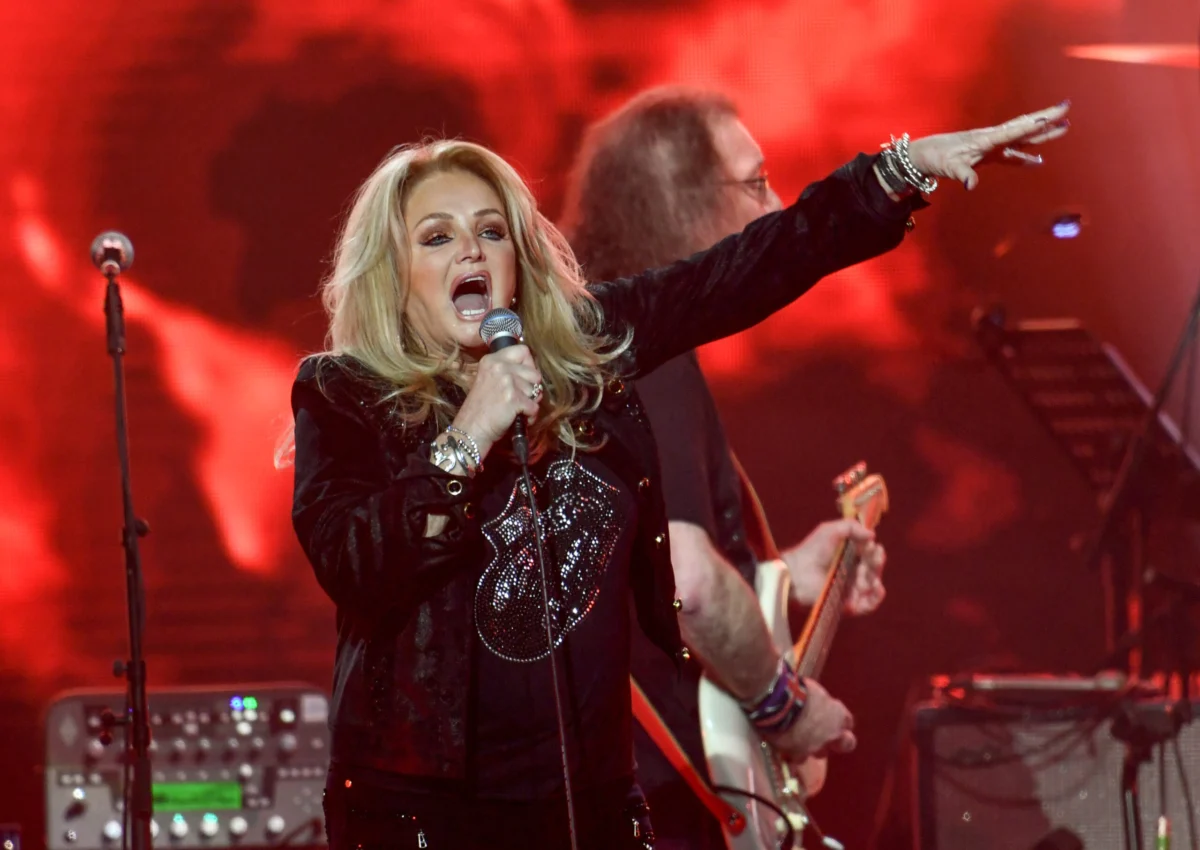
The music industry is mourning the loss of a true titan. Bonnie Tyler, the three-time Grammy nominee whose unmistakable, raspy vocal prowess defined the soundscape of the 1980s, passed away on July 8 at the age of 75. According to an official statement released by her management, the singer died unexpectedly in a hospital in Portugal following a period of treatment for an undisclosed illness. Her passing marks the end of a six-decade career that saw her transition from a Welsh country singer to a global pop-rock powerhouse, leaving behind a catalog of anthems that remain as potent today as the day they were recorded.
A Legacy Written in Sound: The Life and Career of Bonnie Tyler
Born Gaynor Hopkins in Skewen, Wales, in 1951, Tyler’s early years were rooted in the humble beginnings of the British pub circuit. It wasn’t until the late 1970s that her signature voice—a distinct, soulful rasp caused by a surgery to remove vocal nodules—propelled her to international stardom. Her breakthrough hit, "It’s a Heartache," served as a precursor to the epic, cinematic power ballads that would define the next phase of her artistic evolution.
Throughout the 1980s, Tyler became the face of a specific brand of high-octane, emotional rock. Collaborating with producer Jim Steinman, she cultivated a sound that was grand, theatrical, and deeply earnest. This partnership resulted in some of the most enduring songs of the 20th century, cementing her status as a pop culture icon whose reach extended far beyond the confines of the radio charts.
Chronology: A Career of Peaks and Reinvention
To understand the scope of Bonnie Tyler’s impact, one must look at the trajectory of her career, which spanned across generations:
- 1970s: The Breakthrough. After signing with RCA Records, Tyler found success with "Lost in France" (1976) and "It’s a Heartache" (1977), the latter reaching the top five on both the UK Singles Chart and the US Billboard Hot 100.
- 1983: The Epic Era. The release of the album Faster Than the Speed of Night marked a pivotal moment. The lead single, "Total Eclipse of the Heart," hit number one globally and remains one of the best-selling singles of all time.
- 1984: The Soundtrack Icon. Tyler was tapped to contribute to the Footloose soundtrack, resulting in "Holding Out for a Hero." This track solidified her presence in the cinematic world, creating a template for the "high-stakes" soundtrack song.
- 1990s–2000s: The Renaissance. While her chart dominance fluctuated, Tyler remained a fixture in European music, continuing to tour extensively and finding a new audience through the inclusion of her hits in cult-classic films and television shows.
- 2013–Present: The Elder Stateswoman. Tyler represented the United Kingdom at the Eurovision Song Contest in 2013 and continued to release original material, proving her voice remained as commanding as ever.
Official Responses and Public Mourning
The news of her passing has triggered an outpouring of grief from fans, collaborators, and peers alike. The statement from her official website read: "Bonnie’s family and team are heartbroken to announce that Bonnie unexpectedly passed away last night in hospital in Portugal as a result of the illness that she was being treated for."
Fans across social media platforms have shared anecdotes of how her music served as the soundtrack to their own lives, highlighting the universal nature of her lyrics. Music critics have noted that while many 1980s artists faded into obscurity, Tyler’s songs underwent a unique process of cultural "re-contextualization," being embraced by new generations through movies and streaming media.

The Needle Drop: How Tyler Conquered Film and TV
One of the most fascinating aspects of Tyler’s career is how her songs—specifically "Total Eclipse of the Heart" and "Holding Out for a Hero"—became essential "needle drops" for filmmakers. These songs possess a rare, heightened quality that can instantly shift the tone of a scene from mundane to mythic.
Footloose (1984)
When Paramount sought an anthem for the Kevin Bacon-led dance drama, they turned to Tyler. "Holding Out for a Hero" did not just play in the background; it anchored a tense, high-stakes game of "chicken" between two tractors. The song’s driving rhythm and desperate lyrics perfectly mirrored the film’s themes of rebellion and youthful yearning, becoming an instant shorthand for 80s cinematic adrenaline.
Short Circuit 2 (1988)
In a strange twist of cultural memory, the second installment of the Johnny 5 series is largely remembered for the scene in which the sentient robot upgrades himself in a Radio Shack. The scene, underscored by "Holding Out for a Hero," remains a quintessential example of 80s montage energy, proving that Tyler’s voice could provide the emotional weight even for a mechanical protagonist.
Old School (2003)
The early 2000s saw a resurgence of 80s nostalgia, and Old School utilized this to comedic effect. When Will Ferrell’s "Frank the Tank" belts out "Total Eclipse of the Heart" at a wedding, the song serves as a bridge between the sincere power of the original and the absurd reality of the character. It reminded audiences that Tyler’s music was as funny as it was moving.
Shrek 2 (2004)
For Gen Z, the primary association with "Holding Out for a Hero" is likely the climactic, high-fantasy siege of the Kingdom of Far Far Away. Jennifer Saunders’ rendition of the song, performed as the Fairy Godmother, captured the theatrical excess of the original while introducing it to a massive, younger audience. The sequence is widely considered one of the most successful uses of a legacy song in modern animation.
Loki (2021) and Euphoria (2022)
Tyler’s relevance continued into the streaming era. In Marvel’s Loki, the song played as a mysterious figure disrupted the Time Variance Authority, adding a layer of ironic grandeur to the sci-fi proceedings. Similarly, in the dark, hyper-stylized world of HBO’s Euphoria, the song was used in a surreal, homoerotic stage play sequence. By utilizing the song in such disparate contexts, the showrunners highlighted the inherent drama and campiness that Bonnie Tyler championed throughout her career.

Bottoms (2023)
The recent teen comedy Bottoms serves as a final testament to her legacy. By using "Total Eclipse of the Heart" to underscore the chaotic antics of an all-girl fight club, the film utilized the song’s melodramatic intensity to highlight the heightened stakes of the teen experience. It was a perfect tribute to an artist who never did anything halfway.
Implications: A Lasting Cultural Footprint
What made Bonnie Tyler so special? It was the grit. In an era often associated with the gloss of synthesizers and polished production, Tyler’s voice was the human element. It was a voice that sounded like it had lived, suffered, and triumphed. This raw, emotional quality allowed her music to survive the changing tides of musical trends.
Her death leaves a void in the landscape of pop music, but her work remains omnipresent. Whether it is in the background of a blockbuster film, a viral TikTok trend, or a late-night karaoke session, the music of Bonnie Tyler continues to resonate. She provided the world with songs that allowed us to be as dramatic, as heroic, and as heartbroken as we wanted to be.
As we reflect on her six decades of contribution, it is clear that Bonnie Tyler was more than just a pop star; she was a sonic architect of emotion. While the silence in the studio is now permanent, the echoes of her voice will continue to reverberate, reminding us all that we are, in our own ways, holding out for a hero—and that, thanks to her, we have the perfect song to soundtrack the wait.
 Nana Wu
 Iffa Jayyana
 Dwi Wanna
