

If you are looking to capture the gritty, dangerous, and unapologetic essence of New York City in the 1980s, you shouldn’t head to the polished, glass-towered streets of the modern-day East or West Sides. Instead, you need to head north—specifically to the sprawling soundstages of Cinespace Studios in Toronto, Canada. This is where the pulse of pre-Hudson Yards Hell’s Kitchen has been meticulously resurrected for the new MGM+ crime drama, The Westies.
Premiering with a two-episode debut on July 12, the eight-episode first season promises a visceral dive into a vanished era of American history. Starring Academy Award winner J.K. Simmons and industry veteran Titus Welliver, the series serves as a gritty love letter to the organized crime landscape that once defined Manhattan’s west side.

The Architecture of Authenticity: Building a Lost World
During a visit to the Toronto International Film Festival last September, Gold Derby was granted an exclusive behind-the-scenes look at the production. Series creators Chris Bracanto and Michael Panes, the visionaries behind the acclaimed Godfather of Harlem, served as our guides through the labyrinthine set.
For Bracanto and Panes, this project is a homecoming of sorts. Having spent four seasons overseeing the 1960s-set Godfather of Harlem, the duo is well-versed in the visual language of New York crime. While they were too young to fully inhabit the "swinging ’60s" of Manhattan, the 1980s represent their formative era.

"I lived in Hell’s Kitchen after college," Michael Panes shared during our tour. "I actually told our production designer to include my old apartment as part of the set, but he didn’t have the budget or the resources for that level of historical preservation!"
While Panes’ former flat remains a casualty of time, the set itself is a triumph of production design. The showpiece is a full-scale, period-accurate streetscape constructed outside the soundstages. It features scruffy storefronts, graffiti-laden metal grates, and run-down newsstands stocked with vintage magazines and newspapers reflecting the headlines of the decade. The only jarring reminder of the 21st century lies at either end of the boulevard, where massive blue screens await digital extensions in post-production.

A Sensory Experience: Smell-O-Vision on Set
The authenticity of the environment is not merely visual; it is visceral. J.K. Simmons and Titus Welliver, both of whom spent their early years as struggling actors in the New York of the 1980s, were struck by how effectively the set transported them back in time.
"I definitely got transported," Titus Welliver remarked. "There were times where I was standing on the street, and I was like, ‘Wow, I can smell Hell’s Kitchen in the ’80s—the garbage, the urine, and the vomit.’ If they ever created a show for Smell-O-Vision, this would be it."

This commitment to detail has proved invaluable for the younger cast members, such as British actor Tom Brittney, who was born long after the era depicted. "You could look inside every single storefront and see props that looked so real," Brittney noted. "I always feel bad for the production designers because they put in so much detail that the audience might never see. But it’s there for us. After a while, you forget the cameras are even there."
The Power Struggle: A Tale of Two Gangsters
The narrative core of The Westies centers on the shifting power dynamics of the titular gang. J.K. Simmons portrays Eamonn Sweeney, the aging, iron-fisted leader of the Irish criminal organization that once dominated the West Side. Tom Brittney stars as Jimmy Roarke, Sweeney’s top enforcer and surrogate son.

As the 1980s progress, Jimmy begins to question whether Sweeney is the right man to lead as the criminal landscape changes. The threat is twofold: external pressures from Mafia kingpin John Gotti (played by Hamish Allan-Headly) and an encroaching FBI unit led by Birdie Polk (Jessica Frances Dukes), and the internal instability caused by the rapid gentrification of the city. City Hall’s plan to construct the massive Javits Center—a project that would essentially pave over the heart of Westies territory—serves as the ticking clock for the season.
Welliver, who plays a corrupt cop named Glenn Keenan, adds a layer of moral ambiguity to the proceedings. His character is a man caught between his own greed and the decaying structures of the city’s law enforcement.

The 596 Bar: The Heart of the Underworld
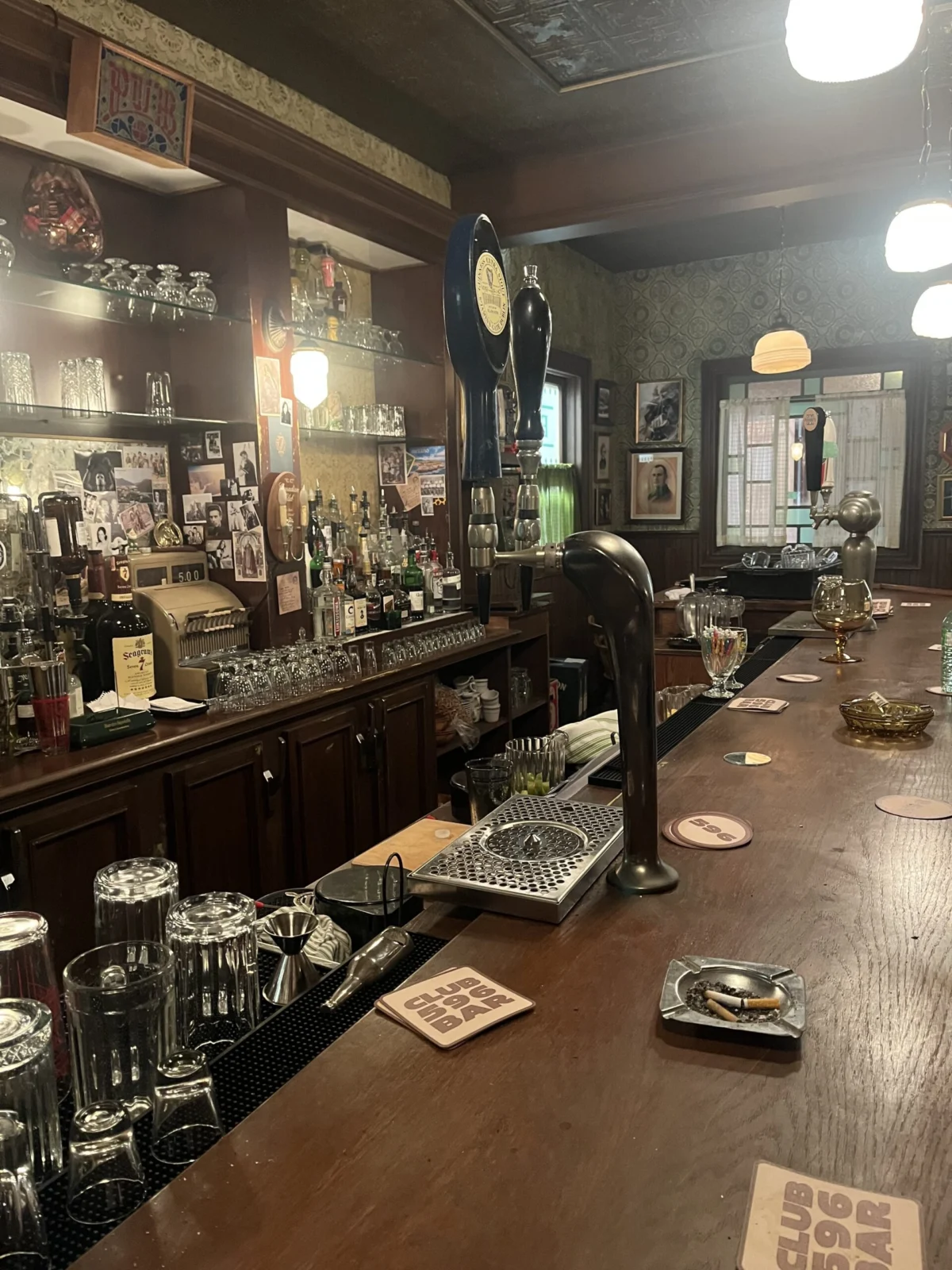
The gang’s headquarters is the "596" bar, a set that functions as the emotional hub of the series. To reach it, visitors must navigate through a series of soundstage warrens before emerging into a dimly lit, tobacco-stained watering hole. With its Ms. Pac-Man tabletop, weathered pool table, and taps that look like they’ve seen decades of service, the 596 feels like a place where everyone knows your name—provided you’re a local.
Between takes, the atmosphere on set was often lightened by era-appropriate music. "Alan Taylor, who directed the first block, would try to play music from the time—Mötley Crüe, Blondie," Brittney recalled. "Occasionally, he’d slip and put on the Peaky Blinders soundtrack, and we’d have to go, ‘No, no, no—different show!’"

Changing of the Guard: The Impact of Cocaine
Brittney notes that the central tension of the show mirrors the broader historical shift in the New York underworld during the mid-80s. "Going from the ‘old way’ of the mob to this new, more volatile era—especially with the introduction of cocaine—changed everything," he explains. "The unique thing about the Westies is that they weren’t an organized gang with rigid rules. You had these young, hungry guys alongside older gentleman gangsters who just didn’t want to get with the times."
J.K. Simmons echoes this sentiment, particularly regarding his character’s "throne room," located in a construction trailer that simulates an office overlooking the future site of the Javits Center. "When you’re doing eight episodes sitting in the same chair, it’s a challenge to keep things interesting," Simmons said. "But it’s a great environment for Sweeney. He’s surrounded by protection, and he’s essentially holding court in a kingdom that is rapidly eroding beneath him."

Implications: The "New York Scumbag Universe"
As production on The Westies concludes, Bracanto and Panes are already looking toward the future. They have jokingly referred to their projects as the "New York Scumbag Universe."
"We both grew up outside of New York, but we consider the city to be our home," Bracanto said. "We enjoy exploring these different time periods of New York crime. Of course, we hope someday there will be no more crime and therefore no more crime shows, but until that time comes, we’re going to cover every single New York gang throughout history."

The ambition is clear. By grounding their stories in such meticulous historical detail, Bracanto and Panes are doing more than just telling a crime story; they are capturing the anatomy of a city that has evolved beyond recognition. Whether it’s the 1960s or the 1980s, the "New York Scumbag Universe" is proving that the history of the city is best told through its shadows.
Looking ahead, fans are already speculating on the next installment of this anthology-style vision. Perhaps a 1776-set saga involving the Revolutionary War, with music by Lin-Manuel Miranda? While that remains a pipe dream, for now, the audience has the gritty, neon-soaked, and violent world of The Westies to look forward to this July. It is a stark reminder that while the city changes, the darkness of its history remains a compelling subject for the screen.
 Ammar Sabilarrohman
 Siti Muinah
 Iffa Jayyana
