

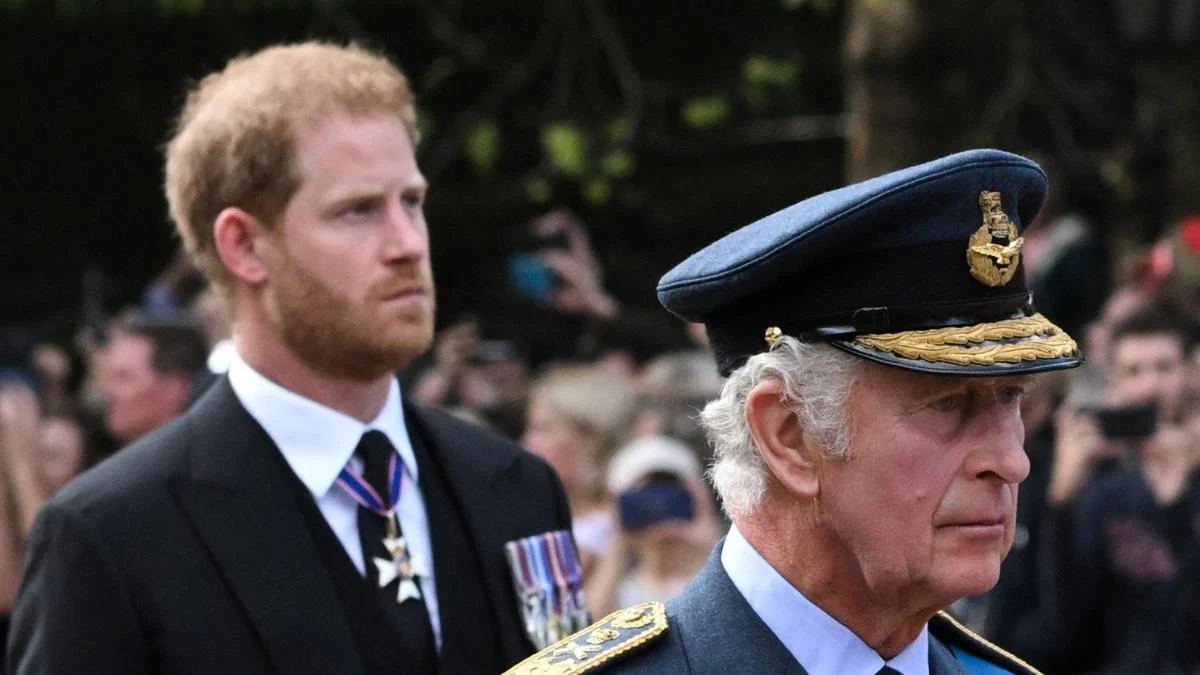
The relationship between the British Monarchy and the Duke and Duchess of Sussex remains one of the most scrutinized familial dynamics in modern history. As Prince Harry prepares for his latest journey to the United Kingdom—a trip intended to balance official duties, such as the Invictus Games, with personal family time—reports have surfaced detailing a stern, preemptive directive from King Charles III. According to high-level insiders, the monarch has laid out a clear set of expectations: the visit must remain strictly professional and private, devoid of the media spectacle that has defined the couple’s recent years.
The Sovereign’s Directive: A Calculated Risk
The King’s stance is described as a "calculated gamble." While he has reportedly gone to great lengths to facilitate a safe and welcoming environment for his son and grandchildren—Prince Archie, 7, and Princess Lilibet, 5—the gesture is not an unconditional embrace.
"Charles has gone above and beyond to make this visit happen, but nobody should mistake that for blind trust," a source close to the Palace disclosed. The directive is unequivocal: there is to be no drama. The King, navigating the complexities of a public-facing institution while balancing his roles as both Sovereign and father, is reportedly wary of the trip being utilized as a platform for personal branding or, worse, a source of fresh controversy that could distract from the Crown’s current agenda.
A Chronology of Strained Reconciliation
To understand the weight of this current ultimatum, one must examine the timeline of the Sussexes’ exit and the subsequent "flashpoints" that have defined their relationship with the House of Windsor.
The 2020 Departure: The Foundation of Distrust
The trajectory of the current tension can be traced back to the early months of 2020, when the Duke and Duchess announced their intention to step back as senior working royals. What began as a negotiation for a "half-in, half-out" model quickly devolved into the "Megxit" crisis. The subsequent interview with Oprah Winfrey in 2021 served as the first major rupture in trust, bringing internal allegations of racial insensitivity and institutional neglect into the global spotlight.
The 2022-2023 Escalation
The death of Queen Elizabeth II in September 2022 provided a brief, somber moment of unity. However, the release of Prince Harry’s memoir, Spare, and the accompanying Netflix docuseries in early 2023, shattered the fragile peace. The candid revelations contained within these projects were viewed by many within the Palace as a betrayal of familial privacy, effectively creating the atmosphere of suspicion that persists today.
The Current Pivot: The Invictus Games and Beyond
The present visit arrives at a time of transition for the Royal Family. With King Charles managing his health and the Prince and Princess of Wales continuing to anchor the institution’s popularity, the arrival of Harry and Meghan is viewed as a high-stakes moment of potential rapprochement—or renewed discord.
Supporting Data: The Cost of Public Perception
The public’s interest in the Sussexes remains immense, but the data suggests a shifting landscape. Recent polling in the UK indicates that while the younger demographic maintains a level of sympathy for the couple, the broader public has grown weary of the "tell-all" culture.
The Palace is acutely aware of the "brand dilution" that occurs when the private lives of royals become a public soap opera. For the King, the stakes are not merely personal; they are institutional. The monarchy relies on a carefully curated image of stability and service. Any deviation from this—any "whiff of troublemaking," as the insider noted—threatens the brand equity of the Crown.
The ultimatum issued by the King is, therefore, a strategic defense mechanism. By limiting the scope of the visit, the Palace aims to minimize the "noise" that typically accompanies the Sussexes’ movements.
Official Responses and Palace Strategy
While Buckingham Palace maintains its standard policy of not commenting on the private conversations of the Royal Family, the lack of a formal denial of these reports speaks volumes. The Palace’s silence is a calculated tool of statecraft.
Inside reports suggest that the King’s private office has been working behind the scenes to ensure that logistics for this visit are handled with maximum discretion. This includes the management of security details, the scheduling of private meetings, and the careful curation of any public appearances. The goal is to avoid the "circus" atmosphere that often plagues the couple’s public outings.
The King’s strategy is clear: he is willing to extend an olive branch, but he is no longer willing to be "blindsided." This represents a shift from the previous, more reactive stance of the monarchy. The current administration under Charles III is showing a greater willingness to set firm boundaries, signaling that the "softly-softly" approach to dealing with the Sussexes has been replaced by a more disciplined, conditional diplomacy.
The Implications: A Lasting Peace or Final Break?
The implications of this visit are profound. If the Duke and Duchess of Sussex successfully navigate the trip without incident, it could serve as a blueprint for future interactions. It would demonstrate that a middle path—where the family can reconnect without the intrusion of cameras or the narrative of grievance—is possible.
However, the margin for error is razor-thin. The insider’s warning—"If he sees any cameras or gets a whiff of troublemaking, that will be the end of things"—is a blunt indicator of the current state of play. This may very well be the final opportunity for a de-escalation of the conflict.
The Human Element
Beyond the politics and the PR, there is the human reality of a family in fracture. Prince Archie and Princess Lilibet remain the focal point of the King’s desire for connection. As a grandfather, Charles III has expressed a wish to maintain a relationship with his youngest grandchildren. Yet, the price of that relationship, in the eyes of the institution, is the total cessation of the "public-facing" conflict.
The Global Stage
For the global audience, the visit is a test of whether the Duke and Duchess can pivot from their role as "critics of the institution" to something more sustainable. If they choose to prioritize the family dynamic over the narrative of their grievances, they may find the doors to the Palace opening wider. If they choose otherwise, the door may remain closed, and the "freeze-out" that some have urged the King to implement may become the permanent status quo.
Conclusion: The Path Forward
The upcoming visit of Prince Harry to the UK is more than a trip to attend a sporting event; it is a diplomatic mission of the highest order. The King has laid out the terms of engagement with clarity and resolve. The ball, quite literally, is in the Sussexes’ court.
As the world watches, the question remains: Can the Duke and Duchess of Sussex conform to the expectations of a centuries-old institution that demands absolute loyalty and discretion? Or is the divide between their new life and their royal roots now too wide to bridge? The events of the coming weeks will likely determine the course of the Royal Family’s history for years to come. In the delicate dance of monarchy, one wrong step can lead to a lifetime of distance—a reality that both the King and his son now face with sobering clarity.
 Azzam Bilal Chamdy
 Ammar Sabilarrohman
