

This story is an installment of The Oeno Files, our weekly insider newsletter to the world of fine wine.
While Washington State has spent decades cultivating a global reputation for its polished Cabernet Sauvignon and sophisticated Bordeaux-style blends, a more compelling, rugged, and nuanced story is unfolding in the shadows of the Cascades. Syrah—the dark, brooding, and aromatic workhorse of the Northern Rhône—has quietly become the second most-produced red wine in the Evergreen State.
Despite having only a 40-year history of cultivation, Washington Syrah has transcended its experimental beginnings to become perhaps the most expressive, site-specific, and rewarding category in American viticulture. It is a wine that defies the "one-size-fits-all" trap of modern mass production, offering a diverse spectrum of profiles that range from the feral, peppery depths of Cornas to the floral, elegant heights of Côte-Rôtie.
The Evolution of an Icon: A Chronology
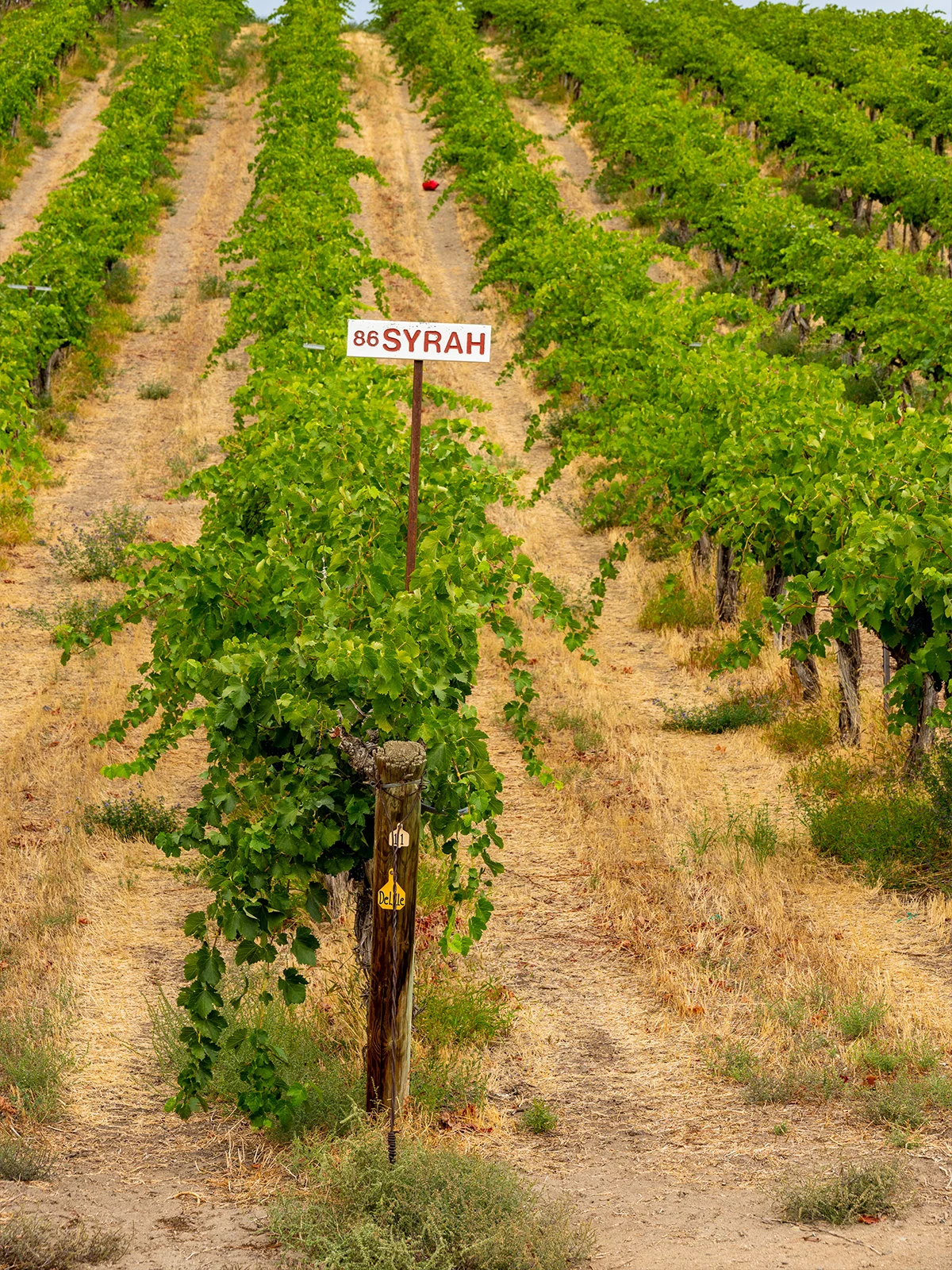
The story of Washington Syrah began in 1986, a watershed year when the first vines were planted at the Red Willow Vineyard in the far northwest reaches of the Yakima Valley. For the first decade, winemakers treated the grape with the same heavy-handed approach used for Cabernet Sauvignon: long macerations, aggressive extraction, and a "new oak" regimen that often masked the variety’s delicate, savory soul.
As the 21st century dawned, a fundamental shift occurred. A new generation of winemakers began to look toward the Old World, specifically the granite slopes of the Northern Rhône, for inspiration. They swapped new oak for neutral barrels, concrete vessels, and large-format casks. They embraced whole-cluster fermentation and stem inclusion to add structure and aromatic lift.
By the 2010s, the focus shifted from "winemaking" to "viticulture." Growers began mapping the state’s diverse AVAs (American Viticultural Areas) with surgical precision, realizing that Syrah acted as a topographical sensor—recording the heat of the rocks, the chill of the altitude, and the mineral content of the soil more acutely than almost any other grape. Today, we are in the "era of site expression," where producers are no longer trying to make a "Washington Syrah," but rather a specific, singular expression of a block of dirt.
The Terroir Spectrum: Where Site Meets Style
The success of Washington Syrah is inextricably linked to the diversity of its landscapes. Because the grape is exceptionally sensitive to its environment, it provides a distinct "flavor map" of the state’s geography.

The Savory and Mineral: The Rocks District and Royal Slope
In regions like the Rocks District of Milton-Freewater, the soil is composed of ancient riverbed deposits—dense, spherical cobblestones that radiate heat long after the sun has set. Matt Reynvaan of R|A Family Wines notes that these stones are the secret to the wine’s intensity. "These stones retain and radiate heat, lending intensity, structure, and unmistakable minerality to the fruit," he explains. The resulting wines are often described as savory, with notes of wet stone, earth, and brine.
The Powerhouse: Red Mountain and Horse Heaven Hills
In contrast, the warmer, more arid climates of Red Mountain and Horse Heaven Hills produce Syrahs of immense power and ripeness. Here, the wines lean into dark fruit—blackberries, plums, and currants—supported by a muscular tannin structure. It is this combination of power and ripeness that has made Washington Syrah a favorite in high-end steakhouses.
The Bridge: Yakima Valley
The Yakima Valley remains the spiritual home of the grape. Because of its varied topography, it serves as a bridge between the savory, cooler-climate profiles and the bolder, fruit-forward styles. It is here that the influence of the original 1986 plantings at Red Willow continues to set the standard for longevity and complexity.
The Winemaker’s Perspective: "A Chameleon in the Cellar"
To understand the complexity of the modern Washington Syrah, one must listen to the artisans who shepherd it from vine to bottle. Morgan Lee, winemaker and partner at Two Vintners, manages a portfolio of Syrahs sourced from 13 different vineyards across six AVAs.
"The beauty of Syrah is that it absorbs its surroundings like nothing else," Lee says. "It is a chameleon. It is so exciting to taste these individual parcels side by side and see how thrillingly different they are from one another." Lee’s process relies on native-yeast fermentation and whole-cluster pressing, techniques that prioritize the "voice" of the vineyard over the intervention of the winemaker.
This philosophy is echoed by Chris Peterson of Liminal, who works with the prestigious WeatherEye Vineyard. By focusing on clonal selection and aspect, Peterson crafts two distinct Syrahs from blocks located just 500 yards apart. One, the High Canyon, mimics the floral, black-fruit elegance of Côte-Rôtie; the other, Block 16, channels the feral, meaty, and structural intensity of Cornas.
Market Presence and Consumer Perception
One of the most persistent myths about Washington Syrah is that it is difficult to find. In reality, the category has found a massive, albeit quiet, audience in the hospitality sector.

Landry’s Inc., a hospitality giant managing over 500 restaurants—including icons like Morton’s, Del Frisco’s, and The Palm—has embraced the category. Scott Tarwater, corporate director of wine and special events, views Washington Syrah as a vital component of a sophisticated wine program.
"It’s a rugged, mountain man—unshaven, but worldly, down to earth, and plain-spoken," Tarwater notes. He emphasizes that the wine’s appeal lies in its duality: it provides the "jammy" satisfaction of a New World red (boysenberry, black raspberry) while satisfying the palate’s demand for savory complexity (ripened olives, pipe tobacco, and cured meats).
Amy Racine, beverage director at JF Restaurants, echoes this sentiment, framing Washington Syrah as the perfect "crossover" wine. "Most guests come in with a fixed idea of what Syrah is supposed to taste like," she says. "They expect a Rhone reference point, and Washington Syrah surprises them by being a little familiar yet entirely its own thing."
Implications: A Category That Rewards Curiosity
The rise of Washington Syrah represents a maturing of the American wine scene. As consumers move away from mass-produced, oak-heavy wines, they are increasingly seeking bottles that tell a story of place.
For the collector, Washington Syrah offers a unique opportunity: access to world-class, site-driven reds that are still priced at a fraction of their counterparts in Napa Valley or the Northern Rhône. For the restaurant sommelier, it is a versatile tool—the savory, peppery backbone makes it an ideal pairing for anything from dry-aged ribeye to game meats and roasted root vegetables.
Key Takeaways for the Discerning Buyer:
- Look for Provenance: Pay attention to the AVA on the label. If you prefer earth and mineral, look to the Rocks District. If you prefer power and dark fruit, seek out Red Mountain or Horse Heaven Hills.
- Embrace the "Northern Rhône" Style: Seek out producers like Dossier Wine Collective or Liminal, who are actively using concrete fermentation and whole-cluster techniques to achieve purity and freshness.
- Value the History: Wines sourced from older vines, particularly those tracing their lineage back to the 1980s in the Yakima Valley, offer a level of concentration and depth that is difficult to replicate with younger plantings.
Ultimately, Washington Syrah is no longer just a "best-kept secret." It is a testament to the fact that when winemakers listen to the land rather than dictate to it, the result is a wine that is as profound as it is delicious. It is a category that rewards the curious, challenges the conventional, and consistently proves that the next great bottle of wine doesn’t need to come from the most famous zip code—it just needs to come from the right soil.
 Basiran
 Siti Muinah
 Nana
Nana
