

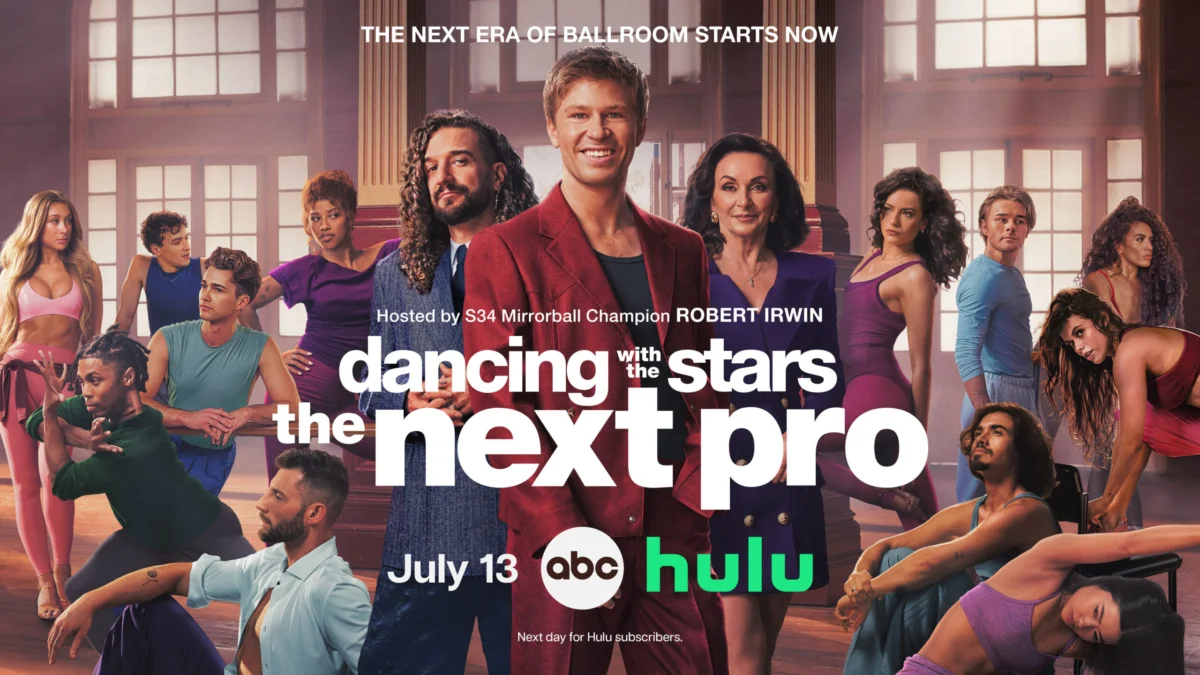
For over two decades, Dancing With the Stars has captivated audiences by pairing celebrities with elite professional dancers, transforming screen icons and athletes into masters of the Paso Doble and the Foxtrot. Yet, for the dedicated fanbase of the long-running reality juggernaut, the true spectacle has always been the technical brilliance and artistry of the pros themselves. In a bold shift for the franchise, ABC has officially peeled back the curtain on the industry’s most grueling rite of passage: Dancing With the Stars: The Next Pro.
The inaugural season, which premiered on July 13, marks the first time in the show’s history that 12 aspiring professionals have been thrust into the spotlight to compete for a coveted permanent spot on the main cast. The prize? A chance to etch their names into ballroom history and compete for the legendary Len Goodman Mirrorball Trophy.

The Architecture of the Competition
Dancing With the Stars: The Next Pro is not merely a dance contest; it is a brutal, condensed boot camp designed to weed out those who cannot handle the immense pressure of live television. Hosted by Season 34 champion and wildlife conservationist Robert Irwin, the series promises a level of intensity previously unseen in the franchise.
"Some of you have close connections to Dancing With the Stars, but on The Next Pro, connections count for nothing," Irwin warned the contestants during the premiere. His words set the tone for a season where past relationships and industry resumes are rendered secondary to raw performance ability.

The judging panel brings a mix of generational expertise and fresh, critical eyes. Three-time Mirrorball champion Mark Ballas and his mother, the iconic Shirley Ballas, serve as the permanent judges. However, the show introduces a revolving door of guest mentors: current DWTS professionals who will guide the contestants through the trials. For the premiere, the legendary choreographer and four-time Emmy winner Derek Hough took the helm, providing the technical oversight necessary for the first high-stakes elimination.
The Cast: A Diverse Roster of Talent
The 12 hopefuls bring a wide array of backgrounds, ranging from Latin dance champions to commercial performers and social media sensations.

- The Connected: Stephani Sosa, sister of current DWTS pro Ezra Sosa, returns to the stage after a stint in the show’s troupe, viewing this as a definitive "second chance."
- The International Contenders: AJ Pritchard brings his experience from the UK’s Strictly Come Dancing, looking to establish his footprint in the American market.
- The Ballroom Veterans: Natalie Jolley and Erik Linder arrive with heavy-hitting credentials as competitive ballroom and Latin champions.
- The Cross-Genre Stars: Performers like Tristen Sanders (gymnastics and hip-hop) and Briar Nolet (commercial film/TV) bring high energy, though they face the steep learning curve of mastering traditional ballroom techniques in record time.
- The Long-Time Peers: Allen Genkin and Nina Mayster share a deep history, having been roommates and professional collaborators, adding an layer of personal stakes to their competitive rivalry.
Chronology of the Premiere: "The Journey Begins"
The premiere episode, titled "The Journey Begins: Technique with Derek Hough," forced the dancers to confront their weaknesses immediately. Hough’s challenge was binary and unforgiving: the men were tasked with the high-speed, demanding Jive, while the women tackled the Samba—a style notorious for its complexity in both footwork and hip action.
The Training Ground
Before the live stage lights hit, the contestants were subjected to intense one-on-one coaching with Hough. The feedback was blunt. Hough, a stickler for precision, found himself underwhelmed by the men’s solo performances, noting a lack of gravitas in their approach.

Natalie Jolley struggled with flexibility, receiving specific notes from Hough to "over-accentuate everything" to compensate for her physical limitations. Meanwhile, Tristen Sanders faced a nightmare scenario: he blanked on his choreography during a practice session, a mistake that could prove fatal in a live environment where "do-overs" are non-existent. The pressure proved palpable, as the contestants grappled with the reality that their career ambitions were being dismantled by a single moment of forgetfulness.
The Live Showdown
When the curtain rose, the performance floor became a crucible.

- Erik and Tristen: The pair showed significant growth from rehearsals. While Shirley Ballas praised Erik’s posture, she noted a lack of Jive content in Tristen’s solo. Mark Ballas, ever the rule-breaker, found himself conflicted between appreciating Tristen’s unique "flavor" and the necessity of technical adherence.
- Jake and AJ: Despite improvements, the judges were largely dissatisfied. Derek Hough criticized the performance for lacking "oomph," and Shirley noted that Jake danced ahead of the music—a common pitfall of nerves.
- Benji and Allen: This pairing emerged as the frontrunners of the male group. Mark Ballas praised their "remarkable energy" and dynamic presence, labeling it the standout performance of the night.
- Selena and Natalie: Selena Hamilton was hailed as a "superstar" by the judges, with her fluid Samba walk earning high marks. Conversely, Natalie’s stiffness and lack of flexibility left her in the danger zone.
- Briar and Stephani: The duo faced technical difficulties. A slip by Briar hindered her performance, while her lack of lower-body positioning drew criticism from Shirley. Stephani, however, received praise for her lock-in focus and technical transitions.
- Adele and Nina: Adele’s performance was compared to the "expensive class of a Rolls-Royce," earning high praise for her vulnerability. Nina was described as "magnetic," though her tendency to rush the music remains a work in progress.
The First Elimination: A Harsh Reality
The conclusion of the episode was a stark reminder of the show’s competitive nature. Following the judges’ critique, two men and two women were placed in jeopardy: Briar Nolet and Natalie Jolley for the women, and Tristen Sanders and Jake Monreal for the men.
In a somber announcement, Shirley Ballas revealed that the journey had come to an end for Briar Nolet and Jake Monreal. For Jake, the exit was bittersweet. "It sucks being the first one to go home, but honestly, I wouldn’t have done anything differently," he stated, reflecting the stoic acceptance required of those in the dance world.

Implications for Season 35
The premiere of The Next Pro signals a shift in the Dancing With the Stars ecosystem. By creating a dedicated series to identify the next generation of professionals, the producers are not only ensuring the quality of future seasons but are also building a new narrative arc that centers on the talent development process.
The implications for the remaining contestants are clear: technical perfection is the baseline, but the ability to take risks—as urged by Shirley Ballas—is what will separate the dancers from the stars. As the competition progresses, the guest mentors from the current DWTS roster will continue to play a pivotal role, blurring the lines between the mentors and the hopefuls.

With the first two eliminations behind them, the remaining 10 dancers must now prepare for even more demanding styles. The "boot camp" has only just begun, and as the stakes escalate, the pressure to prove that they belong in the elite ranks of the DWTS pros will only intensify. For the viewers, the show offers a rare, granular look at the sacrifices and technical mastery required to sustain one of television’s most enduring dance franchises.
Dancing With the Stars: The Next Pro is currently airing on ABC, with episodes available to stream on Disney+ and Hulu the following day. As the season unfolds, the question remains: who has the technique, the stamina, and the star power to claim the ultimate prize? Only time—and the judges’ scorecards—will tell.
 Nana Wu
 Iffa Jayyana
 Dwi Wanna
