

The American dream of homeownership is undergoing a profound transformation. As of June 2026, the U.S. housing market has reached an unprecedented zenith, with the median home price climbing to a record-breaking $408,776. While this 2.2 percent year-over-year increase might seem modest to some, it masks a deep, systemic bifurcation within the national real estate landscape. The market is no longer a monolith; it is a tale of two distinct sectors—a hyper-competitive luxury tier fueled by affluent, cash-rich buyers, and a stagnant, inaccessible entry-level segment that continues to lock out first-time purchasers and working-class families.
The State of the Market: A Mid-Year Snapshot
According to the latest data from the real estate analytics firm Redfin, the surge in national median prices is being disproportionately driven by the top end of the market. While the broader economy grapples with mortgage rates that have stabilized around 6.5 percent for a standard 30-year fixed loan, high-net-worth individuals are largely insulating themselves from the punitive effects of high borrowing costs.

The data reveals that pending luxury sales jumped 5.2 percent through the late spring, with the prices of high-end properties appreciating at a velocity more than three times faster than that of standard residential homes. This momentum is not distributed evenly across the map; rather, it is heavily concentrated in major coastal urban centers and burgeoning financial hubs, effectively widening the wealth gap between those who own real estate and those aspiring to enter the market.
Chronology: The Path to the 2026 Peak
To understand how we arrived at this record-breaking June, one must look at the compounding factors of the last two years:

- Early 2025: The "Lock-in Effect" begins to solidify. Homeowners who secured sub-3 percent mortgage rates during the pandemic era refuse to list their properties, leading to a chronic shortage of inventory.
- Late 2025: As inflation stabilizes, the Federal Reserve signals a pause in rate hikes. However, the anticipated decline in mortgage rates fails to materialize as rapidly as market participants hoped, keeping borrowing costs high.
- Q1 2026: The AI investment cycle reaches a fever pitch, resulting in massive liquidity events for employees and founders in Silicon Valley.
- April–May 2026: Corporate migration to tax-advantaged states, particularly Florida and Texas, hits a new high, creating a surge in demand for luxury estates.
- June 2026: The cumulative pressure of low supply and high-end demand pushes the national median home price to its all-time peak of $408,776.
Regional Hotspots: The San Francisco and West Palm Beach Phenomena
The most striking evidence of this trend is found in the diverging fortunes of San Francisco and West Palm Beach.
The Silicon Valley Resurgence
In San Francisco, the housing market has defied the expectations of many analysts. Despite reports of a tech exodus in previous years, the city is currently experiencing a "second wind" driven by the massive artificial intelligence boom. Companies specializing in large language models and machine learning are attracting top-tier talent with compensation packages that include significant equity components. As these tech workers vest their shares, they are flooding the local real estate market, paying premiums to secure limited inventory. Consequently, San Francisco has led the nation with a 9.2 percent jump in home prices over the past 12 months.

"Wall Street South" and the Florida Boom
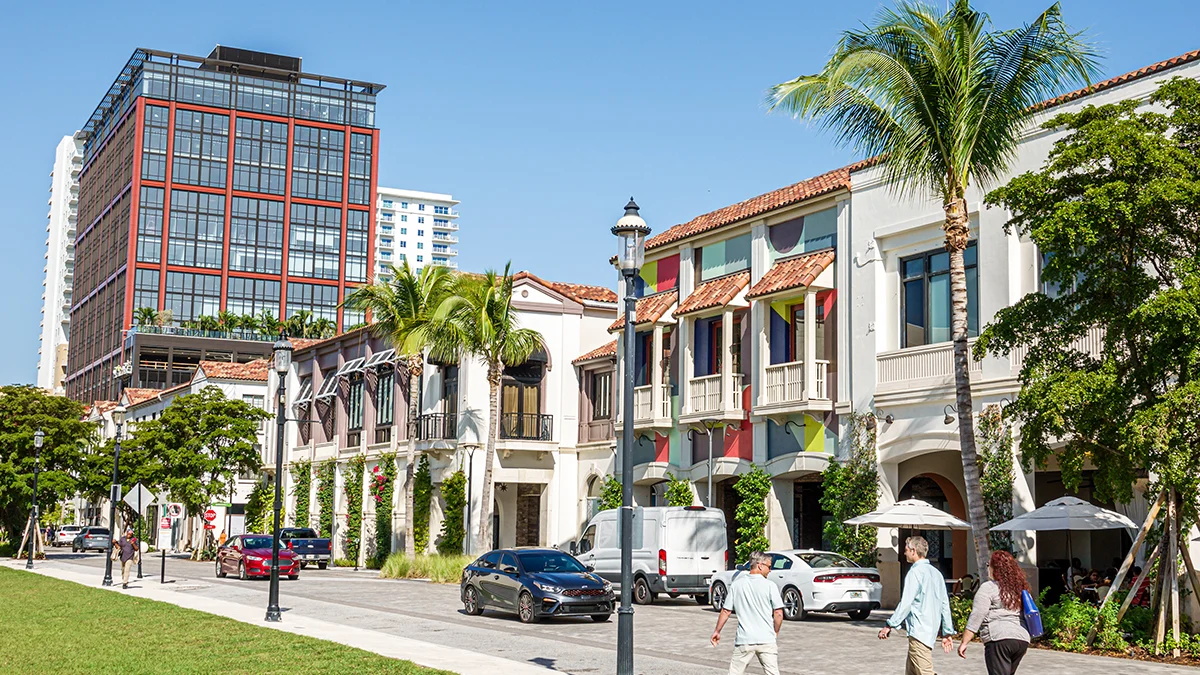
Simultaneously, West Palm Beach continues to solidify its reputation as "Wall Street South." The city’s evolution from a seasonal resort town to a year-round corporate powerhouse has been nothing short of transformative. The migration of financial heavyweights—including Goldman Sachs, J.P. Morgan, and various hedge funds—has brought a new demographic of ultra-high-net-worth individuals to the region. This influx has driven luxury home prices in the area up by an astonishing 187 percent over the past decade. In June alone, total home sales in the region surged by 23 percent, mirroring the frenetic activity seen in the Bay Area.
Supporting Data: The Disparity in Purchasing Power
The current market is defined by a "resource gap." Data indicates that over one in five homes sold in June went for above the asking price. In a standard market, this would suggest a broad-based bubble; however, current indicators point to a targeted, luxury-led surge.

- Cash is King: Wealthy buyers are increasingly bypassing traditional financing. By paying with cash or making substantial down payments, these buyers are effectively immunizing themselves against the 6.5 percent interest rate environment.
- The Inventory Drought: Total active listings remain historically low. Because existing homeowners are unwilling to trade their current mortgage rates for a higher one on a new property, new listings are scarce. This inventory squeeze ensures that even modest homes face multiple-offer scenarios, keeping prices elevated even in non-luxury segments.
- Geographic Expansion: High-net-worth interest is no longer confined to the traditional powerhouses. Data shows increased activity in "second-tier" cities, including Nashville, Austin, and San Diego, as remote-capable luxury workers seek better quality-of-life metrics alongside financial appreciation.
Official Responses and Expert Outlook
Economists and market analysts remain divided on the long-term sustainability of this growth. In recent statements, representatives from major real estate brokerages have noted that while the "billionaire effect" is redrawing the global luxury map, the lack of affordable inventory remains a structural threat to the broader economy.
"We are seeing a market that is fundamentally disconnected from the average American household’s income," says one prominent analyst. "When over 20 percent of homes are selling above asking price in a high-interest-rate environment, it is clear that the market is being driven by wealth accumulation rather than organic, broad-based demand."

While official government data confirms that the rate of appreciation has slowed compared to the hyper-inflationary periods of 2021 and 2022, the lack of supply—exacerbated by the reluctance of current homeowners to move—continues to act as a floor for prices.
The Societal Implications
The implications of this trend are significant. First, the barrier to entry for first-time buyers has reached a point where, for many, homeownership is no longer a realistic milestone without significant intergenerational wealth transfer. This creates a "rentership society" where housing costs consume a growing percentage of household income, further hindering the ability of families to save for the future.

Second, the concentration of wealth in specific "super-zip codes" is accelerating urban stratification. In cities like San Francisco and West Palm Beach, the service and support sectors are increasingly unable to afford to live in the communities they serve, leading to labor shortages and a reliance on long-distance commuting.
Finally, the shift suggests that the traditional cyclicality of the housing market may be changing. If the "luxury floor" continues to rise, the market may become less sensitive to interest rate fluctuations and more sensitive to the concentration of capital among the top 5 percent of earners. As we move into the second half of 2026, the question for policymakers is not just how to increase inventory, but how to ensure that the American housing market remains a vehicle for wealth creation for the many, rather than an exclusive playground for the few.

The record-breaking June of 2026 will likely be remembered as the moment the American housing market fully decoupled from the realities of the average consumer, ushering in an era of luxury-driven, high-cost residential real estate that may define the economic landscape for years to come.
 Evan Lee Salim
 Asep Darmawan
 Laily UPN
