

Introduction: The Summer Tour Paradox
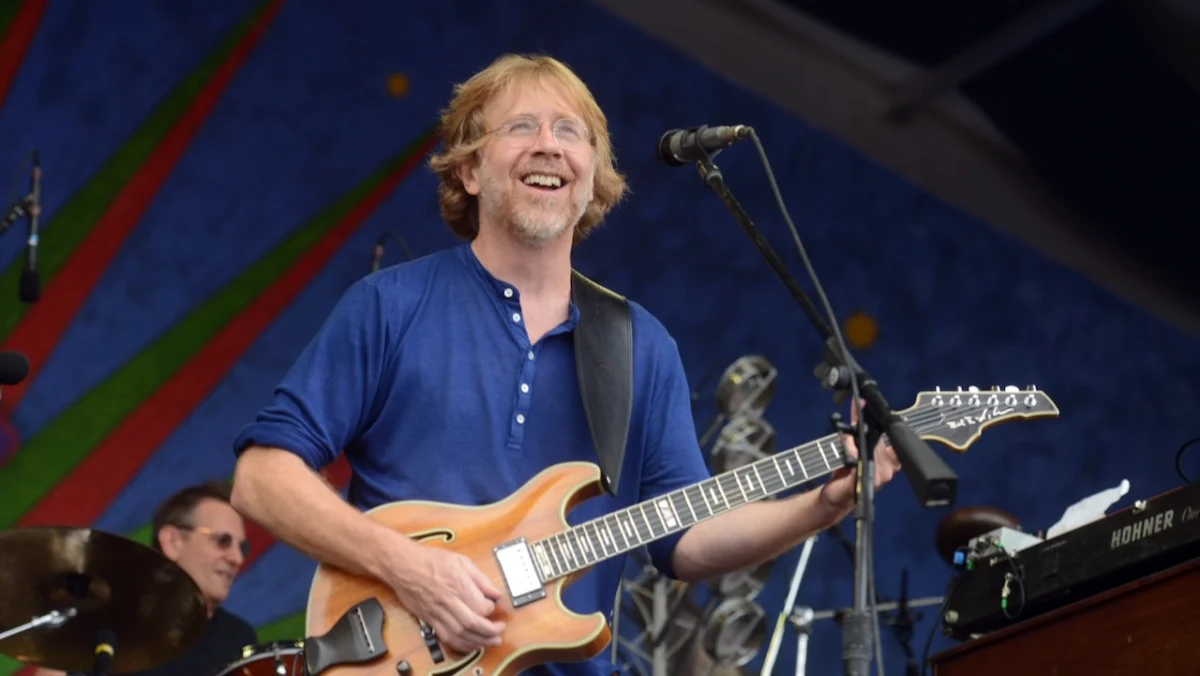
For the dedicated fanbase of the legendary improvisational rock quartet Phish, the summer tour is more than a series of concerts; it is a pilgrimage. This past weekend, the band descended upon the Ruoff Music Center in Noblesville, Indiana, for a three-night residency as part of their highly anticipated 2026 summer tour. For thousands of "Phishheads," the weekend was a success, defined by expansive, high-energy jams on tracks like "Bouncing Around the Room," "Tweezer," and "Simple," alongside unexpected covers of Led Zeppelin’s "No Quarter" and Prince’s "Cream."
However, for the Hamilton County Prosecutor’s Office, the weekend left a bitter taste. Following the conclusion of the three-night stand, the office took to social media to voice its profound disappointment, citing a significant presence of illicit substances and criminal activity among the concert-going crowd. This clash between the celebratory culture of the jam-band community and the strict enforcement policies of local authorities has once again sparked a debate regarding the policing of large-scale music festivals and venue-specific security protocols.
The Chronology of the Weekend
The residency at the Ruoff Music Center was intended to be a centerpiece of the 2026 summer concert season in Indiana. The venue, a staple of the Midwest touring circuit, routinely hosts massive crowds, and the Phish residency saw roughly 20,000 fans in attendance each night.
Night One: Setting the Stage
As the tour kicked off in Noblesville, the atmosphere inside the amphitheater was one of typical Phish-centric euphoria. Outside, however, law enforcement agencies from multiple jurisdictions had initiated a coordinated operation. According to official reports, the focus was not merely on traffic flow or venue security, but on the interdiction of narcotics.
Nights Two and Three: Escalation of Enforcement
As the residency progressed, the visibility of law enforcement increased. While the band continued to deliver technically complex performances that spanned the spectrum of their catalog, authorities reported that their undercover and uniformed operations were yielding substantial results. The operation culminated on the final night, with prosecutors noting that their primary objective was to ensure the safety of the venue, which they characterized as a "treasure in Hamilton County."
Supporting Data: The Scale of the Seizures
In the aftermath of the shows, the Hamilton County Prosecutor’s Office released a detailed list of the contraband seized throughout the weekend. The inventory reads like a cross-section of the illicit drug trade:
- Psilocybin Mushrooms: Large quantities recovered.
- Synthetic and Hard Narcotics: Methamphetamine, heroin, fentanyl, and MDMA.
- Psychedelics: Significant amounts of LSD.
- Marijuana: Persistent presence despite varying state legalities.
- Nitrous Oxide: A substance long associated with the fringe of the jam-band subculture.
The office reported that five individuals were formally arrested on major-felony charges related to drug dealing and possession. Furthermore, officers utilized the opportunity to perform warrant checks, identifying several individuals with active warrants, including a high-profile case involving an individual with an out-of-state warrant for failure to register as a sex offender.
Statistical Context: The 0.008% Reality
While the list of seized substances is undeniably extensive, a statistical analysis of the weekend presents a more nuanced picture. With an estimated 60,000 total attendees over the three-night run (20,000 per night), the five felony arrests account for approximately 0.008% of the total crowd. This figure has become a talking point for fans who argue that the Prosecutor’s Office is painting an entire community with a broad brush based on the actions of an infinitesimal minority.
Official Responses and the "Disappointed" Stance
The Facebook post issued by the Hamilton County Prosecutor’s Office was notably stern. By choosing to frame their official communication around "disappointment," the authorities sent a clear message that the culture surrounding the concert—specifically the open-air vending and the consumption of substances—would no longer be treated with the "look-the-other-way" approach often associated with historical jam-band tours.
"As a result of the efforts by officers with multiple law enforcement agencies, significant quantities of suspected [narcotics] were seized," the statement noted. The tone was one of moral and civic frustration. The office emphasized that while they appreciate the "diverse array of entertainment" the Ruoff Music Center brings to Noblesville, that privilege is contingent upon the maintenance of public order and safety.
The statement concluded with a warning: "Law enforcement will not tolerate the wrongdoers who threaten the safety and enjoyment of those who just want to enjoy the show." This rhetoric suggests a shift in policy, potentially signaling that future events at the Ruoff will face similar, if not more stringent, security scrutiny.
Implications for the Live Music Industry
The situation in Hamilton County serves as a case study for the broader challenges facing large-scale touring acts in 2026.
The "Venue-as-Community" Model
Venues like the Ruoff Music Center are essentially temporary cities. When 20,000 people gather, the lines between private enjoyment and public safety often blur. The Phish community, while generally peaceful, has a history of "lot culture"—a decentralized economy of vendors and campers that exists in the periphery of the ticketed event. When local prosecutors target this culture, they are not just targeting individuals; they are targeting a lifestyle that has existed for decades.
Security vs. Experience
The trend toward heavy-handed policing at major concerts creates a "security-first" atmosphere that can fundamentally alter the fan experience. Fans are now navigating a landscape where the threat of arrest for minor infractions is higher than at any point in the history of the band’s touring career. This may lead to fewer fans traveling for multi-night residencies, potentially impacting the local economy of cities like Noblesville, which rely on the influx of tourism generated by these events.
Future Liability and Policing
The identification of individuals with outstanding warrants—particularly for serious offenses like sex offender registration violations—demonstrates that law enforcement views these concerts as prime opportunities for intelligence gathering and apprehension. This "dragnet" approach to event security is becoming more common across the United States. As law enforcement technology improves, the anonymity that once protected concert-goers is rapidly eroding.
Looking Ahead: The 2026 Tour
As the Phish 2026 summer tour moves forward, the focus shifts to upcoming stops in Savannah, Georgia, Raleigh, North Carolina, and Columbia, Maryland. The band, known for its resilience and ability to navigate changing cultural tides, will continue to play to sold-out crowds. However, the events in Indiana serve as a harbinger for the rest of the summer.
Touring artists and venue operators are now on notice: the legal threshold for "tolerable behavior" has been lowered. For the fans, the message is equally clear: the days of operating outside the purview of local law enforcement are coming to an end.
Conclusion: A Balancing Act
The Ruoff Music Center remains a vital hub for live music, and the Hamilton County Prosecutor’s Office is charged with the mandate of public safety. The tension observed this past weekend is the inevitable byproduct of a society that is increasingly intolerant of the "anything goes" ethos of 20th-century counter-culture music scenes.
Ultimately, the goal of both the concert-goers and the authorities is supposed to be the same: a safe, enjoyable environment for all involved. Whether that can be achieved without the heavy-handed intervention seen in Noblesville remains to be seen. For now, the fans will keep dancing, the band will keep playing, and the authorities will keep watching—each waiting to see if the next stop on the tour will bring more music or more handcuffs.
 Ammar Sabilarrohman
 Lina Irawan
 Nana Muazin
