

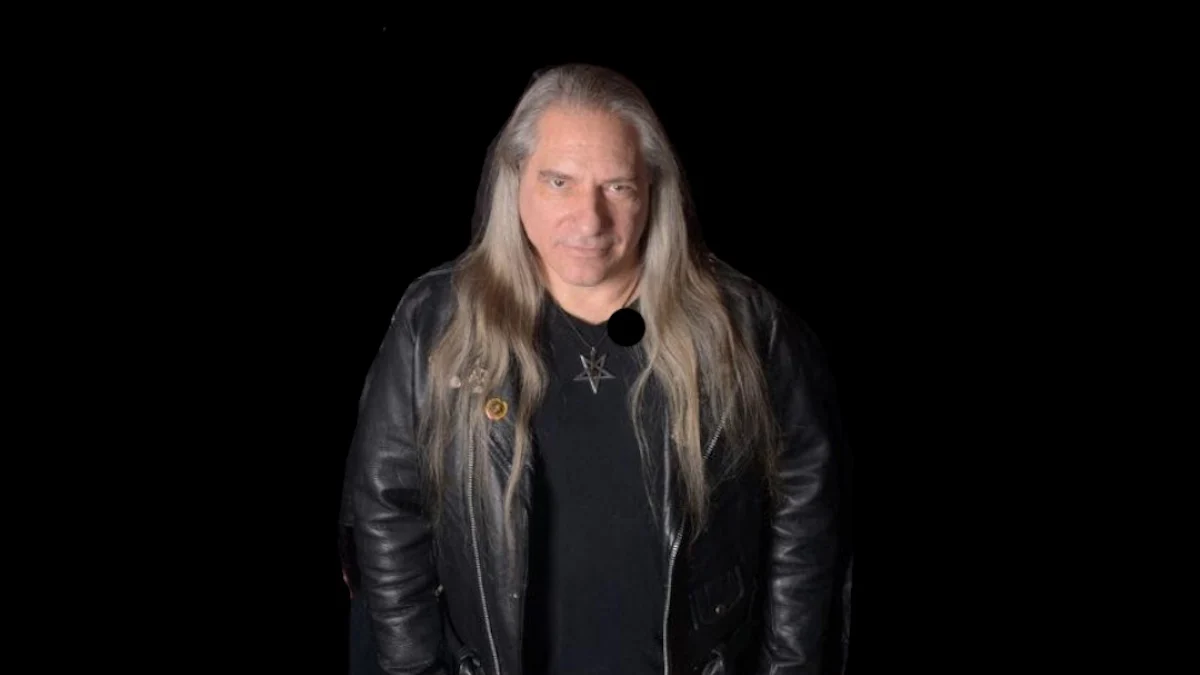
The extreme metal community is in mourning following the announcement that Mike Browning, a foundational figure in the development of American death metal, has passed away at the age of 62. Browning, whose career spanned over four decades, was instrumental in the creation of two of the genre’s most influential pillars: Morbid Angel and Nocturnus. His death marks the loss of a musician whose creative vision helped transition death metal from a raw, thrash-adjacent experiment into the technical, atmospheric, and sci-fi-infused juggernaut it is today.
The news of his passing was confirmed by Profound Lore, the label home for his long-running project, Nocturnus AD. In a poignant tribute, the label hailed him as a "death metal legend" and the "godfather of sci-fi death metal," bidding him a final farewell as he journeys "beyond the gateway to the outer void."
The Genesis: Founding Morbid Angel
To understand the landscape of 1980s extreme music, one must acknowledge the role of the Tampa, Florida scene, and at its epicenter stood Mike Browning. In 1983, Browning co-founded Morbid Angel, a band that would eventually become the gold standard for death metal worldwide.
Browning’s tenure with the band was foundational, serving as both lead vocalist and drummer during their formative years. He was the driving rhythmic and vocal force behind the sessions for what was intended to be the band’s debut studio album, Abominations of Desolation. Recorded in 1986, the album captured a band on the precipice of greatness, blending the speed of thrash with a newfound, occult-tinged darkness that would define the genre for years to come.
However, the history of Abominations of Desolation is as chaotic as the music itself. For years, the official narrative provided by the band’s leadership suggested the album was shelved due to technical shortcomings. Browning, however, offered a far more human and volatile explanation during a 2019 interview with Bardo Methodology.
The Fracturing of a Titan
According to Browning, the decision to discard the recordings had nothing to do with production quality or musical ability. He asserted that the album was effectively buried following a personal falling out with guitarist Trey Azagthoth. Browning alleged that after discovering an affair involving his then-girlfriend and the guitarist, a violent confrontation ensued, leading to an irreparable rift in the band.
"These comments about it not being technically good enough only came once I was out," Browning noted in the interview, emphasizing that the band had been fully prepared to move forward with the release before the internal conflict reached its boiling point. Abominations of Desolation eventually saw a release in 1991, years after Browning’s departure, serving as a historic artifact of the band’s primitive, visceral roots.
The Sci-Fi Revolution: The Nocturnus Years
If Morbid Angel established Browning as a pioneer, Nocturnus cemented his legacy as a visionary. Following his exit from Morbid Angel, Browning sought to push the boundaries of what death metal could sound like. In the late 1980s, he formed Nocturnus, a band that boldly incorporated keyboards and science fiction themes—elements that were then considered taboo in the hyper-masculine, "satanic-only" climate of the death metal underground.
The 1990 debut album The Key remains a landmark release. It is widely regarded as the blueprint for progressive death metal, proving that death metal could be cerebral and atmospheric without sacrificing its crushing intensity. The use of sci-fi lyrical concepts—ranging from cyborgs and time travel to cosmic horror—opened the door for a generation of bands to explore themes beyond the traditional occult.
Browning’s tenure with Nocturnus lasted through their sophomore effort, 1992’s Thresholds. While he was eventually ousted from the band, his influence remained embedded in the project’s DNA. By 1999, he was back in the fold, forming Nocturnus AD to carry on the legacy of the original group. Through various monikers and lineups—including a period as "After Death"—Browning remained the steadfast guardian of the Nocturnus sound.
His commitment to this vision never wavered, culminating in the 2024 release of Unicursal, a record that proved his creative fire was still burning brightly even in the later stages of his career.
Chronology: A Life in Extreme Music
- 1983: Co-founds Morbid Angel in Tampa, Florida, helping to define the early Florida Death Metal sound.
- 1986: Records Abominations of Desolation with Morbid Angel; the album is later shelved following internal band disputes.
- 1987: Departs Morbid Angel, leading to the early transition of the band’s lineup.
- 1987–1988: Forms Nocturnus, integrating progressive elements and science fiction motifs into the death metal lexicon.
- 1990: Releases the seminal album The Key, widely cited as a pioneering work in technical and progressive death metal.
- 1992: Releases Thresholds with Nocturnus before his departure from the group.
- 1999: Founds Nocturnus AD to preserve and evolve the musical style he helped pioneer.
- 2013: Revives the name Nocturnus AD permanently, focusing on new material and live performances.
- 2024: Releases the latest Nocturnus AD studio album, Unicursal.
- 2026: Passes away at age 62, leaving behind an indelible mark on global extreme metal.
Official Responses and Industry Impact
The death of Mike Browning has triggered an outpouring of tributes from peers and contemporaries who recognized his importance to the genre’s maturation. Morbid Angel, in a rare moment of public acknowledgement regarding their early history, released a brief but respectful statement: "R.I.P Mike, thanks for helping making all this happen. Our condolences to his family & especially his daughter."
Profound Lore Records, which stood by Browning during his later years with Nocturnus AD, emphasized his status as a "godfather" of the subgenre. The sentiment shared across the metal community has been one of deep respect for a man who refused to compromise his vision, even when faced with the systemic challenges of the music industry or the shifting tides of genre trends.
For many, Browning represents the "pure" spirit of the 80s death metal movement—a time when bands were forged in garages and basements, driven by an obsessive need to create something faster, heavier, and more complex than anything that had come before.
The Lasting Implications: Why Browning Matters
The legacy of Mike Browning is not merely found in the sales of his records or the longevity of his bands. It is found in the DNA of modern extreme music. By insisting on the inclusion of synthesizers in The Key, Browning challenged the gatekeepers of death metal, forcing them to accept that technical proficiency and atmospheric texture were not antithetical to "true" death metal.
His story also highlights the often-fraught nature of band politics during the birth of a musical movement. The Abominations of Desolation saga serves as a reminder that the history of metal is as much about human drama as it is about the music itself. Browning’s willingness to speak his truth about his departure from Morbid Angel provided historians and fans with a clearer, more grounded view of how one of the world’s biggest metal bands came to be.
As the metal community reflects on his passing, the focus inevitably turns to his work. Whether one is listening to the primal, unrefined aggression of his early Morbid Angel recordings or the complex, keyboard-laden tapestries of The Key, the fingerprints of Mike Browning are unmistakable. He was a pioneer who helped build a fortress of sound that has outlasted many of his contemporaries.
In the wake of his passing, the music remains. The gateway to the "outer void" he spoke of is now one he has crossed, but the map he drew for future generations of musicians remains as relevant as ever. Mike Browning was more than a drummer or a vocalist; he was a catalyst for an entire subculture, a man who saw the potential for death metal to be more than just noise—to be, in fact, an art form.
Our condolences remain with his family, friends, and the legions of fans who found identity and inspiration in the dark, science-fiction landscapes he created. The void is a little quieter today, but the echo of his contribution will resonate for decades to come.
 Asro
Asro
 Lina Irawan
 rifanmuazin
