

By [Your Name/Journalistic Desk]
July 14, 2026
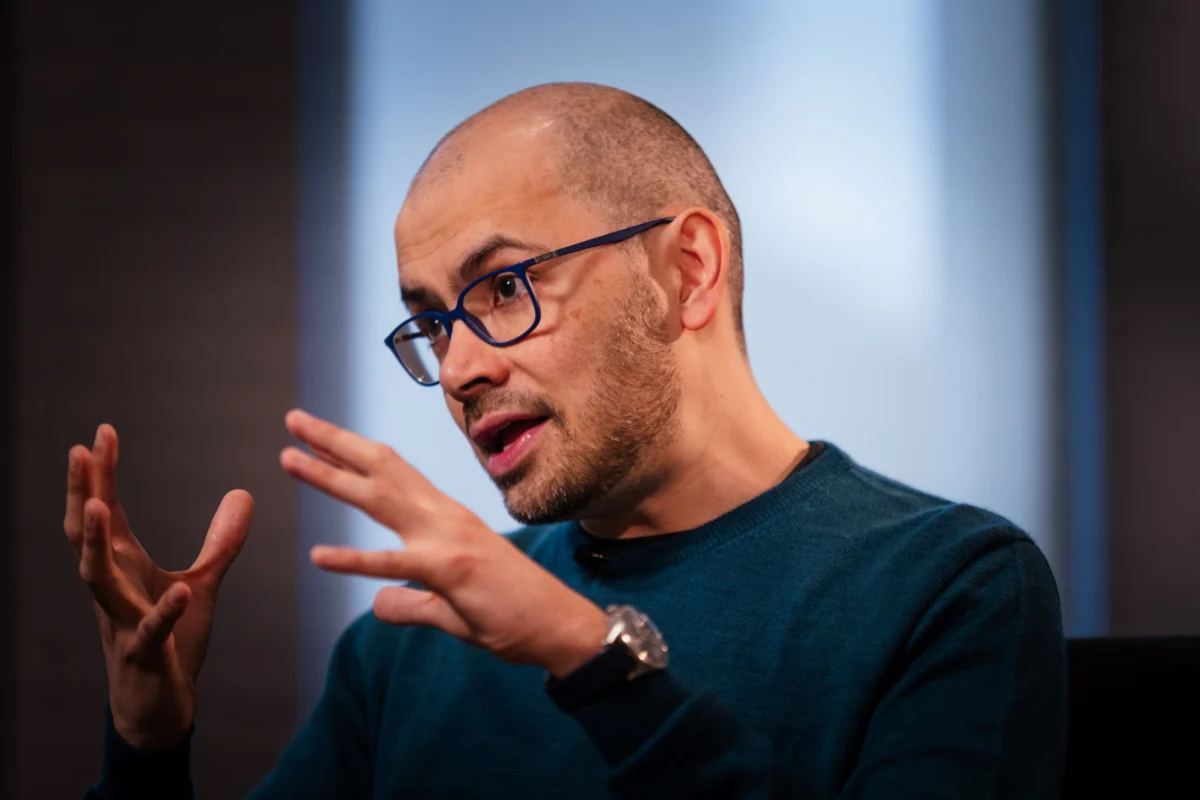
In a significant pivot for the artificial intelligence industry, Google DeepMind CEO Demis Hassabis has publicly advocated for a fundamental restructuring of how the most powerful AI systems are governed. In a manifesto published on X (formerly Twitter) titled “A Framework for Frontier AI and the Dawning of a New Age,” Hassabis argues that the current ad-hoc, opaque review processes for “frontier” models—the most capable, large-scale AI systems—are insufficient for the risks they pose.
Hassabis is calling for the creation of an independent “standards body,” modeled directly after the Financial Industry Regulatory Authority (FINRA). This organization would be empowered to conduct rigorous technical testing of models before they are deployed to the public, effectively acting as a gatekeeper for the U.S. market.
The Case for a New Regulatory Paradigm
The core of the proposal lies in moving away from government-led, non-technical oversight toward an industry-funded but independently operated regulatory framework.
Currently, when companies like OpenAI or Anthropic reach significant milestones in model capability, they undergo voluntary—and often criticized—reviews by U.S. government agencies. These assessments have drawn fire from experts who argue that government officials lack the deep, granular technical expertise required to evaluate cutting-edge neural networks. Furthermore, the decision-making processes regarding release dates have been described as opaque, creating a friction point between the speed of innovation and the necessity of safety.
Hassabis suggests a transition: “Initially, Frontier Labs would voluntarily share models with the Standards Body for review up to 30 days before release,” he wrote. “Once the assessment protocol is shown to be effective and robust, formalization could quickly follow, meaning that Frontier Models would be required to pass it to be deployed in the U.S. market.”
Chronology of the Frontier AI Debate
The call for this regulatory body arrives at a critical juncture in the history of artificial intelligence.
- 2023–2024 (The Early Warnings): As foundation models such as GPT-4 and Claude 3 began to dominate the discourse, concerns regarding “existential risk” moved from academic white papers to the halls of Congress.
- Early 2026 (The Breaking Point): Reviews of Anthropic’s “Mythos” and OpenAI’s “Sol” models became lightning rods for criticism. Industry observers pointed to the lack of transparency in the federal review process, arguing that the assessments were either too superficial or too slow to keep pace with rapid iteration.
- June 2026: A series of public debates surfaced regarding the potential for “regulatory capture,” where AI companies might influence the very rules meant to govern them. The industry reached a consensus that the current “wait-and-see” approach from the federal government was creating market uncertainty.
- July 14, 2026: Demis Hassabis formally introduces the FINRA-style proposal, shifting the focus from whether we should regulate to how we should regulate.
The FINRA Model: A Self-Regulatory Blueprint
The Financial Industry Regulatory Authority (FINRA) is a private, non-governmental organization that regulates member brokerage firms and exchange markets in the United States. It is overseen by the Securities and Exchange Commission (SEC) but operates with a degree of independence and technical specialization that government agencies often struggle to replicate.
Hassabis envisions the “AI Standards Body” functioning similarly. It would be funded by the AI labs themselves, ensuring that the organization has the financial muscle to hire the world’s top researchers—many of whom currently command salaries in the millions of dollars at firms like Google, OpenAI, and Meta.
By staffing the body with a combination of open-source advocates, technical experts, and third-party safety auditors, the framework aims to solve the “expertise gap.” Furthermore, it would allow the industry to outsource specific evaluations to boutique AI safety labs, creating a decentralized but standardized approach to auditing models for everything from chemical weapon risks to autonomous cyber-attack capabilities.
Official Responses and Political Hurdles
The proposal is being met with a complex mix of optimism and skepticism, particularly within the corridors of the current administration.
The Trump Administration has historically been wary of establishing heavy-handed regulatory bodies that might stifle American technological leadership. White House AI advisor and a16z general partner Sriram Krishnan recently dismissed the idea of a centralized AI regulator, famously stating, “there will not be an FDA for AI.”
This stance reflects a broader libertarian sentiment in Silicon Valley, which fears that a slow-moving, bureaucratic agency could hamper the U.S. in its competitive race against international rivals, particularly those in jurisdictions with less restrictive regulatory environments.
However, the industry’s shift toward supporting a FINRA-like model is a calculated compromise. By positioning the regulator as an industry-funded, technically focused entity rather than a top-down federal agency, advocates like Hassabis hope to satisfy the administration’s desire for market-driven innovation while addressing the public’s mounting concerns regarding safety.
Technical Implications: Testing the Untestable
The technical challenge inherent in Hassabis’s proposal is the “moving target” problem. AI models are not static; they are constantly being fine-tuned, updated, and integrated into complex agentic workflows.
If a Standards Body is to be effective, it must develop an “assessment protocol” that is robust enough to catch emergent behaviors—those capabilities that appear suddenly as a model scales. This involves:
- Red Teaming as a Service: The body would likely maintain a rotating cadre of experts to conduct adversarial testing on new models.
- Post-Release Monitoring: Hassabis emphasized that the body would work with labs to address “critical post-release vulnerabilities,” acknowledging that a model’s behavior can change once it is exposed to the chaos of the open internet.
- Standardized Benchmarks: Moving beyond generic performance metrics to safety-specific benchmarks that measure a model’s propensity for bias, deception, or dangerous instruction-following.
Economic and Strategic Implications
The creation of a FINRA for AI would have profound impacts on the economics of the industry.
The Cost of Compliance
For smaller labs and startups, the cost of submitting to a 30-day review period and meeting the rigorous standards of a national regulator could be prohibitive. Critics worry this might create a “regulatory moat,” where only the largest, best-funded companies can afford to bring frontier models to market, thereby stifling competition.
Geopolitical Stability
The U.S. is currently in a race to define the global standards for AI. By establishing a robust, independent standards body, the U.S. could effectively export its regulatory framework to other nations. If other countries adopt the U.S. “standards body” protocols, it could become the international benchmark for AI safety, effectively setting the rules of the road for the global AI economy.
Conclusion: A Turning Point for AI
Demis Hassabis’s proposal is not just about safety; it is an attempt to stabilize the AI industry during a period of extreme volatility. By proposing a structure that is both technically literate and industrially funded, he is trying to navigate the narrow path between the extremes of unchecked acceleration and crushing state-led regulation.
Whether this proposal gains traction depends on whether the major players in the AI ecosystem can agree on the rules of the game. If the industry can prove that self-regulation—under the watch of an independent body—can catch the dangers before they materialize, it may prevent the very thing the industry fears most: a government crackdown that halts progress entirely.
As the industry looks toward the next generation of models, the focus is shifting from "what can AI do?" to "what can we trust it to do?" Hassabis has provided the starting point for that conversation. Now, the rest of the industry, and the policymakers in Washington, must decide if they are willing to step into this new age of structured oversight.
Disclaimer: This article contains links to affiliate partners. Purchasing through these links may result in a small commission for TechCrunch, which does not influence our editorial coverage.
 Ammar Sabilarrohman
 Ali Ikhwan
 rifanmuazin
