

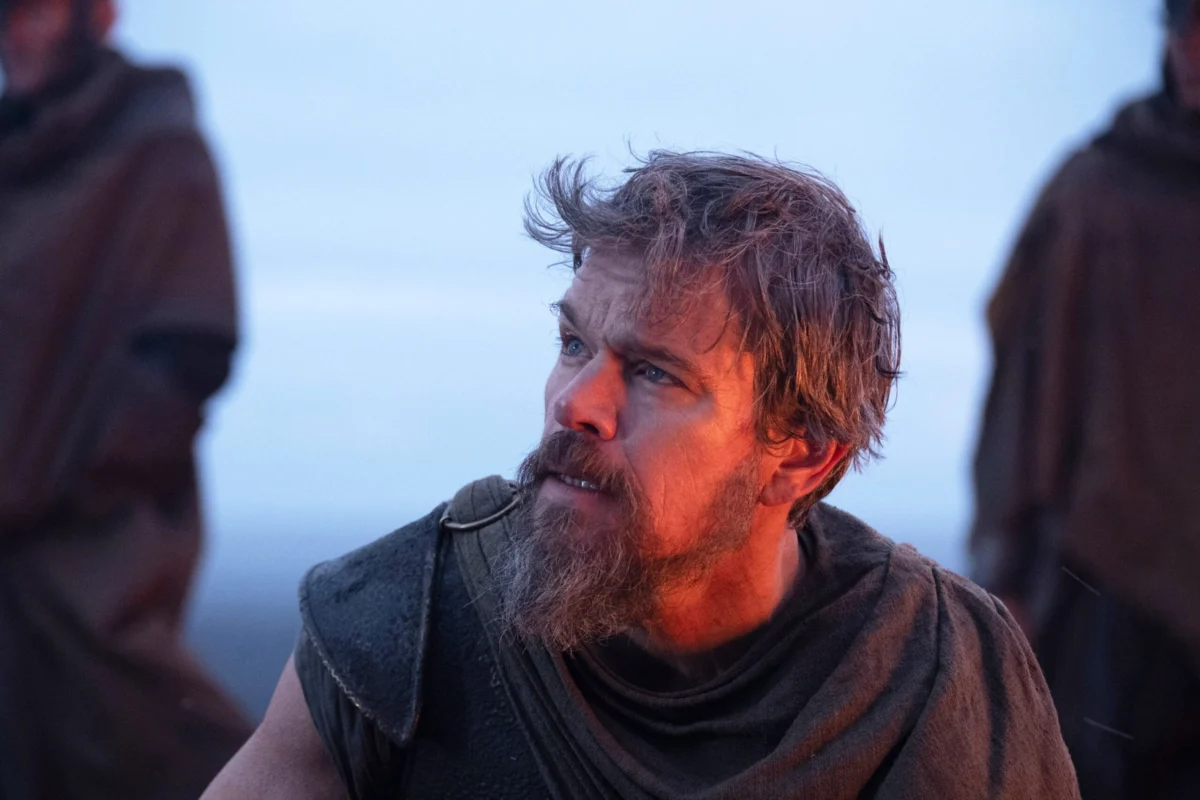
Three years after his monumental sweep at the Academy Awards with Oppenheimer, Christopher Nolan is set to return to the global stage with one of the most ambitious projects of his career: a direct adaptation of Homer’s The Odyssey.
Homer’s epic poem—the foundational text of Western literature—has served as a creative North Star for storytellers for millennia. From oral traditions and stage plays to the dawn of the cinematic age, the journey of Odysseus has been interpreted, deconstructed, and reimagined countless times. Yet, despite the ubiquity of its themes—home, loss, perseverance, and the struggle against the divine—a direct, big-budget cinematic adaptation of the epic has remained elusive for major prestige directors. Nolan’s upcoming take is widely expected to be the first to truly capture the Academy’s attention as a faithful, direct adaptation, marking a significant milestone in the director’s already storied filmography.
A Legacy of Odyssean Echoes
While Nolan’s The Odyssey stands apart as a direct adaptation, the DNA of Homer’s narrative has permeated the history of cinema, influencing some of the most celebrated films to grace the screen. The Academy has frequently honored these "Odyssean" stories, recognizing the structural and thematic parallels that resonate with audiences across centuries. To understand the weight of Nolan’s new project, one must look at how the spirit of the ancient epic has been channeled through the lens of modern masters.
The Pioneers: From Deep Space to the River of War
The most iconic example of an "Odyssey" in spirit remains Stanley Kubrick’s 2001: A Space Odyssey (1968). While not an adaptation of Homer, the film intentionally evokes the epic through its very title, transforming the Mediterranean Sea into the vast, silent vacuum of space. By replacing the voyage of a king returning to Ithaca with the evolution of humanity itself, Kubrick created a cosmic mirror to Homer’s work. The film received four Oscar nominations, securing a win for Best Visual Effects, and solidified its status as a foundational masterpiece of science fiction.
A decade later, Francis Ford Coppola took the "voyage into the unknown" to the jungles of Vietnam in Apocalypse Now (1979). A loose adaptation of Joseph Conrad’s Heart of Darkness, the film is structurally a textbook Odyssey. Captain Benjamin L. Willard (Martin Sheen) travels up a river that serves as the equivalent of the Aegean Sea, encountering surreal, dangerous "episodes" that test his sanity and morality. The film garnered eight Academy Award nominations, winning for Best Cinematography and Best Sound, and remains a definitive look at the dark, hallucinatory side of the hero’s journey.
The Coen Brothers and the American Mythos
The Coen brothers have returned to the well of the Odyssey twice, showcasing how the structure of the ancient tale can be layered into the American experience. O Brother, Where Art Thou? (2000) famously transposed the epic to the Great Depression-era South. With George Clooney playing a character explicitly named "Ulysses," the film utilized a picaresque structure, reimagining sirens, cyclopes, and lotus-eaters as folk figures in a landscape of music and poverty. The film was a cultural phenomenon, earning two Oscar nominations and a Grammy for its seminal soundtrack.

Thirteen years later, the Coens explored a more internal, melancholic side of the "wandering hero" in Inside Llewyn Davis (2013). By focusing on a struggling folk singer, the directors utilized motifs of temptation, the search for a permanent home, and the inevitability of circular failure to ground the grandiosity of the Odyssey in the gritty reality of 1960s Greenwich Village.
The Modern Survivalist: Interstellar and The Martian
Nolan himself has danced around these themes before. Interstellar (2014) serves as a spiritual precursor to his current project. Set in a dying future where humanity must look to the stars for survival, the film features an astronaut, Joseph Cooper (Matthew McConaughey), who is driven by the singular, desperate desire to return to his family. It is a story of time dilation and cosmic distance that mirrors Odysseus’s decades-long trek home. The film was nominated for five Academy Awards and won for Best Visual Effects.
Similarly, Ridley Scott’s The Martian (2015) captured the ingenuity of the survivor. Matt Damon’s portrayal of Mark Watney—a man stranded on a desolate planet, relying on science and grit to "science the sh*t" out of his situation—is perhaps the most direct distillation of Odysseus’s intellect. It was a critical and commercial triumph, securing seven Oscar nominations and cementing the idea that the "odyssey" is a narrative structure that modern audiences crave.
Production and Creative Direction
Christopher Nolan’s The Odyssey is currently in late-stage post-production, with industry insiders suggesting a visual language that blends the director’s signature practical effects with a grounded, visceral approach to ancient combat and maritime survival.
The casting choices have been a focal point of industry discourse. Matt Damon, re-teaming with Nolan following his role in Oppenheimer, has been tapped to play Odysseus. The choice is strategic; Damon’s ability to project vulnerability alongside rugged, blue-collar determination fits the character’s evolution from arrogant king to weary traveler. Opposite him, Anne Hathaway (reuniting with the director after Interstellar and The Dark Knight Rises) is set to portray Athena, the guiding deity who serves as the film’s moral and strategic anchor.
Nolan has reportedly insisted on authentic Mediterranean filming locations, eschewing excessive green screens to capture the "weight of the world" that defined Homer’s original text. This commitment to physical realism is expected to be a primary talking point during the upcoming awards season.

The Oscar Outlook: Implications and Predictions
As we look toward the 2027 awards cycle, the industry consensus is that The Odyssey is positioned to be a major contender. Gold Derby’s early prognosticators have high expectations, with the film appearing in the top five for several major categories:
- Best Picture: The scale and historical significance of the adaptation make it a natural frontrunner for the Academy’s top prize.
- Best Director: Nolan, having finally secured his first directing Oscar with Oppenheimer, is now viewed as an industry titan whose every move is scrutinized for potential "masterpiece" status.
- Best Actor: Matt Damon’s transformation into the role of the beleaguered, aging king is expected to be a career-defining performance.
- Best Supporting Actress: Anne Hathaway’s portrayal of Athena is being tipped for its complexity, as she must navigate the film’s divine and human registers.
- Best Adapted Screenplay: Adapting a poem that is structurally episodic into a cohesive, three-act film is a massive narrative challenge that, if successful, will likely be recognized by the Academy.
Beyond the Awards: Why The Odyssey Matters
The implications of this film go beyond mere hardware. In an era where franchise fatigue is a documented phenomenon in Hollywood, Nolan’s decision to adapt one of the oldest stories in human history suggests a shift in focus toward "prestige myth-making."
By treating The Odyssey as a serious drama rather than a fantasy spectacle, Nolan is attempting to bridge the gap between high-art intellectualism and blockbuster entertainment. The film asks fundamental questions that resonate in our modern, hyper-connected, yet often isolated world: What does it mean to be a father? What do we owe to the home we left behind? And how do we maintain our humanity when faced with the cruelty of the elements?
Conclusion
As the release date for The Odyssey approaches, the cinematic community finds itself in a state of heightened anticipation. We are not merely waiting for a new film; we are waiting for a new iteration of a story that helped define the Western imagination. Whether or not it captures the Oscar gold, Christopher Nolan’s contribution to the Homeric tradition is set to be the definitive cinematic version of the journey for a new generation.
In the long, winding history of films about lost souls, kings, and survivors, The Odyssey arrives not as a remake, but as a homecoming. As the dust settles on the Oppenheimer era, Nolan is once again proving that the most compelling journeys aren’t just about where we go, but who we become on the way back home. With the weight of history behind him and the full force of his technical mastery applied, the director is prepared to prove that even the oldest stories can be made brand new, provided they are told with enough heart, enough intellect, and enough vision.
 Nana Wu
 Iffa Jayyana
 Dwi Wanna
