

By Investigative Desk
In a harrowing development that underscores the deepening humanitarian crisis in Southeast Asia, the United Nations has issued a grave alert regarding the disappearance of two vessels in the Bay of Bengal. Officials from the International Organization for Migration (IOM) and the UN Refugee Agency (UNHCR) confirmed on Thursday that more than 500 people are feared dead following two separate maritime incidents involving Rohingya refugees and migrants.
These tragedies, which occurred in late June and early July, represent one of the deadliest stretches for those attempting to flee the persecution and systemic violence that have long plagued the Rohingya community. As international agencies scramble to assess the full scale of the loss, the incidents have ignited renewed calls for urgent regional action to address the root causes of forced displacement in the region.
Main Facts: A Timeline of Despair
The dual shipwrecks occurred during a period of volatile weather conditions, making an already perilous journey into a death trap.
- The First Incident: A vessel carrying approximately 250 passengers departed from Myanmar’s Rakhine state in late June. Contact with the boat was lost shortly after its departure, leaving no trace of the passengers or the vessel in the vast, turbulent waters of the Andaman Sea.
- The Second Incident: On July 8, a second, larger boat—carrying roughly 280 individuals—is believed to have capsized off the Ayeyarwady coast of Myanmar.
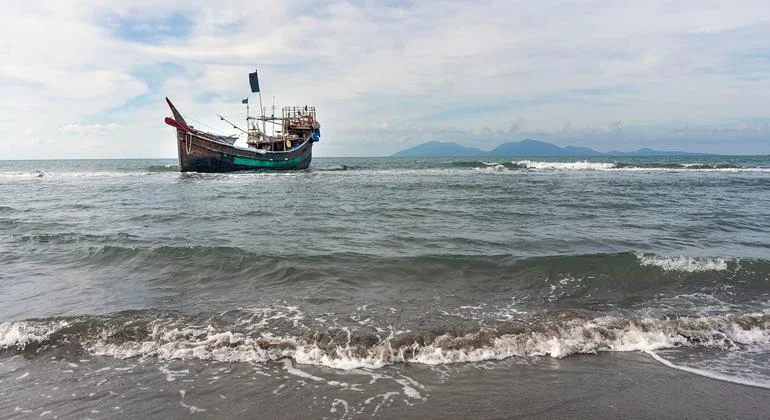
These individuals, many of whom are ethnic Rohingya, were attempting to navigate the high seas on makeshift, overcrowded vessels. Such craft are notoriously ill-equipped to withstand the monsoonal currents and unpredictable swells of the Indian Ocean. The failure of these vessels highlights the extreme desperation that drives thousands of displaced people to risk their lives in the hands of human traffickers, often during the most hazardous sailing months of the year.
Supporting Data: The Rising Toll of Maritime Migration
The loss of these 500 lives is not an isolated occurrence but rather the manifestation of a systemic failure to protect vulnerable populations. According to data provided by the UNHCR, nearly 300 people had already been reported missing or drowned in the Andaman Sea and the Bay of Bengal in the first half of 2024 alone.
The Geography of Risk
The maritime route from Rakhine state and the Cox’s Bazar refugee camps in Bangladesh towards Southeast Asian nations—primarily Malaysia and Indonesia—has become one of the most lethal corridors for refugees globally.
- Environmental Factors: The current monsoon season has brought torrential rain and flooding to the region, exacerbating the risks for small boats. Navigation becomes nearly impossible in these conditions, and the structural integrity of the vessels is often compromised by the force of the waves.
- Capacity Overload: To maximize profits, smuggling syndicates frequently pack these boats well beyond their intended capacity, leaving passengers with virtually no chance of survival if the vessel encounters even minor mechanical trouble or adverse weather.
The Root Causes: Why the Rohingya are Fleeing
The tragedy in the Andaman Sea is inseparable from the political instability and humanitarian collapse currently unfolding in Myanmar.
The Aftermath of the 2021 Coup
Since the military coup in February 2021, Myanmar has been embroiled in a protracted civil war. The military junta’s grip on power has resulted in widespread civilian displacement, the systematic destruction of infrastructure, and a complete breakdown of law and order. For the Rohingya, who had already suffered decades of state-led persecution—including the 2017 atrocities that forced nearly a million people to flee to Bangladesh—the post-coup environment has rendered life in Rakhine state untenable.
The Crisis in Cox’s Bazar
The situation is mirrored in the sprawling refugee camps of Cox’s Bazar, Bangladesh. These camps, which serve as the world’s largest refuge for the Rohingya, are currently facing a "funding cliff." UN agencies have reported drastic cuts in food rations and essential services due to a shortfall in international donor contributions.
"The situation inside Cox’s Bazar is increasingly difficult for those staying there because of serious funding cuts," noted UNHCR spokesperson Matthew Saltmarsh. When faced with the choice between a slow death by starvation or a high-stakes gamble on the open sea, an increasing number of families are opting for the latter.
Official Responses and International Accountability
The international community’s response has been one of alarm, yet critics argue that the lack of concrete action remains a fatal flaw.
The UN Stance
The IOM and UNHCR have issued a joint statement emphasizing that these reports "underscore the devastating impact of protracted conflict and displacement." They argue that without sustainable, long-term solutions, the cycle of death will continue. The agencies are currently working with regional governments to coordinate search and rescue efforts, though the sheer scale of the maritime area and the clandestine nature of these journeys make effective intervention exceptionally difficult.
The Arms Trade and Military Support
A recent report by the UN Office of the High Commissioner for Human Rights (OHCHR) has shed light on the complicity of foreign actors in Myanmar’s ongoing violence. The report details how foreign entities continue to supply the military junta with arms, jet fuel, and dual-use components. These supplies directly fuel the airstrikes and military campaigns that drive civilians to flee.
The UN report explicitly warns that the reduction in foreign aid—coupled with the continued flow of weapons to the military—is crippling locally led civilian protection efforts. This creates a "perfect storm" where residents have no protection from the junta at home and no safe passage when they attempt to escape.
Implications: A Call for Regional and Global Policy Shifts
The tragedy of the 500 lost at sea is a symptom of a broader, deeper failure in international diplomacy.
The Need for a Regional Approach
Cooperation frameworks, such as the Bali Process on People Smuggling, Trafficking in Persons and Related Transnational Crime, are essential tools for regional stability. However, they are often hampered by the lack of political will among member states to provide landing rights or legal status to refugees.
The IOM and UNHCR emphasize that a "route-based approach" is necessary. This involves:
- Enhanced Search and Rescue: Strengthening the ability of coastal nations to intercept and assist vessels in distress without the threat of refoulement or detention.
- Addressing Smuggling Networks: Dismantling the criminal syndicates that profit from human suffering by exploiting the lack of legal migration pathways.
- Sustainable Solutions: Shifting the focus from temporary containment to durable solutions, including repatriation (when conditions allow) or third-country resettlement.
A Moral Imperative
As the international community grapples with the loss of these 500 lives, the primary implication is the realization that the status quo is lethal. The silence of the international community regarding the arms supply to the Myanmar military, combined with the starvation-level funding of refugee camps, has effectively pushed the most vulnerable population in the world toward the bottom of the ocean.
"This is part of a worrying trend that’s been going on for some time now," said Mr. Saltmarsh. "Hundreds of people have already been reported to have lost their lives in that same region, in those same seas this year."
Unless there is a fundamental shift in how the international community addresses the military crisis in Myanmar and the subsequent humanitarian needs of the displaced, the upcoming months will likely see even more boats setting sail—and even more lives lost to the depths of the Bay of Bengal. The tragedy is not just in the sinking of these vessels, but in the global indifference that makes such journeys seem like the only viable option for survival.
 Azzam Bilal Chamdy
 Pevita Pearce
