

Main Facts: The Economic Engines of Atrocity
The ongoing civil war in Sudan has evolved into a sophisticated, brutal "war economy" where the nation’s natural wealth—once the backbone of its civilian economy—is now the primary engine of its destruction. A harrowing new report from the United Nations Office of the High Commissioner for Human Rights (OHCHR) has laid bare how the warring factions, specifically the Sudanese Armed Forces (SAF) and the paramilitary Rapid Support Forces (RSF), are systematically exploiting gold and gum arabic to finance their military operations, prolonging a conflict that has displaced millions and pushed the nation to the brink of collapse.
While the international community often views the conflict through the lens of political power struggles, the OHCHR report reveals a more mundane, yet equally devastating, reality: the commodification of state assets. Gum arabic, a vital ingredient in everything from soft drinks to pharmaceuticals, and gold, the ultimate store of value, have been transformed into tools of war. By redrawing trading routes, enforcing informal "taxes," and outright looting, these militias are effectively holding the country’s economic future hostage to sustain their campaign of violence.
Chronology: From Stability to State Capture
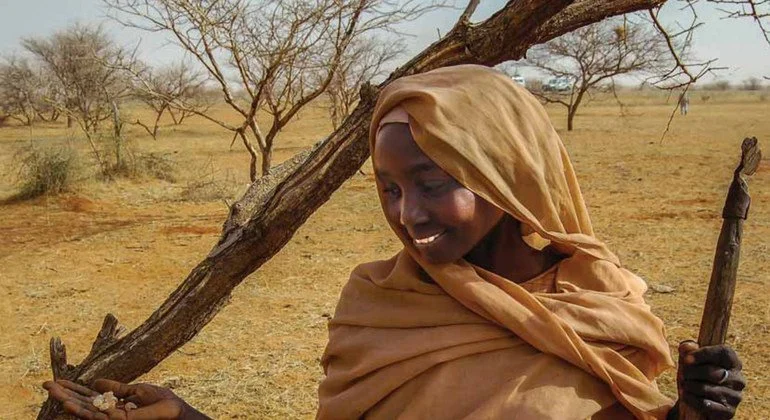
The collapse of Sudan’s fragile transition to civilian rule in April 2023 marked the turning point for the nation’s economic landscape. Prior to this, Sudan was a global powerhouse in the gum arabic industry, accounting for 70 to 80 percent of global crude exports. The trade was a lifeline for approximately five million Sudanese people, providing essential income for smallholders and semi-nomadic farmers across the "gum belt."
- April 2023: War erupts between the SAF and the RSF. The transition to democratic governance is dismantled, and the institutional oversight of resource extraction begins to crumble.
- Late 2023: As formal state structures falter, both the SAF and RSF begin seizing control of strategic trade corridors. The "gum belt," spanning the Kordofan and Darfur regions, becomes a theatre of war, with farmers subjected to extortion and forced displacement.
- January–June 2024: Systematic looting accelerates. UN-appointed experts document the theft of at least 3,700 tonnes of gum arabic by the RSF, often used as "payment" in lieu of salaries for fighters.
- Throughout 2024: Gold production remains a state-level contention. SAF-controlled areas manage to export roughly 28 tonnes of gold, valued at $1.6 billion, while nearly half of the total production is smuggled out of the country through informal channels.
- May 2025: The RSF further consolidates its grip on the gum arabic trade, looting major trading centers in El-Nuhud, West Kordofan, and redirecting supplies toward Chad and Darfur to circumvent international scrutiny.
Supporting Data: The Scale of Exploitation
The figures underpinning this war economy are staggering. According to the OHCHR, the financial stakes involved in the conflict are not merely incidental—they are the raison d’être for the continued fighting.
The Gum Arabic Pipeline
Before the war, gum arabic exports were worth up to $183 million annually. Today, the supply chain is fractured. The RSF has successfully diverted significant quantities from West Kordofan and Darfur toward "Souq al-Na’am," a demilitarized zone on the border with South Sudan. From there, the commodity is laundered, moving through Juba to the port of Mombasa in Kenya, or redirected toward Cameroon, where it is relabeled and processed for the international market. This laundering process effectively masks the "blood" origin of the product, allowing it to enter global supply chains undetected.
The Gold Standard of Conflict
Gold represents the most significant revenue stream for both sides. In 2024, the SAF-controlled regions declared a production of 65 tonnes of gold. Of this, 28 tonnes were officially exported through Port Sudan, accounting for 48.5 percent of Sudan’s total recorded exports. However, the shadow economy is likely much larger. Official data suggests that nearly 48 percent of total output was smuggled, likely passing through illicit networks to avoid taxation and international sanctions. While production data in RSF-controlled areas is opaque, mining hubs in Jebel Amer, Songo, and Talodi remain hotbeds of activity, providing the militia with the liquidity needed to purchase arms and maintain troop numbers.
Official Responses: The Call for Disruption
The UN’s stance is unequivocal: the international community is currently failing to sever the financial lifelines of the Sudanese conflict. OHCHR spokesperson Ravina Shamdasani did not mince words in her assessment of the situation.
"Sudan’s vast wealth of natural resources should benefit its people," Shamdasani stated. "Distressingly, what we are seeing today is anything but that. This wealth is only serving to undermine human rights and drive conflict, bringing pain and suffering on an enormous scale."
The OHCHR report serves as a direct challenge to global corporations and regulatory bodies. The UN insists that the current "war economy" must be disrupted by focusing on the specific trade routes and commodity chains that keep the factions solvent. This includes:
- Increased Surveillance of Trade Corridors: Greater scrutiny of transit points in Chad, South Sudan, and the Central African Republic.
- Supply Chain Due Diligence: Pressure on international buyers to verify the origin of gum arabic and gold to ensure they are not financing human rights violations.
- Sanctions Enforcement: A call for the Security Council to move beyond rhetoric and implement targeted measures against the individuals and entities facilitating the illicit trade of these commodities.
Implications: The Human Cost of Silence
The implications of this economic warfare are catastrophic. For the average Sudanese citizen, the weaponization of natural resources has turned their traditional livelihood into a death sentence. The OHCHR reports that farmers in the gum belt are now routinely subjected to arbitrary detention, extortion, and systemic looting. When their harvest is stolen, they lose not only their income but their primary means of survival during the off-season.
The Erosion of Sovereignty
By controlling the trade routes, the warring parties have effectively privatized the state. When a militia can pay its fighters with stolen gum arabic or smuggled gold, they are no longer accountable to the populace—they are accountable only to their ability to extract wealth. This creates a feedback loop: the more the militias extract, the more they can afford to fight; the more they fight, the less oversight exists to prevent the extraction.
Global Complicity
The fact that Sudanese gum arabic and gold continue to find their way into the international market—repackaged and relabeled—suggests a significant failure in global supply chain transparency. If international consumers and corporations do not demand rigorous verification, they are, by extension, financing the destruction of Sudan.
As the UN warned, the international community must pay "much closer attention" to the commodities that sustain these militias. Without a concerted effort to map, monitor, and choke these trade routes, the conflict in Sudan is unlikely to end. The war is no longer just about territory or political ideology; it has become a self-sustaining enterprise, fueled by the very resources that should have built a prosperous, peaceful future for the Sudanese people.
The tragedy of Sudan is that its potential for prosperity has become its greatest curse. Unless the world addresses the economic incentives of this war, the cycle of looting, smuggling, and violence will continue, leaving the people of Sudan to pay the price in blood for the world’s appetite for their resources.
 Lina Hope
 Asro
Asro
 Layla Zulfa
