

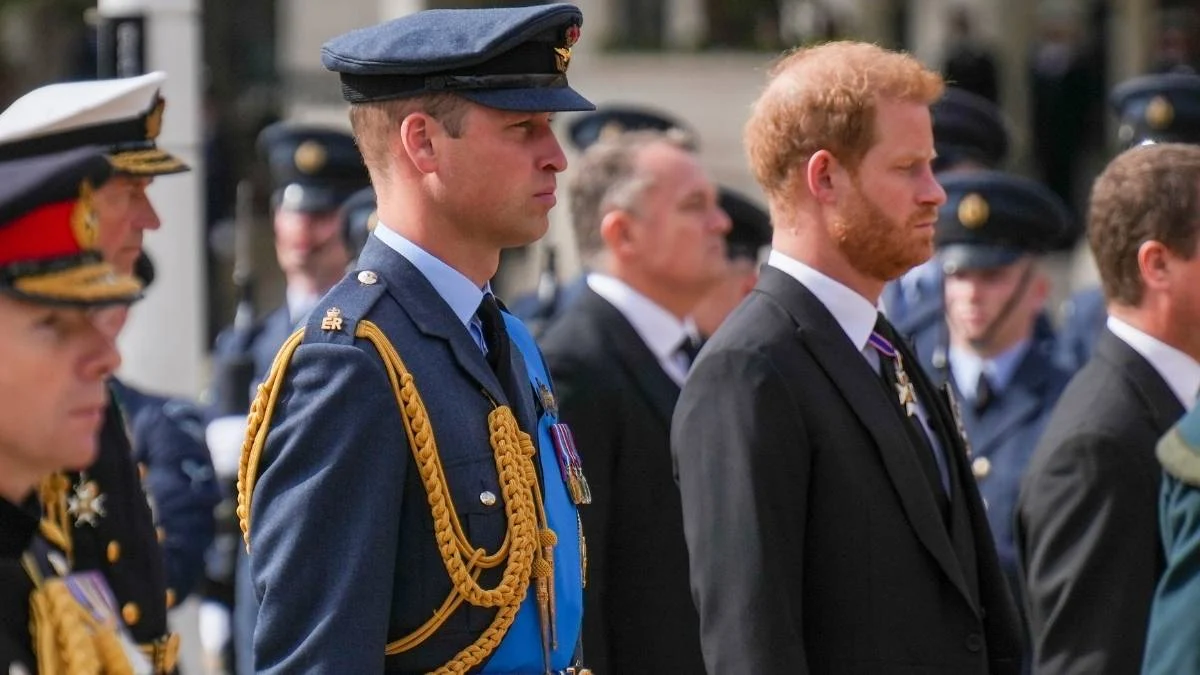
The British Royal Family, an institution built upon centuries of tradition, protocol, and carefully curated public image, currently finds itself navigating one of its most profound internal crises in modern history. While King Charles III has signaled an openness to healing the fractured ties with his youngest son, Prince Harry, a significant roadblock persists within the House of Windsor: the deepening, and potentially permanent, estrangement between the King’s two sons, the Prince of Wales and the Duke of Sussex.
Despite a recent, highly anticipated private reunion between Prince Harry, Meghan Markle, their children, and King Charles on July 10, reports indicate that Prince William remains steadfast in his refusal to engage in a rapprochement. For the future King, the conflict is no longer a matter of sibling rivalry; it has become a matter of institutional security and personal trust.
The Fractured Foundation: A Chronology of Discontent
The roots of the current impasse are deep, spanning years of mounting tension that began long before the Duke and Duchess of Sussex announced their departure from royal duties.
2020: The "Megxit" Departure
The visible unraveling began in early 2020, when Harry and Meghan shocked the world by announcing their intention to step back as senior working members of the Royal Family. The move to North America was initially framed as a quest for privacy and independence, but the subsequent media blitzes—most notably the bombshell interview with Oprah Winfrey in 2021—laid bare the toxic environment they alleged to have experienced within the palace walls.
2023: The Publication of Spare
While the 2021 interviews created a diplomatic firestorm, the true "point of no return" for Prince William is widely considered to be the publication of Harry’s memoir, Spare, in early 2023. The book provided an unprecedented, unfiltered look at the brothers’ relationship, detailing private arguments, physical altercations, and deeply personal grievances. By pulling back the curtain on the most intimate aspects of royal life, Harry inadvertently signaled to his brother that nothing was off-limits, effectively burning the bridge of confidentiality that William deems essential for any familial relationship.
2024–2026: The Cooling Period
Following the memoir’s release, the dynamic shifted from active conflict to a cold, icy silence. While Harry has made brief, sporadic visits to the United Kingdom, these trips have been characterized by a lack of engagement with the Prince and Princess of Wales. The July 10 reunion with the King provided a flicker of hope for reconciliation, yet it served to highlight the stark contrast between the King’s paternal desire for unity and William’s rigid, duty-bound stance.
Trust as the Cornerstone of Reconciliation
According to insiders close to the Prince of Wales, William’s refusal to reconcile is not born out of a lack of affection for his younger brother. Rather, it is a calculated decision based on the fundamental breakdown of trust.
"For William, this has never really been about family affection or whether he still loves his brother," one source noted. "It all comes back to trust."
The issue for the Prince of Wales is the commodification of their private lives. Throughout the past several years, various conversations, private text exchanges, and intimate moments have appeared in public forums—be it through high-profile television specials, podcasts, or memoirs. From William’s perspective, these leaks have fundamentally altered the nature of his relationship with Harry. If a conversation cannot be held in confidence, it cannot be held at all.
This environment has forced the Royal Family into a state of permanent defensive posturing. The inner circle surrounding William is reportedly highly disciplined, prioritizing the preservation of the monarchy’s dignity and the protection of its secrets above the emotional needs of an estranged family member.
Divergent Objectives: King Charles vs. Prince William
A critical component of this ongoing drama is the difference in perspectives between the monarch and the heir apparent. While King Charles is viewed as a father seeking to mend a broken family, Prince William is viewed as a strategist focused on the continuity of the Crown.
The King’s Paternal Approach
King Charles, navigating the complexities of his reign, is reportedly more inclined to prioritize the "family" aspect of the institution. His willingness to host the Sussexes at his residence suggests a desire to keep the lines of communication open, despite the public controversy. For the King, the optics of a fractured family are a burden he hopes to alleviate during his tenure.
The Heir’s Institutional Defense
Prince William, however, operates from a different vantage point. As the future King, his primary mandate is to ensure the long-term stability and integrity of the monarchy. He views the recent history of the Sussexes’ grievances as a threat to that stability. Insiders suggest that William believes that welcoming Harry back without a formal process of accountability and a guarantee of privacy would be an abdication of his duty. He is not just protecting his own heart; he is protecting the institution he will eventually head.
"Rebuilding trust would take years rather than months," a source explained. "One cordial family gathering doesn’t erase everything that’s happened. The institution is moving forward, and William is the one steering that ship."
Implications for the Future of the Monarchy
The ongoing estrangement has significant implications for the future of the British monarchy. Firstly, it creates a "two-tier" royal experience: the public-facing, dutiful core led by William and Catherine, and the detached, independent entity of the Sussexes. This division is likely to persist as long as the trust deficit remains unaddressed.
Secondly, the lack of reconciliation forces the public and the media to constantly choose sides, which only serves to deepen the division. The royal institution thrives on a sense of unity and continuity; a high-profile, permanent rift between the two most visible young royals acts as a constant, low-level drain on the institution’s popularity and perceived authority.
Finally, there is the matter of the next generation. Prince George, Princess Charlotte, and Prince Louis are growing up in a world where their cousins, Archie and Lilibet, are essentially strangers. While the adults may hold onto their grievances, the long-term impact of this rift on the younger generation of royals remains a quiet but profound concern for royal observers.
The Path Forward: Is Reconciliation Possible?
Is there a path back to a functional relationship? Most royal experts suggest that a genuine reconciliation is unlikely in the immediate future. The conditions required—total privacy, a cessation of public revelations, and a mutual agreement on boundaries—are difficult to achieve given the commercial and personal interests involved.
For now, the status quo appears to be the most viable path forward for the Prince of Wales. By maintaining a firm boundary, William is signaling that the era of "leaky" royal relations is over. Whether Prince Harry will ever be willing to conform to the strict, often opaque, requirements of the royal inner circle remains the central, unresolved question of the saga.
As it stands, the divide between William and Harry is more than a family squabble; it is a profound misalignment of values regarding loyalty, privacy, and duty. Until those values can be reconciled—if they ever can—the brothers will likely remain on separate paths, leaving the world to watch from the sidelines as the House of Windsor navigates this era of unprecedented internal fragmentation.
 Neng Nana
 Azzam Bilal Chamdy
 Nana
Nana
