

By Editorial Staff
Published on July 16, 2026
The automotive world is currently braced for a moment of profound transformation. For decades, the name Ferrari has been synonymous with the visceral, high-octane symphony of internal combustion engines. Yet, as the industry shifts toward an electrified future, Maranello has finally stepped into the arena with its first-ever production electric vehicle (EV): the Ferrari Luce.
In a move that underscores the gravity of this transition, RM Sotheby’s has announced that it will auction the inaugural production unit—Chassis 0—during its prestigious annual Monterey sale. This is not merely an auction; it is an event marking the dawn of a new epoch for one of the most storied manufacturers in history. While the car itself has ignited fierce debate among enthusiasts and industry titans alike, the sale serves a noble purpose: 100 percent of the proceeds will be donated by the Ferrari Foundation to support global educational initiatives.

The Genesis of the Luce: A New Paradigm
The development of the Ferrari Luce represents the most significant pivot in the company’s 80-year history. Tasked with translating the “Prancing Horse” DNA into an electric powertrain, Ferrari’s engineers faced a monumental challenge: how to maintain the brand’s characteristic agility, driver engagement, and emotional resonance without the presence of a V-8 or V-12 engine.
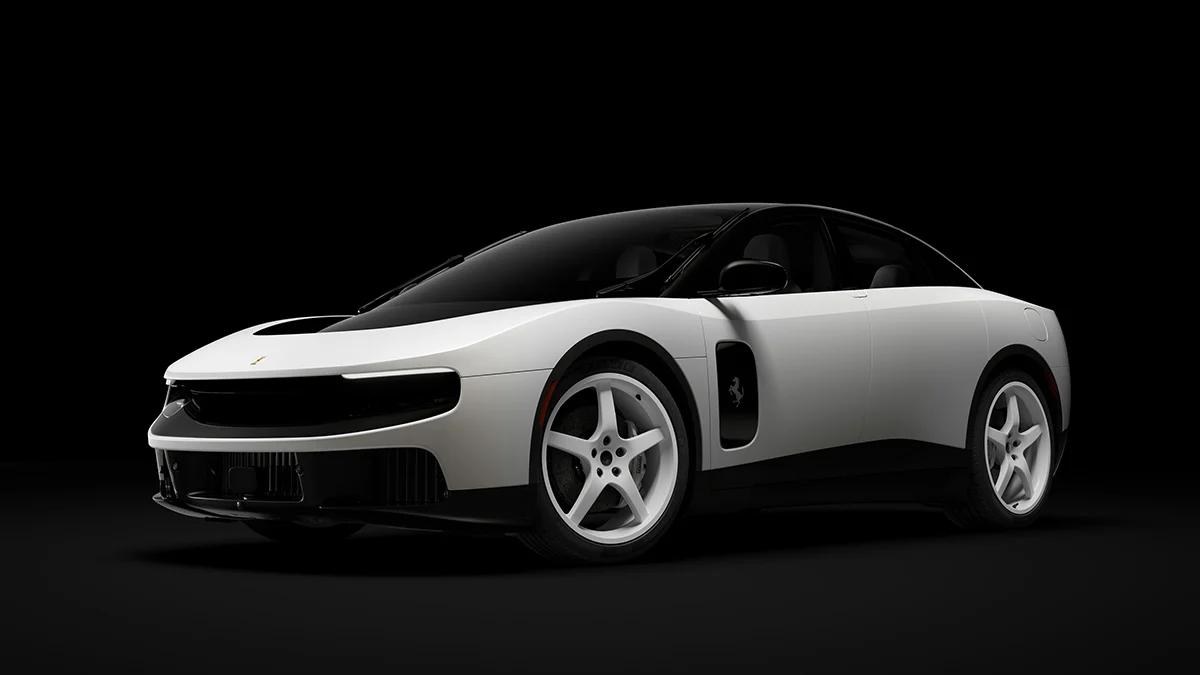
The vehicle’s design, spearheaded by former Apple design chief Jony Ive, has become an immediate lightning rod for controversy. Eschewing the aggressive, angular vents and complex aerodynamics typically associated with Maranello’s track-focused machinery, the Luce adopts a minimalist, avant-garde aesthetic. It is a four-door grand tourer that emphasizes fluidity and space, a departure that has left traditionalists questioning whether the design honors the heritage of Pininfarina or signals a total break from the past.
Chronology: From Concept to Controversy
The road to the Luce has been marked by high expectations, internal restructuring, and vocal opposition from peers in the luxury performance space.

- 2024–2025: The Development Phase. Ferrari signaled its intent to electrify, initiating a massive capital expenditure program to upgrade its Maranello production facilities to accommodate modular EV platforms.
- Early 2026: The Debut. The Luce was unveiled to a skeptical press corps. The aesthetic, heavily influenced by Jony Ive’s philosophy of "reductionist luxury," was met with a polarized reception.
- Spring 2026: Executive Departures. Barely a month after the vehicle’s public reveal, Ferrari’s head of marketing exited the company. While the official statement cited a pre-planned departure, industry analysts noted the timing coincided with the intense public backlash regarding the vehicle’s design and identity.
- Summer 2026: The Rivalry. The controversy reached a fever pitch when Lamborghini CEO Stephan Winkelmann explicitly referenced the Luce’s reception as a primary factor in Lamborghini’s decision to pivot away from a similar all-electric strategy, reinforcing the divide in the Italian supercar market.
- July 2026: The Monterey Sale. The announcement of the auction for Chassis 0 marks the official commercial arrival of the model, testing the market’s appetite for a "Ferrari-branded" EV.
Supporting Data: The Anatomy of Chassis 0
Despite the heated discourse, the engineering specifications of the Luce suggest a vehicle that does not compromise on performance. The "Tailor Made" version being auctioned is a masterclass in bespoke craftsmanship.
Technical and Aesthetic Specifications:
- Exterior: The vehicle is finished in a unique "Madreperla" (Mother of Pearl) semi-gloss livery, a color developed specifically for the launch to highlight the car’s body contours.
- Wheels: Bespoke, color-matched wheels conceal high-performance, custom-calibrated brake calipers, engineered to handle the unique weight distribution of an EV powertrain.
- Interior: The cabin features "Le Mans" metallic leather in a subtle Perla finish, complemented by Grigio Corvara trim. The interior is designed to prioritize a "lounge-like" experience, reflecting the car’s identity as a grand tourer rather than a track-only machine.
- Provenance: As "Chassis 0," this vehicle is officially designated as the very first production model, a distinction that usually guarantees significant appreciation in the collector car market.
Official Responses and Industry Implications
The reaction to the Luce is indicative of a wider existential crisis within the high-performance automotive sector. Ferrari’s leadership has maintained a stoic stance, emphasizing that the Luce is a necessary evolution. The company argues that true luxury in the 21st century is defined by the ability to innovate while maintaining exclusivity.
Conversely, figures like Stephan Winkelmann of Lamborghini have staked their reputations on the belief that the "soul" of a supercar is inextricably linked to the mechanical combustion engine. This has created a bifurcated marketplace: one side pushing headlong into the software-defined, electric future, and the other retreating into the heritage-driven, carbon-neutral synthetic fuel (e-fuel) market.

The auction of Chassis 0 will serve as a bellwether for the brand. If the vehicle fetches the projected $1.1 million—or significantly more—it will prove that the Ferrari badge remains the ultimate currency, regardless of what lies beneath the hood. If, however, the bidding is tepid, it may force Ferrari to re-evaluate its design language and marketing strategy for future electric iterations.
The Verdict: A Collector’s Gamble?
To the casual observer, the auction of the first Ferrari EV is a curiosity. To the serious collector, it is a high-stakes gamble. History has shown that controversial vehicles—such as the early Ferrari Testarossa or even the initial SUV-style models—often go through a period of rejection before being viewed as pioneers of their respective eras.
By offering the car at a public auction rather than through private allocation to a "discreet" client, Ferrari is making a calculated move to democratize the narrative of its electric future. It is a signal that the company is confident in the Luce’s place in history.

As the gavel falls in Monterey, the world will not just be watching a transaction; it will be witnessing the verdict on whether the legendary Prancing Horse can successfully leap across the divide between the mechanical age and the electric one. Whether the Luce is remembered as a visionary masterpiece or a cautionary tale, its status as the first of its kind ensures its place in the pantheon of automotive history.
For those interested in the evolution of the brand, the auction represents a rare chance to own the "Patient Zero" of Ferrari’s new era. As the company continues to refine its electric architecture, the Luce will likely remain the most important, and most scrutinized, vehicle to ever emerge from the gates of Maranello.
For more information on the upcoming auction or to view the full gallery of the 2026 Ferrari Luce, visit the official RM Sotheby’s website.
 Basiran
 Siti Muinah
 Nana
Nana
