

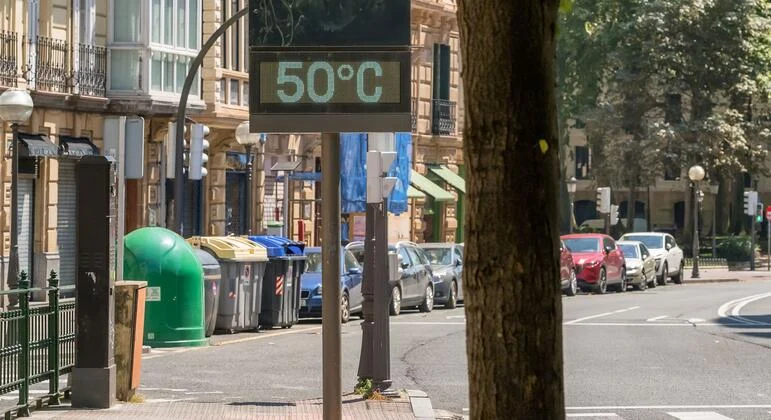
As Europe cements its status as the fastest-warming continent on the planet—with temperatures rising at roughly double the global average—the World Health Organization (WHO) has issued a stark warning: the era of unprecedented heatwaves is no longer a future threat, but an immediate public health emergency. With nearly 10,000 excess deaths recorded across just five nations this summer alone, the organization is calling for a radical, systemic overhaul of European healthcare infrastructure.
The message from the WHO is one of urgent pragmatism: extreme heat is a lethal, yet manageable, public health crisis. By investing in resilient hospital architecture, early-warning systems, and proactive community care, the region can decouple rising temperatures from rising mortality.
The Escalating Crisis: A Continent Under Pressure
Europe’s geography and infrastructure are increasingly ill-equipped for the climate reality of the 21st century. The continent is warming at a rate that far outpaces the rest of the globe, a trend driven by the compounding effects of rapid urbanization, an aging population, and the accelerating pace of global climate change.
The Human Cost
The statistics are harrowing. In the last four years alone, heat-related events have claimed more than 200,000 lives across the WHO European Region. Furthermore, mortality linked to heat has surged by 30% over the past two decades. This is not merely a statistical anomaly; it is a clear trend line pointing toward a hotter, more dangerous future.
Why Urbanization Worsens the Threat
Cities, often characterized by the "urban heat island" effect, are at the epicenter of this crisis. Concrete, asphalt, and high-density development trap solar radiation, causing urban centers to retain heat long after the sun has set. When these temperatures spike, they do not only affect the elderly or the infirm—they place an unsustainable strain on the very institutions tasked with saving lives: hospitals.
Chronology of a Climate-Driven Emergency
The trajectory of heat-related mortality in Europe follows a pattern of increasing intensity and shorter intervals between extreme events.
- Pre-2000s: Heatwaves were viewed as rare, episodic events, often managed with localized and reactive measures.
- 2008: The WHO publishes its first comprehensive guidance on Heat-Health Action Plans (HHAPs), recognizing that a formal, structured response is required to manage temperature-related risks.
- 2020–2024: A period of unprecedented thermal intensity. The region experiences consecutive record-breaking summers, leading to a massive spike in excess deaths and the rapid degradation of hospital cooling systems.
- May–June 2026: A critical turning point in the UK, where coordinated meteorological and public health efforts trigger "Amber" and "Red" alerts as temperatures soar toward 37.7°C, serving as a blueprint for rapid-response action.
- Present Day: The WHO issues updated, high-level guidance, shifting the focus from "emergency response" to "systemic resilience," urging nations to treat heat-proofing as a permanent pillar of healthcare policy.
Supporting Data: The Anatomy of a Health Crisis
The data underpinning the WHO’s call to action is granular and deeply concerning. Analysis of excess mortality data confirms that heatwaves do not just "hasten" the deaths of the frail; they trigger systemic failures in health systems.
- Mortality Trends: Data from five monitored countries reveals a near-10,000 death toll in a single summer season. This demonstrates that even in wealthy, highly developed nations, current infrastructure is failing to buffer the population against extreme thermal stress.
- The Infrastructure Gap: Hospitals built decades ago were designed for temperate climates. Today, they are facing "thermal saturation." When internal temperatures rise, the equipment—from critical life-support systems to complex diagnostic computers—becomes prone to failure.
- Staff Burnout: Heat is not just a threat to patients; it is a threat to the workforce. The physical and psychological stress placed on doctors and nurses working in uncooled environments is leading to burnout and decreased clinical efficacy, further weakening the health system’s ability to respond during peak demand.
Official Responses: Shifting the Paradigm
Dr. Hans Kluge, WHO Regional Director for Europe, has been unequivocal in his messaging. "Heat deaths are not inevitable," he stated. "We know how to protect people: warn communities early, make cities cooler, ensure access to water and shade, check on those most at risk, and prepare health systems before temperatures peak."
The "Hospital Safety Index"
The WHO is spearheading the Hospital Safety Initiative, which utilizes the Hospital Safety Index to pressure-test healthcare facilities. While originally designed to evaluate the structural integrity of hospitals against earthquakes and floods, the index is being recalibrated to assess climate-resilience. Countries like Armenia, Georgia, Kazakhstan, Poland, and Ukraine have already begun utilizing this framework to prioritize capital investment in cooling, power stability, and structural adaptation.
National Models: The UK and Romania
- The United Kingdom: The UK’s Adverse Weather and Health Plan serves as a global gold standard. By integrating the Met Office’s meteorological data with real-time public health interventions, the system creates a seamless flow of information. When an alert level is reached, it triggers pre-set protocols for social services, community outreach, and clinical surge capacity.
- Romania: At Buhuși Hospital, a localized success story is unfolding. The facility has pioneered a dedicated "cool space" for heatstroke patients, equipped with specialized staff trained to identify early-stage heat exhaustion. This model of "micro-preparedness" is being studied by the WHO as a cost-effective, scalable solution for smaller regional hospitals.
Implications: The Path to a Resilient Future
The WHO’s new guidance identifies eight core pillars for a successful Heat-Health Action Plan (HHAP). These elements represent the necessary evolution of public health policy in an era of climate instability:
- Governance: Establishing clear lines of authority so that public health, meteorology, and infrastructure ministries work in unison.
- Heat Warning Systems: Moving beyond general weather forecasts to health-impact-specific alerts that trigger automated hospital protocols.
- Vulnerable Populations: Targeted, proactive outreach to the elderly, the homeless, and those with pre-existing conditions.
- Communication: Simple, actionable public messaging that cuts through the noise.
- Health System Resilience: The physical hardening of hospitals (insulation, high-efficiency cooling, independent power grids).
- Reducing Heat Exposure: Urban planning that prioritizes green spaces and reflective surfaces.
- Surveillance: Real-time data collection to identify "heat clusters" before they become mass-casualty events.
- Learning: Continuous evaluation and updating of protocols based on each season’s performance.
A Call for Investment
The transition toward climate-proof healthcare will be costly, but the cost of inaction is exponentially higher. As the WHO emphasizes, the economic burden of lost productivity, excessive hospital admissions, and premature mortality far outweighs the capital expenditure required to upgrade buildings and modernize cooling systems.
The future of European healthcare depends on the ability to recognize that the climate has changed. By shifting from a reactive model—where hospitals scramble to cope with the heat—to a proactive, resilient model, Europe can preserve the sanctity of the patient experience even as the world grows warmer. The technology, the data, and the framework exist. The missing piece, according to the WHO, is the political will to implement these changes before the next record-breaking summer arrives.
 Lina Hope
 Asro
Asro
 Layla Zulfa
