

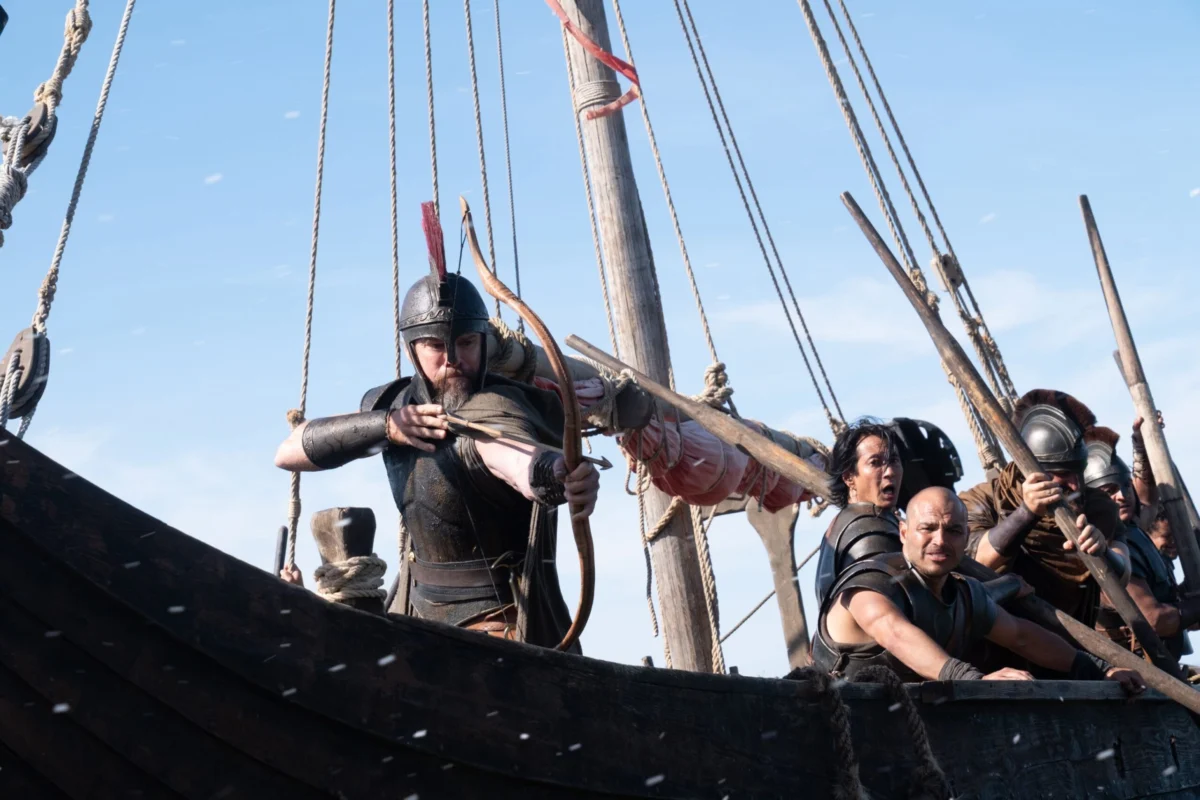
In Christopher Nolan’s sweeping cinematic reimagining of Homer’s ancient epic, The Odyssey, the dangers facing the protagonist are as varied as they are terrifying. While audiences may be mesmerized by the visceral terror of the Cyclops or the divine, roiling wrath of Poseidon, a more insidious, human-centric threat looms over the narrative: the "Sea People." Throughout the film, this mysterious, marauding force is presented as a constant, suffocating dread, a spectral army that threatens to dismantle the stability of Ithaca and its surrounding Mediterranean neighbors.
For viewers seeking to understand the intersection of Nolan’s high-concept storytelling and the fragmented archaeological record of the Bronze Age, the "Sea People" represent more than just a plot device—they serve as a bridge between mythic tragedy and historical collapse.
The Narrative Weight of the Sea People
A Threat from the Horizon
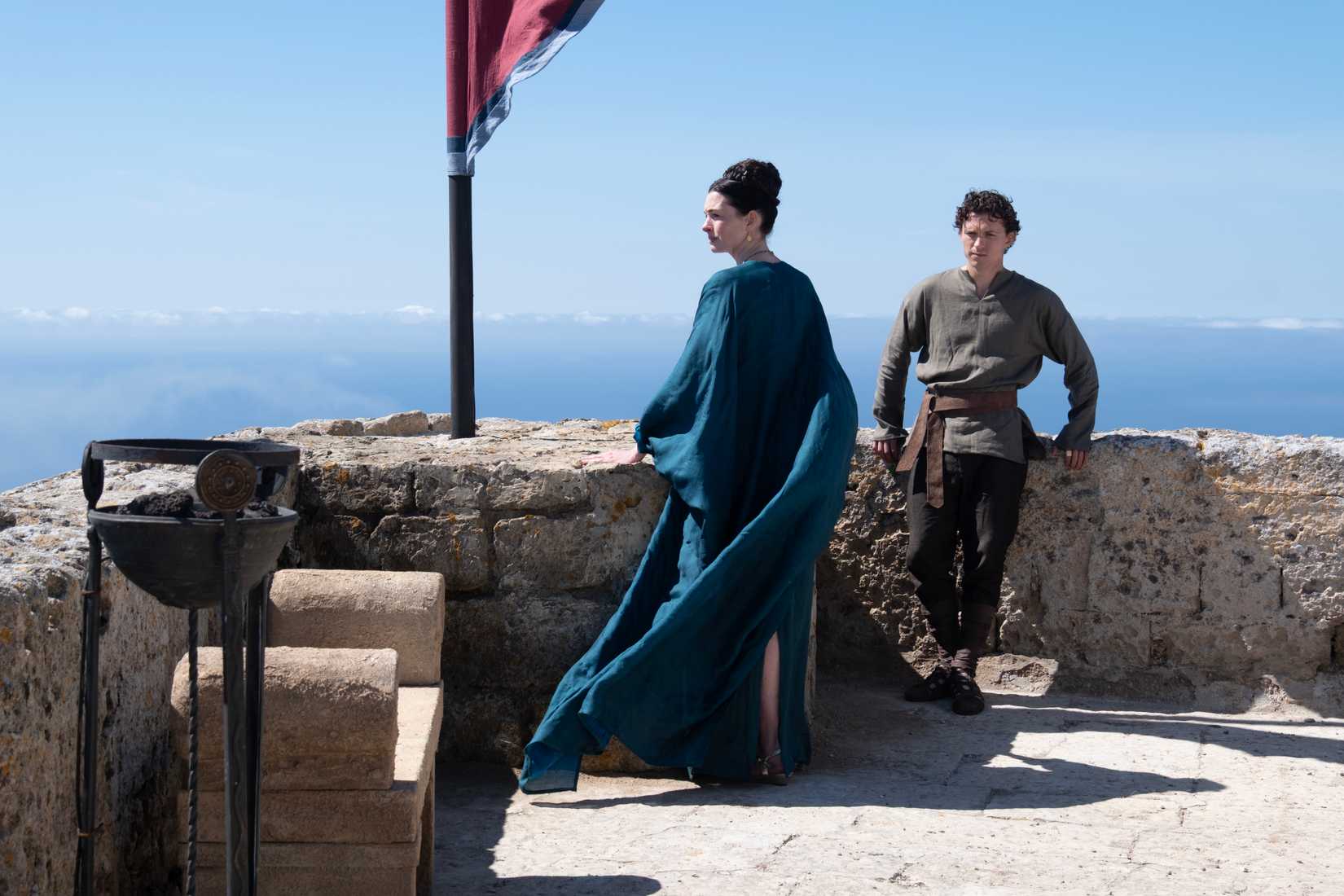
In the film, the Sea People are established as a destabilizing force of invaders who exploit the power vacuums left in the wake of the Trojan War. For Queen Penelope, portrayed with stoic complexity by Anne Hathaway, the threat is existential. As she manages the political decay of Ithaca and fends off an opportunistic throng of suitors, the looming specter of the Sea People provides a desperate justification for her need for a strong, military-focused king. They are the "unseen" boogeymen of the Mediterranean—the reason why a return to normalcy, or the return of King Odysseus (Matt Damon), is not just a family matter, but a national security imperative.
Nolan uses these figures to frame the "aftermath" of war. The Sea People represent the transition from the orderly, heroic combat of the Iliadic age to a more chaotic, lawless era of displacement and desperation.
The Mirror of Odysseus
One of the most provocative creative choices in the film is the implicit suggestion that Odysseus and his own returning forces are, in fact, the very "Sea People" that the populace fears. As the film nears its climax, the narrative suggests that the Greek army’s tactical brutality—exemplified by the deception of the Trojan Horse and the subsequent annihilation of a civilization—was the catalyst for this era of lawlessness.
By destroying the established order of Troy, Odysseus’s forces inadvertently shattered the socio-economic framework of the region, unleashing a wave of displaced soldiers, refugees, and marauders. In this reading, the "Sea People" are not a separate, external entity, but the inevitable consequence of a total war that left thousands of men with nothing to return to, forcing them to become the very thing they were sent to destroy.
Chronology: The Bronze Age Collapse
To understand why Nolan chose to lean into this historical ambiguity, one must look at the actual timeline of the Late Bronze Age (c. 1200 BC).
- 1250–1200 BC: The height of the Mycenaean civilization and the traditional timeframe for the Trojan War.
- 1200 BC: The "Great Collapse." Massive socio-economic disruptions occur across the Mediterranean. Cities are burned, trade routes are severed, and writing systems vanish.
- 1177 BC: The date most commonly cited by historians (such as Eric Cline) for the height of the crisis, when Egypt, under Ramesses III, successfully repelled a massive naval and land invasion by a confederation of groups.
- 1150 BC: The "Greek Dark Ages" begin. The centralized palatial economies of the Mycenaeans disintegrate, leading to centuries of rural, decentralized living—the setting for much of The Odyssey.
The film masterfully aligns the personal odyssey of Odysseus with the broader, systemic collapse of his world. He is not just trying to get home; he is trying to navigate a world that is fundamentally ending.
Supporting Data: History vs. Mythology
The ‘Cretan Lie’ and Academic Theory
The link between Odysseus and the Sea People is not a total invention of the screenplay; it is a theory rooted in the text of Homer itself. In the poem, Odysseus returns to his home disguised as a beggar and speaks with his faithful servant, Eumaeus. He weaves a complex, fictional biography—the "Cretan Lie"—in which he describes himself as a veteran of the Trojan War who subsequently turned to piracy and raiding in Egypt.
While the story is a fabrication within the narrative, scholars have long argued that Homer was drawing on the collective memory of his audience. By having his hero claim to be a raider, Homer acknowledges that the line between a "hero" and a "pirate" was paper-thin during the transition from the Bronze to the Iron Age.
The Archaeological Record
Historically, the "Sea Peoples" (plural) are documented primarily through Egyptian inscriptions at Medinet Habu. The records detail a "confederation" of groups, including the Peleset (likely the Philistines), the Shekelesh (potentially from Sicily), and the Denyen.
Unlike the organized armies of the Pharaohs or the Hittites, the Sea Peoples were described as a migration of entire families—men, women, children, and their belongings—carried on ox-carts and ships. They were not merely soldiers; they were a displaced population. This distinction is crucial to understanding the film’s tone: the Sea People are a humanitarian disaster turned into a military conflict.

Implications: The Nature of Historical Memory
A Symptom, Not a Cause
Historians have moved away from the "invasion" model of the Bronze Age collapse, viewing the Sea Peoples more as a symptom of a failing system. Droughts, famine, seismic activity, and the collapse of the "interconnected" global trade economy (which relied on tin and copper from distant lands) likely caused the initial failure of states. The Sea Peoples were the shockwaves radiating outward from these crumbling empires.
In The Odyssey, Nolan adopts this nuance. The Sea People are not just villains; they are the debris of a fallen world. When Odysseus looks upon them, he is looking at the shadow of his own actions.
The Political Message
Nolan’s portrayal carries a clear modern resonance. The film explores how societal fear of "outsiders" is often used to consolidate power at home. By painting the Sea People as an existential threat, local leaders in the film create a climate of fear that allows them to ignore the actual, systemic issues rotting their own houses from within. It is a cautionary tale about how fear-mongering regarding "invaders" can be used to justify the erosion of domestic democratic ideals—a theme that feels pointedly relevant in our contemporary geopolitical climate.
Official Perspectives and Critical Reception
While Universal Pictures has remained tight-lipped regarding the specific creative choices of the screenwriting team, the film has been praised by classicists for its "archaeological realism."
"Nolan hasn’t just adapted the poem," noted Dr. Helena Vance, a professor of Bronze Age history, in a recent interview. "He has adapted the context. By bringing in the Sea Peoples, he gives the audience a reason to feel the scale of the collapse. You realize that Odysseus isn’t just fighting gods and monsters; he’s fighting history itself."
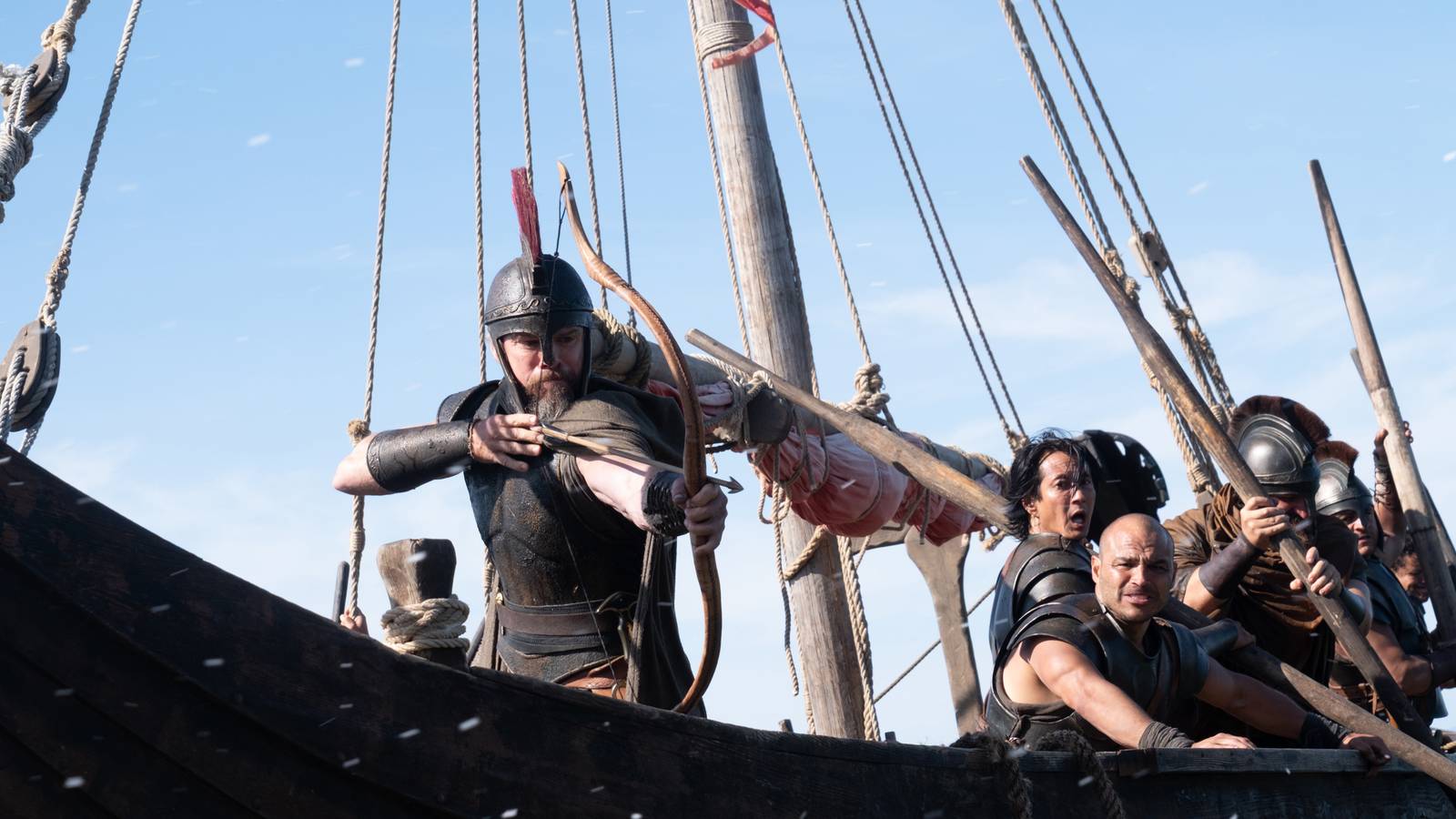
The film’s production design, particularly the aesthetic of the "Sea People" armaments, reflects this. Rather than giving them a uniform look, the costume designers utilized a patchwork of disparate styles—bronze armor from various Aegean cultures, scavenged leather, and makeshift weaponry. It visually confirms the historical consensus that this was a loose, desperate, and heterogeneous group of survivors.
Conclusion: The Ghost of the Bronze Age
As The Odyssey reaches its conclusion, the ambiguity remains. Are the Sea People a divine punishment? A foreign invasion? Or are they simply the reflection of a society that has lost its way?
Christopher Nolan’s film suggests that the truth is far more tragic. They are the inevitable byproduct of a world that values war as the ultimate expression of human achievement. When the smoke clears and the heroes return, they find that in their quest for glory, they have destroyed the very world they sought to protect.
The Sea People may be a historical mystery, but in the hands of a master filmmaker, they become a mirror for the modern age. As we watch Odysseus navigate the wreckage of his home, we are forced to wonder: when a civilization collapses, who are the ones who come knocking at the door? Often, they are the very people we created, left to drift in the wreckage of our own history.
The Odyssey is currently playing in theaters worldwide.
 Azzam Bilal Chamdy
 Lina Hope
 Layla Zulfa
