

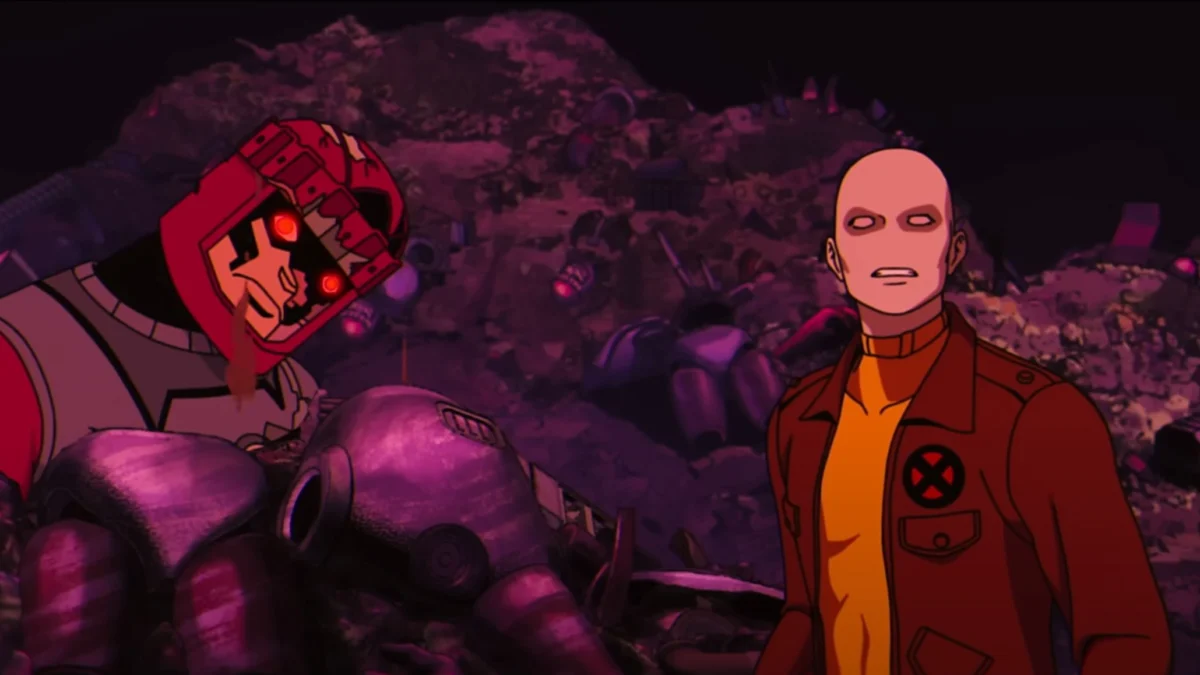
The cultural phenomenon that is Disney Plus’s X-Men ’97 has done more than simply revive a beloved Saturday morning cartoon; it has acted as a bridge between the nostalgic reverence of the 1990s and the complex, character-driven storytelling expected of modern animation. While the show meticulously mirrors the visual language of the original X-Men: The Animated Series—albeit with a polished, high-definition sheen—it takes bold creative liberties with its roster. Among the most significant departures from the source material is the complete reimagining of Morph.
In the original 1992 run, Morph served as a tragic narrative device: a lighthearted, snarky original character who was unceremoniously killed off in the pilot to raise the stakes for the remaining X-Men. Though he made periodic, villainous returns, he remained a two-dimensional casualty of war. In X-Men ’97, however, Morph has been elevated into a nuanced, nonbinary figure with a distinct aesthetic inspired by the Exiles comic run. Bringing this multifaceted character to life is actor and comedian JP Karliak, who has become the definitive voice for a mutant finally granted the depth he deserves.
A Legacy Reimagined: The Chronology of Morph
To understand the significance of the current iteration of Morph, one must look at the character’s erratic history. In the ’90s series, Morph was voiced by Ron Rubin, characterized by a traditional superhero costume, black hair, and a signature nasally, sardonic laugh. He was an homage to the comic book character Changeling, but he lacked a cohesive identity beyond his role as a team member who "paid the ultimate price."
When the creative team for X-Men ’97 began drafting the revival, they recognized an opportunity to subvert expectations. The new Morph is a direct reflection of modern sensibilities. By establishing the character as nonbinary—a move that feels narratively organic given the fluidity of their mutation—the showrunners allowed Morph to move past the rigid archetypes of the 20th century. The physical transformation, featuring a bald head and a blank, white, malleable face, serves as a visual metaphor for their state of constant flux. As Karliak explains, stepping into this role was not about imitating the past, but about honoring the essence of the character while expanding his potential.
The Mechanics of Mutation: Understanding Power Limits
One of the most frequent points of contention among the X-Men fandom—often debated on forums like Reddit and social media—concerns the "rules" of Morph’s powers. In the original series, Morph functioned as a mimic, similar to Mystique, merely altering his appearance to infiltrate or deceive. X-Men ’97 has significantly expanded this, showing Morph adopting the forms of heavy hitters like the Incredible Hulk, Colossus, and Doctor Octopus, complete with their physical capabilities.
This has led to inevitable confusion: if Morph is a shapeshifter, why do they gain the strength of a titan? JP Karliak provides clarity, citing his discussions with producer Jake Castorena.

"The explanation that I got is that Morph has the ability to replicate powers that are physical in nature," Karliak notes. "Because Morph has the ability to change their density and the force behind it—very physics-based stuff. So if it’s strength like Hulk or Colossus, or speed like Quicksilver, or flight like Angel, they can replicate it. No telepathy, no weather manipulation, no psionic abilities or anything like that."
This distinction is crucial. It positions Morph not as a "copy-all" character, but as a master of biological and physical manipulation. Karliak suggests this is not the ceiling for the character. The possibility of a "secondary mutation" remains a common trope in Marvel lore, leaving the door open for Morph to potentially bridge the gap between physical mimicry and more exotic, non-physical power sets in future seasons.
The Emotional Core: Deciphering the "I Love You"
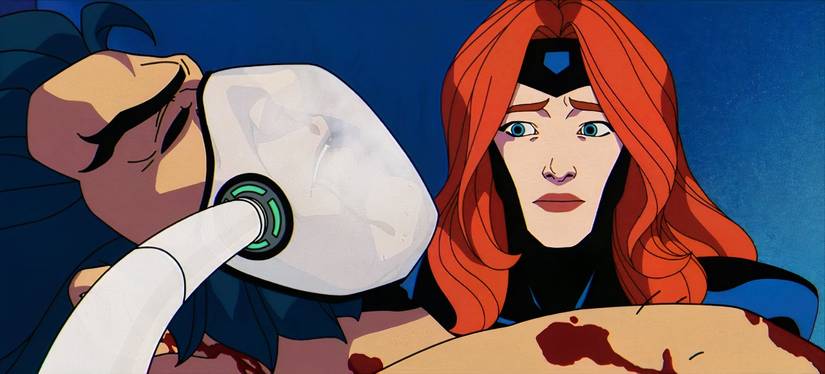
Perhaps the most discussed moment of the first season occurred during the emotional aftermath of Magneto’s assault on Wolverine. After having his adamantium skeleton ripped from his body, Wolverine is left in a state of traumatic recovery. In a moment of quiet, heavy intimacy, Morph shifts into the form of Jean Grey and whispers, "I love you" to the unconscious Logan.
The ambiguity of the scene ignited a firestorm of fan theories. Was this a genuine romantic confession from Morph, or a tactical use of empathy to provide comfort to a dying friend? While former showrunner Beau DeMayo previously indicated a romantic intent, Karliak offers a more grounded, character-focused perspective.
"I always took it as the former," Karliak says, referring to the act as one of pure, sacrificial comfort. "The person that my buddy would receive the most comfort from is the person that he’s in love with. I think delivering that message from Jean was an act of supreme comfort."
This speaks to the maturity of the character. Morph is not a jealous observer; they are a deeply loyal teammate who understands the psychological landscape of those around them. When asked about Morph’s own feelings for Logan, Karliak is pragmatic. "I do think that Morph has some feelings for Wolverine, but I also think that Morph is emotionally competent enough to know that Wolverine is a lost cause romantically. Logan is in love with Jean Grey and always will be. I think Morph is processing those emotions."
The Shapeshifter’s Duel: Morph vs. Mystique
In the pantheon of Marvel shapeshifters, Mystique remains the gold standard for tactical deception and espionage. Naturally, the question arises: Who is the superior shapeshifter?
Karliak is decisive: "Morph."
However, he is quick to qualify this by defining the utility of the two characters. Mystique utilizes her abilities as a weapon of misinformation, a spy who hides in plain sight. Morph, conversely, treats their mutation as a multi-tool.
"I think it’s actually very equally matched," Karliak says. "But I do think Morph is much more, especially in this series, attuned to using their shapeshifting abilities to harness certain power sets or vary up their fighting styles. Rarely does Morph use their powers in this series for deception, whereas that’s Mystique’s whole thing. [Morph] does it every once in a while, but it’s mostly for power sets—or for a joke."
Implications for the Future of the Franchise
The successful modernization of Morph is a microcosm of the overall success of X-Men ’97. By taking a character once relegated to the status of a "redshirt"—a disposable prop—and investing in their emotional intelligence, physical evolution, and queer identity, Marvel has demonstrated that the X-Men brand is at its best when it focuses on the human (or mutant) condition rather than just spectacle.
The implications for future seasons are clear. As Morph continues to grapple with their identity, their feelings for their teammates, and the escalating threats facing the X-Men, they are poised to be the emotional anchor of the series. JP Karliak’s performance, which balances humor with profound vulnerability, ensures that Morph is no longer just a shapeshifter; he is a fully realized hero. In a world of gods, telepaths, and omega-level mutants, it is the character who can become anyone who has finally found the courage to be themselves.
 Basiran
 Suro Senen
