

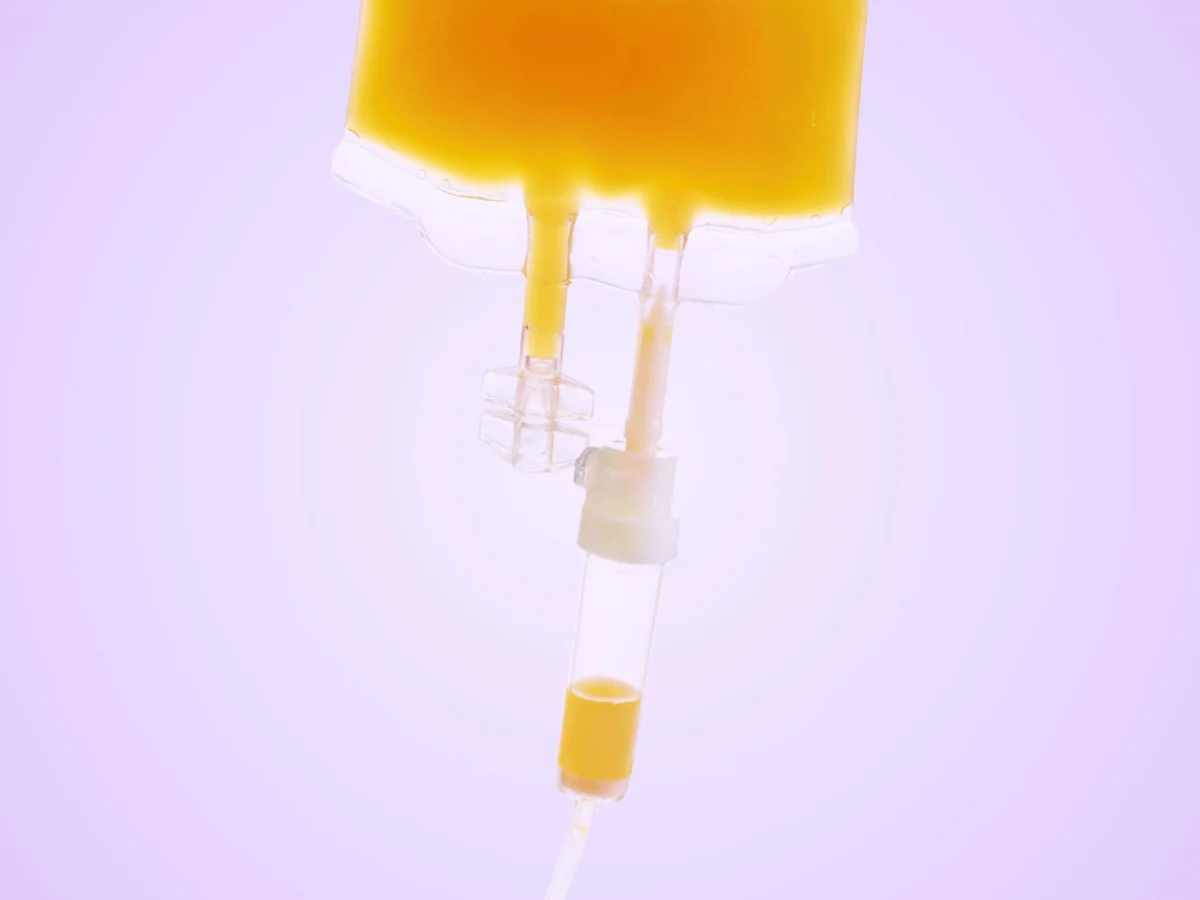
The quest for eternal youth has transitioned from the realm of alchemy and folklore into the sterile, high-tech laboratories of modern longevity science. For decades, researchers have hunted for a “fountain of youth” hidden within the human circulatory system. The latest sensation in this pursuit is a procedure known as therapeutic plasma exchange (TPE)—a medical technique that filters and replaces the liquid portion of the blood.
A 2025 study published in the journal Aging Cell sent ripples through the health and wellness community by suggesting that this procedure could effectively lower an individual’s biological age by approximately two and a half years. However, as the medical community dissects these findings, a clearer, more nuanced picture is emerging: while the science is grounded in legitimate biological mechanisms, the prospect of a “plasma elixir” remains far more complex—and less permanent—than headlines might suggest.
The Mechanics of Aging: Understanding the Role of Plasma
To understand why longevity experts are captivated by plasma, one must first understand that it is far more than the inert yellow fluid surrounding our red and white blood cells. Plasma is a sophisticated, high-speed logistics network. It is a complex mixture of water, proteins, metabolites, hormones, and inflammatory signaling molecules that reflect the physiological state of every organ in the body.
“It’s a transport system, much like a global shipping service,” explains Dr. Andrea Maier, MD, PhD, a geriatrician and board member of the Academy for Health and Lifespan Research. “It is a vehicle that shuttles vital biological cargo from your brain to your muscles, from your kidneys to your lungs. It is fluid that carries an immense amount of information regarding your systemic health.”
Because plasma serves as a mirror for the body’s internal environment, it has become a focal point for researchers attempting to quantify “biological age.” Unlike chronological age—the simple count of years since birth—biological age is an estimate of how well an individual’s cells and organ systems are functioning.
Dr. Keenan Walker, a senior investigator at the National Institute on Aging, notes that while there is no single, universally accepted measurement for biological age, the concept is a powerful predictor of health outcomes. “What studies have consistently found is that individuals whose biological age exceeds their chronological age are at a significantly higher risk for chronic conditions, age-related diseases, and premature mortality,” Dr. Walker says. By analyzing the proteome—the thousands of proteins circulating in the plasma—scientists can gain a high-resolution snapshot of a person’s current vitality.
A Chronology of Discovery: From Parabiosis to Modern Clinics
The fascination with blood-based anti-aging interventions did not emerge overnight. It traces its origins to a controversial and radical surgical technique known as parabiosis, which gained traction in research circles roughly 15 years ago.
In these experiments, researchers surgically linked the circulatory systems of two mice—one young and one old. The hypothesis was that the young mouse’s “youthful” blood, rich in circulating factors and free from the accumulated inflammatory debris of old age, might rejuvenate the older organism. The results were startling: the older mice exhibited increased resilience to tissue damage, improved cognitive function, and enhanced organ repair.
These findings sparked a gold rush in biotechnology. Could we isolate the “rejuvenating factors” in young blood or, conversely, filter out the “pro-aging” factors that accumulate in the elderly? This led to the adaptation of therapeutic plasma exchange (TPE). Originally developed to treat severe autoimmune disorders, neurological conditions, and blood cancers, TPE involves removing a patient’s plasma and replacing it with a combination of saline and purified albumin.
The transition from a clinical treatment for the critically ill to a potential longevity intervention for healthy adults represents a massive leap in medical philosophy—one that is currently being scrutinized by the scientific establishment.
Supporting Data: The 2025 Aging Cell Study
The recent Aging Cell study sought to bring empirical rigor to the debate. Researchers enrolled 42 participants, subjecting them to a protocol of plasma exchange using purified albumin and saline, with some subjects receiving an additional immune therapy called IVIG. Using advanced molecular biomarkers to track aging, the study reported that some participants saw a reduction in their biological age by an average of 2.5 years.
On the surface, this is a monumental finding. However, a deeper dive into the methodology reveals the limitations of the data. Dr. Maier highlights a crucial caveat: the 2.5-year reversal was observed at the midpoint of the study, not at its conclusion.
“When you look closely at the data, the comparison is between the midterm results and the baseline, not the final results and the baseline,” Dr. Maier explains. “By the end of the study, the rejuvenation effect had nearly evaporated.”
This suggests that the human body is highly resilient and adaptive, but perhaps not in the way biohackers might hope. When the body’s plasma is abruptly replaced, it triggers an immediate, systemic response. The influx of new proteins and the removal of inflammatory markers can create a temporary “reset.” However, as the body adapts to this intervention, it often reverts to its previous homeostatic state. The biomarkers essentially swing back to their original baseline, suggesting that the “rejuvenation” is a transient fluctuation rather than a fundamental rewiring of the aging process.
Official Responses and Clinical Implications
The consensus among leading experts is one of cautious, skeptical optimism. Both Dr. Maier and Dr. Walker acknowledge that blood-based interventions hold promise, but they warn against the premature commercialization of these techniques.
“I would classify this as a Phase 1 study,” Dr. Maier says. “We have demonstrated that the procedure can be performed safely, but we have yet to see any evidence of sustained, long-term benefit. This is a tiny, first step. We should absolutely not be implementing this in general clinical practice at this time because it is an aggressive, invasive procedure that places significant stress on the body.”
Dr. Walker adds a vital layer of nuance regarding the participants. “We observed that those who were less healthy at the start of the study saw a much stronger intervention effect,” he notes. “This suggests that the efficacy of plasma exchange may be highly dependent on the individual’s baseline health. We need to determine exactly for whom this works, rather than assuming it is a universal panacea.”
The implication is that the future of longevity medicine likely lies in precision—identifying specific proteins or metabolites that need to be modulated—rather than a blunt, systemic exchange of all plasma.
The Future of Longevity: Moving Beyond the "Rough" Science
As the field matures, the focus is shifting away from the idea of “cleansing the blood” and toward the development of pharmaceutical mimetics. If researchers can identify the specific proteins responsible for the rejuvenation observed in mice and early human trials, they may be able to develop drugs that replicate these effects without the need for high-risk, invasive procedures like TPE.
For the average person, the takeaway is clear: the fountain of youth remains elusive. While the Aging Cell study is a fascinating contribution to the literature of gerontology, it is not a green light to seek out “plasma clinics” for age-reversal treatments. The procedure is physically demanding, potentially disruptive to the body’s internal balance, and lacks evidence of lasting impact.
Innovation in longevity is moving at an unprecedented pace, and the marriage of molecular biology and computational modeling is beginning to yield real fruit. However, until long-term, large-scale studies can demonstrate consistent safety and sustained results, the most effective "anti-aging" interventions remain the tried-and-true pillars of health: consistent exercise, nutrient-dense nutrition, adequate sleep, and the management of chronic stress.
“I love innovation, and I love this study,” concludes Dr. Maier. “But I think the future will give us something much more refined than this. We are just starting to read the book of human aging, and we are currently only on the first page.”
 Asro
Asro
 Dwi Wanna
 Nana
Nana
