

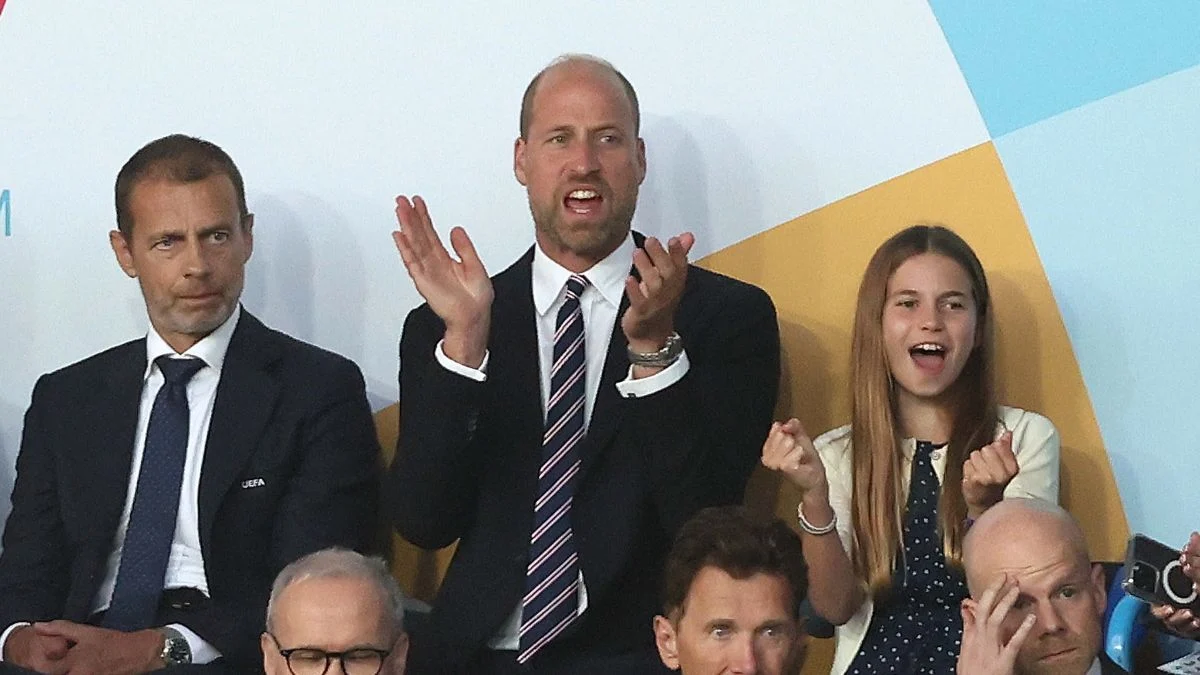
For a figure as synonymous with British football as the Prince of Wales, his absence from the recent World Cup stands as a notable deviation from his public life. Prince William, who holds the presidency of the Football Association (FA) and is frequently spotted cheering on the Three Lions from the stands, was conspicuously absent from the stadiums during England’s latest tournament run. While speculation initially swirled regarding the reasons behind his distance, reports from royal correspondents have clarified that the decision was rooted in a significant domestic milestone.
Rather than a slight against the sport he loves, the Prince’s absence served as a testament to his commitment to fatherhood. As his eldest son, Prince George, reaches a pivotal threshold in his education and development, the Prince and Princess of Wales chose to prioritize an intimate, final family summer before the structure of boarding school life takes hold.
The Context: A Milestone for Prince George
The narrative surrounding Prince William’s absence began to take shape following insights provided by Richard Eden of The Daily Mail. According to reports, the decision to remain in the United Kingdom was dictated by the academic calendar. Prince George, who has been a student at Lambrook School, has now concluded his tenure there, marking the end of a formative chapter.
Kensington Palace officially confirmed that the 12-year-old heir to the throne is set to begin his studies at the prestigious Eton College this September. This transition is not merely a change in scenery; it represents a major shift in the family’s day-to-day rhythm. For the Prince and Princess of Wales, the period between the end of the term at Lambrook and the commencement of the autumn term at Eton offered a rare window of uninterrupted time. With Princess Charlotte and Prince Louis also wrapping up their respective school terms, the royal household sought to savor a period of normalcy away from the glare of international sporting events.
Chronology of a Quiet Summer
To understand the Prince’s decision, one must look at the timeline of the summer season, which proved to be a confluence of national sporting fervor and private familial duty.
- Early Summer: As the World Cup tournament kicked off, the Prince of Wales was balancing his high-profile public duties with the final weeks of the children’s school year. During this time, he maintained his typical support for the team through digital channels and public statements.
- The School Conclusion: Mid-summer saw the official closing of the academic year at Lambrook. This marked the specific moment when the family entered their "transition phase."
- The Tournament Progression: As England advanced through the rounds, public pressure for royal attendance increased. However, the Palace maintained a firm stance that the Prince would remain at home.
- The Final Stages: By the time the tournament reached its climax, the Prince of Wales had already signaled his intention to stay close to home, focusing on the logistical preparations for George’s move to Eton.
- Post-Tournament Reflection: Following England’s 2-1 defeat to Argentina, the Prince’s personal response on social media solidified his role as a supporter, even from afar, highlighting that his physical absence did not equate to a lack of investment in the team’s journey.
The "New Heights" Connection: Managing Expectations
Perhaps the most intriguing element of this story is the contrast between the Prince’s public promises and his eventual actions. During an appearance on the New Heights podcast—hosted by NFL stars Jason and Travis Kelce—Prince William was asked directly about his plans to attend the World Cup final.
At the time, the Prince appeared enthusiastic, telling the hosts, “Definitely, if we’re in the finals.” This public commitment fueled anticipation among fans that he would be present for the crowning moment of the tournament. However, as the tournament progressed, the realities of life with three young children took precedence. The shift from a public declaration to a private decision highlights the ongoing struggle the royal couple faces in balancing their duties as public figures with their desire to provide a stable, "normal" upbringing for their children.
Official Responses and Public Sentiment
Kensington Palace has been characteristically measured in its communication regarding the matter. By confirming George’s transition to Eton, the Palace implicitly provided the reasoning for the Prince’s schedule. There was no need for a formal defense of the Prince’s whereabouts, as the family’s priority remains the wellbeing and education of their children.
Public sentiment, while initially curious, has largely shifted toward understanding. In an era where the public increasingly values transparency regarding the human side of royalty, the narrative of a father choosing to spend time with his son before he leaves for boarding school has resonated with many. It paints a picture of a modern royal father—one who is conscious of the fleeting nature of childhood and the weight of the responsibilities that await his son in the future.
Implications: The Evolution of the Royal Role
The decision to stay away from the World Cup has broader implications for how we view the royal family’s engagement with public life. Historically, royal attendance at major events was considered mandatory, regardless of personal circumstances. Today, the Prince and Princess of Wales are carving out a new path—one that allows for personal boundaries to be drawn.
1. Prioritizing the "Private" Family
The family has long been known for guarding the privacy of their school breaks. This incident reinforces that policy. By keeping the family together during this period, William and Kate are sending a clear message: while they are public servants, they are also parents whose primary responsibility is the security and stability of their children.
2. The Weight of Expectations
The "Gutted" post-match reaction by the Prince serves as a reminder that he remains the nation’s foremost cheerleader for football. By using social media to express his pride in the team, he successfully navigated the gap between physical attendance and moral support. He praised the team as "the most complete England team in a tournament," ensuring that the players felt acknowledged even without his presence in the stadium.
3. The Future of the Monarchy
As Prince George approaches his teenage years and his eventual accession to more prominent royal duties, the focus on his education and character development is paramount. The time spent with his father this summer is a foundational investment. The fact that the Prince of Wales chose this specific summer to "pull back" suggests a strategic approach to family life that will likely define his reign in the future.
The "Complete" Team: A Final Reflection
In his post-match analysis, Prince William noted that the squad had "given it everything." This sentiment could just as easily apply to his own summer. He gave the family the time they needed during a transition period, and he gave the England team the recognition they deserved through his public platform.
While some die-hard fans may have missed his presence in the stands, the broader perspective reveals a man who is increasingly comfortable with the difficult task of balancing the expectations of the nation with the needs of his own household. The World Cup was a spectacle, but for the Prince of Wales, the summer of 2026 was about something much more enduring: the final weeks of a young boy’s childhood before he takes his next steps toward the future.
Ultimately, the Prince’s decision was not about choosing between football and his family. It was about recognizing that the clock on childhood never pauses, while the football pitch will always be there for the next tournament. In choosing to be present for his son, the Prince demonstrated a maturity that may serve him—and the monarchy—well in the years to come.
 Neng Nana
 Azzam Bilal Chamdy
 Nana
Nana
