

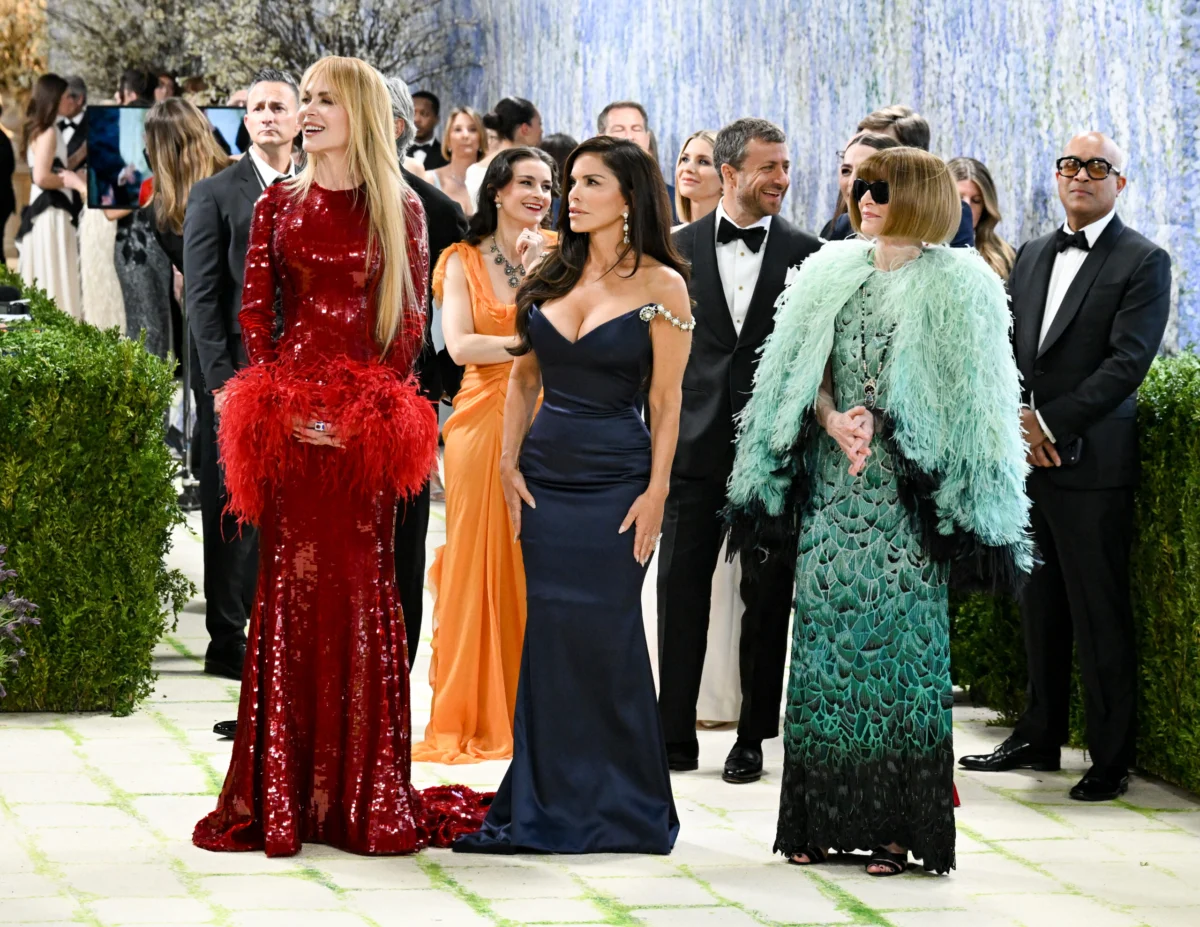
For decades, the first Monday in May served as the undisputed North Star of the fashion world. It was a night of high-concept artistry, where the boundary between celebrity and couture blurred within the hallowed halls of the Metropolitan Museum of Art. Yet, as the flashbulbs dimmed on this year’s Met Gala, a growing consensus among industry insiders suggests that the "Oscars of Fashion" is undergoing a profound identity crisis. What was once an exclusive, curated bastion of avant-garde design has increasingly drifted toward a spectacle of corporatized excess and creative stagnation.
The Financialization of the Red Carpet
The shift in the Gala’s atmosphere is not a sudden accident, but a calculated pivot that began in the post-pandemic era. After the 2021 return of the event, the guest list underwent a rapid transformation. The initial influx of social media influencers—a move clearly intended to capture the fleeting attention of a younger, digital-native demographic—stripped away much of the event’s perceived exclusivity. However, as the novelty of the influencer wave faded, a more formidable, and arguably more jarring, trend took its place: the absolute supremacy of the corporate mogul.
The most glaring manifestation of this transition occurred in February, with the announcement that Jeff Bezos, the founder of Amazon, and his wife, Lauren Sánchez Bezos, would serve as honorary chairs for the 2026 gala. The subsequent report from Page Six that the couple had contributed "at least" $10 million to sponsor the evening sent shockwaves through the fashion community.
When the Met’s own website explicitly states that the exhibition and gala were "made possible" by the couple, it signals a fundamental shift in the event’s power structure. The gala is no longer merely a fundraiser for the Costume Institute; it has become a branding exercise for the world’s most powerful individuals.
The Irony of the Amazonian Presence
The involvement of the Bezos family has drawn sharp, justified criticism, primarily due to the inherent conflict between their business empire and the values of the fashion industry. Amazon, as the primary engine of modern fast-fashion logistics, has been consistently accused of devaluing the very craftsmanship the Costume Institute purports to honor.
By prioritizing hyper-efficient, low-cost manufacturing, Amazon has played a central role in the decline of garment quality and the erosion of sustainable labor practices. Critics argue that the gala—a venue that celebrates the labor-intensive, artistic mastery of couture—is an inherently hypocritical backdrop for a couple whose wealth is built on a business model that has arguably hollowed out the mid-tier fashion economy.
Furthermore, rumors swirling around the couple’s potential interest in acquiring Condé Nast, the parent company of Vogue and the architect of the modern gala, add a layer of existential unease to the proceedings. The possibility that the "Devil Wears Prada" narrative might manifest in real life—where the editorial independence of the fashion world’s most powerful publication is subsumed by corporate acquisition—is a prospect that keeps many in the industry awake at night. Yet, for now, the Costume Institute and the gala’s long-time steward, Anna Wintour, appear willing to prioritize the financial stability of the museum over the optics of such an alliance.
A Stagnant Vision: The "Fashion is Art" Failure
This year’s theme, "Fashion is Art," was intended to invite guests to explore their relationship with clothing as an embodied art form. The exhibition, "Costume Art," was conceptually ambitious, aiming to dissect the "centrality of the dressed body" through a diverse lens, covering everything from the classical to the aging form.

However, the execution on the red carpet failed to match the gravity of the mission. Instead of a celebration of artistic expression, the scene felt like a disjointed, poorly constructed collage. A long-standing, unspoken rule of the Met Gala is that if an ensemble is suitable for the standard Hollywood red carpet, it is likely too safe for the Met. This year, that threshold was almost universally ignored.
The lack of creative risk-taking was nowhere more evident than in the repetitive nature of the references. In an age of infinite digital archives, the reliance on a handful of "safe" art-history tropes was staggering. The sight of three separate stars—Lauren Sánchez Bezos in Schiaparelli, Claire Foy in Erdem, and Julianne Moore in Bottega Veneta—all interpreting Sargent’s Portrait of Madame X highlighted a lack of imagination that bordered on the comical. Similarly, the trend of "living statues" saw over 15 attendees, including the Jenner sisters, Heidi Klum, and Doja Cat, opting for literal, skin-tight interpretations of famous sculptures, rendering the "art" theme literal rather than transformative.
The Exceptions to the Mediocrity
Amidst the sea of homogeneous, uninspired attire, a few attendees managed to pierce the veil of stagnation. These individuals demonstrated that the key to a successful Met Gala look is rigorous research and a departure from the "Google search" method of styling.
- Bad Bunny: Arriving in unsettlingly realistic old-man makeup and prosthetics, the artist pushed the boundaries of the "dressed body," challenging the gala’s obsession with traditional glamour.
- Madonna: Dressed in a Saint Laurent look that drew from Lenora Carrington’s The Temptation of St. Anthony, she provided a masterclass in how to translate a surrealist painting into a wearable garment without resorting to a literal costume.
- Beyoncé: Working with Olivier Rousteing, she paid homage to Caroline Durieux’s The Visitor. The execution was a triumph of structure and concept, proving that the most memorable looks are those that require deep engagement with the source material rather than superficial mimicry.
These performances served as a reminder of what the gala could be, standing in stark contrast to a crowd that appeared to be more interested in fulfilling a contractual obligation to their stylists than in contributing to the cultural dialogue.
The Bottom Line: Financial Success vs. Cultural Relevance
The Metropolitan Museum of Art’s Costume Institute confirmed that this year’s gala was a record-breaking success, raising $42 million—a $11 million increase over the previous year. It is impossible to ignore that this fiscal victory is almost entirely due to the influx of ultra-high-net-worth corporate sponsors like the Bezos family.
From a ledger perspective, the Met Gala has never been healthier. However, the cultural cost is becoming increasingly difficult to quantify. As the gala transitions from a night of visionary fashion to a gala of corporate patronage, it risks losing the very thing that made it the most coveted ticket in the world: its status as a place where art, and not just capital, takes center stage.
For the Costume Institute, the challenge for the future is clear. Can they maintain the financial windfall provided by the tech elite without allowing the gala to devolve into a mere display of corporate vanity? Or is the "Gilded Age" of the Met Gala truly coming to an end, replaced by an era where the price of a seat at the table is the only metric that matters? As it stands, the crown is not just slipping; it is being auctioned off, piece by piece, to the highest bidder.
 Sagoh
Sagoh
 Pevita Pearce
 Jia Lissa
