

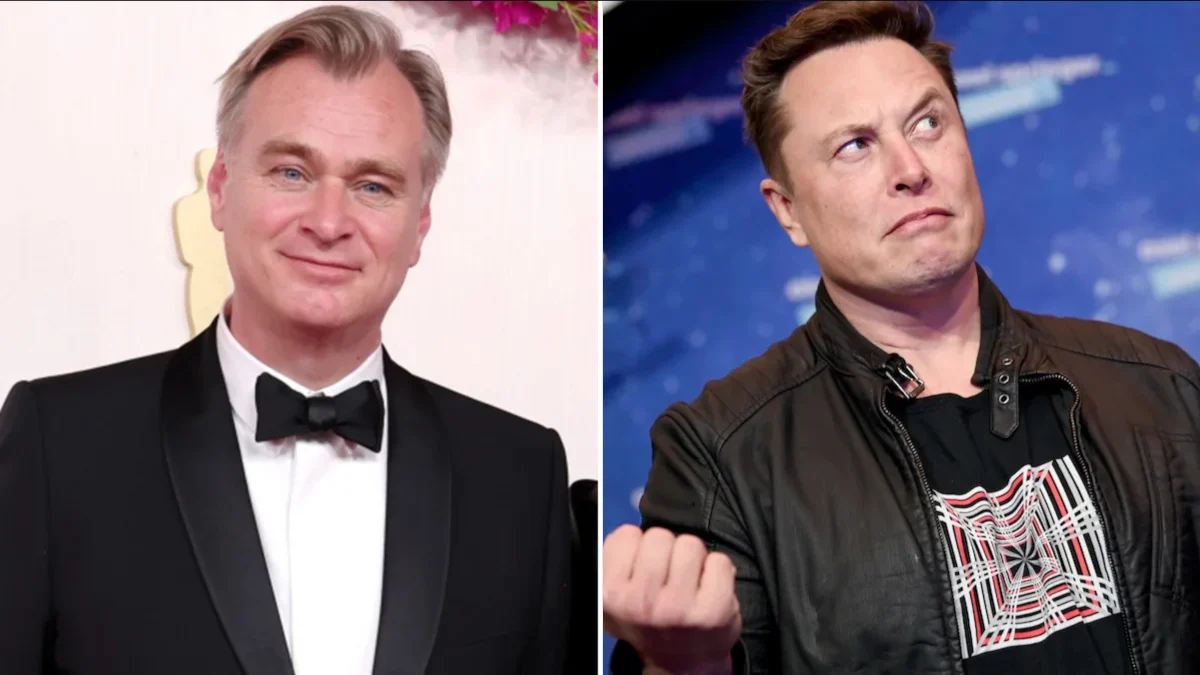
The cinematic landscape of 2026 has been defined by a singular, colossal event: the release of Christopher Nolan’s The Odyssey. While the film has garnered widespread critical acclaim for its visual ambition and narrative depth, its journey to the screen was marked by an unprecedented campaign of hostility from tech mogul Elon Musk. Despite months of vocal criticism from the billionaire, The Odyssey has shattered box office expectations, effectively silencing the "go woke, go broke" rhetoric that has become a staple of Musk’s recent social media presence.
The Numbers: A Record-Breaking Opening
By every quantitative metric, The Odyssey is a massive financial success. The film earned a staggering $50 million in U.S. theaters on its opening Friday alone. Projections from major ticket tracking firms confirm that the film is set to conclude its domestic opening weekend with a haul exceeding $137 million.
The global performance is even more robust. With a projected worldwide opening of $264.1 million, the film has effectively recouped its $250 million production budget within the first three days of its release. This trajectory places The Odyssey on a path to become one of the most profitable films in Christopher Nolan’s storied career, contradicting the narrative that the director’s creative choices would alienate the general audience.
Chronology of a Failed Campaign
The antagonism between Elon Musk and the Odyssey production began in early 2026, long before the film’s first trailer even dropped.
- January 2026: Musk begins utilizing his platform to criticize the casting of Lupita Nyong’o as Helen of Troy and Elliot Page as the soldier Sinon. He frames these casting decisions as evidence of "forced diversity" and adherence to "DEI (Diversity, Equity, and Inclusion) quotas," rather than creative vision.
- March–May 2026: The rhetoric escalates. Musk claims that Nolan has "lost his integrity" and suggests that the director is "pissing on the grave of Homer." During this period, Musk also amplifies disparaging posts regarding Elliot Page’s physical appearance.
- June 2026: As the release date approaches, Musk pivots to attacking the Academy of Motion Picture Arts and Sciences, baselessly claiming that Nolan intentionally cast diverse actors to "game the system" and secure Oscar nominations under new, controversial eligibility standards.
- July 18, 2026: The film premieres. Within 48 hours, the box office data confirms that the public interest in the film vastly outweighs the vitriol generated by online influencers.
Supporting Data and Critical Reception
Beyond the box office, the critical consensus surrounding The Odyssey has been nearly unanimous in its praise. As of Sunday morning, the film holds an impressive 95% rating on Rotten Tomatoes, having peaked at 98% during its initial release. This is the highest critical standing for any film in Christopher Nolan’s filmography.
Renowned publications have been quick to defend the artistic merits of the film against the backdrop of the controversy. The New York Times celebrated the film for its "passion in every frame," while Consequence lauded it as "the epic we truly need right now." These reviews highlight the film’s technical achievements, emotional resonance, and the sheer scale of Nolan’s storytelling—factors that audiences have clearly prioritized over the performative outrage cycles of social media.
The Hypocrisy of the Critic
A significant point of contention throughout this saga has been the glaring inconsistency in Musk’s arguments. Musk repeatedly leveled charges of "racial erasure" against Nolan for casting a Black actress as Helen of Troy. However, as critics and cultural observers have noted, Musk remained silent regarding the casting of Matt Damon as the titular hero, Odysseus.
As a columnist for The Atlantic astutely pointed out in May, Musk’s selective outrage regarding "historical accuracy" fails to address the fact that Damon, an actor of Northern European descent, is playing a character from the Mediterranean. This disparity highlights the performative nature of the critique; Musk’s issue was not with "Homeric accuracy," but with the specific presence of actors from marginalized groups in prominent roles. By applying his "woke" label only to specific actors, Musk exposed the underlying bias driving his campaign.
Implications: Does the "Woke" Narrative Still Hold Weight?
The success of The Odyssey serves as a case study in the diminishing returns of the "go woke, go broke" mantra. For years, this slogan has been used to predict the failure of any media project that centers on diverse casting or progressive themes. However, 2026 has seen a trend of high-budget films thriving despite similar online hostility.
The Audience-Platform Disconnect
The primary implication of this success is the growing disconnect between the echo chambers of social media platforms like X (formerly Twitter) and the actual purchasing power of the global movie-going audience. While Musk’s posts garner millions of impressions, the conversion of those impressions into actual cultural influence appears to be failing. The general public, it seems, is far more interested in the quality of the storytelling and the vision of the filmmaker than in the political grievances of a tech billionaire.
The Future of Casting and Artistic Freedom
By attempting to frame the casting of Nyong’o and Page as a cynical attempt to win awards, Musk inadvertently triggered a conversation about the nature of casting itself. If the film is, as expected, a top contender for the 2027 Academy Awards, it will likely be on the merit of the performances, the cinematography, and the score.
The failure of the anti-Nolan campaign suggests that studios may feel emboldened to continue casting for talent and presence rather than adhering to rigid, outdated archetypes. When a filmmaker of Nolan’s caliber succeeds despite such high-profile interference, it sends a message to the industry that artistic autonomy remains the most valuable asset in Hollywood.
Conclusion: A Lesson in Irrelevance
Elon Musk’s campaign against The Odyssey was characterized by inflammatory language, unsubstantiated claims, and a clear ideological bias. By attempting to dictate the artistic direction of a major motion picture, Musk positioned himself as a central figure in the culture wars. However, the sheer scale of the film’s opening weekend success—a quarter of a billion dollars in just three days—suggests that his influence has reached a plateau.
Ultimately, The Odyssey proved to be an epic in every sense: in its production, its box office returns, and its resilience against a tide of manufactured controversy. As the film continues its run, it stands as a testament to the fact that quality, vision, and the collective desire for grand-scale storytelling will almost always triumph over the fleeting, ephemeral noise of the internet. Musk may have hoped to damage the film’s reputation, but he succeeded only in highlighting his own disconnect from the realities of the modern cultural landscape.
 Ammar Sabilarrohman
 Lina Irawan
 Nana Muazin
