

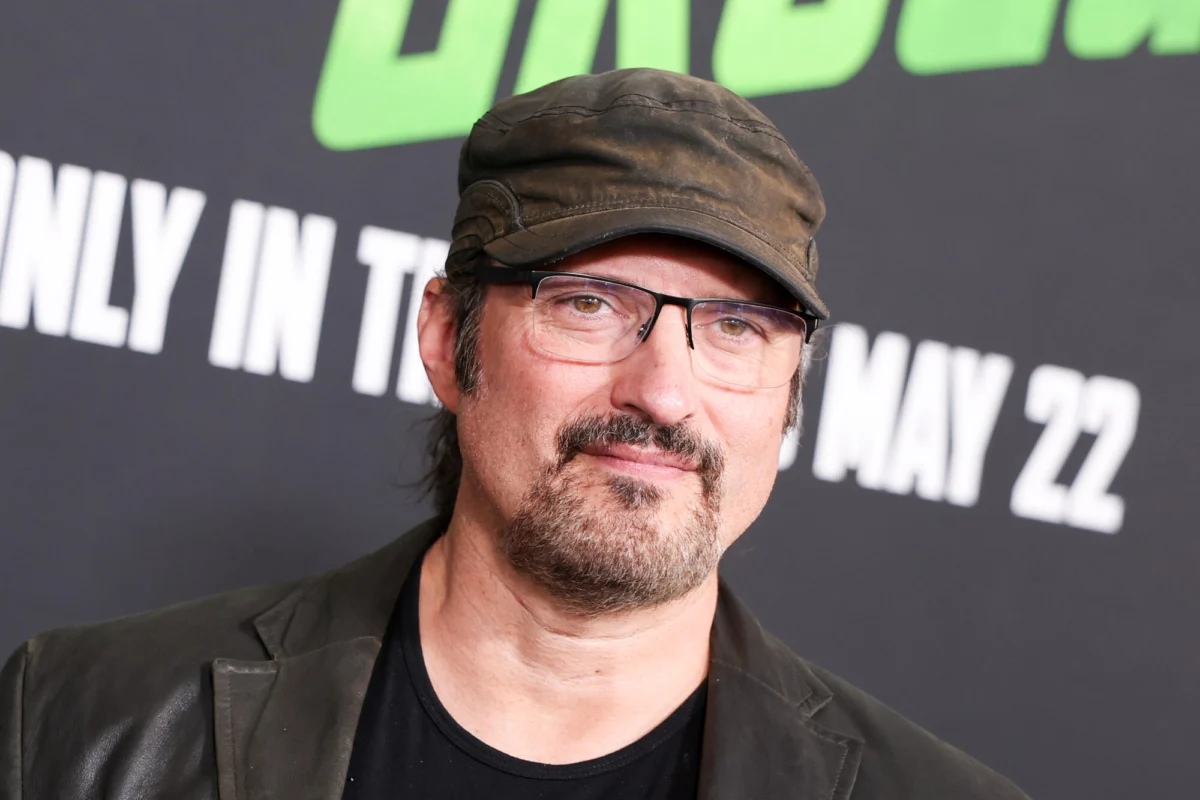
It is a rare phenomenon in Hollywood when a high-budget franchise begins in a backyard and ends up defining a generation. Yet, for filmmaker Robert Rodriguez, the Spy Kids franchise represents the culmination of a lifelong creative journey—one that is as much about family, culture, and personal persistence as it is about the high-tech gadgets and "Thumb-Thumbs" that graced the silver screen in 2001.
During a recent 25th-anniversary celebration of the original Spy Kids film at the Academy Museum in Los Angeles, Rodriguez pulled back the curtain on the creative chaos and industry hurdles that birthed one of the most beloved family franchises in cinema history. Among the many revelations shared, the story of how George Clooney landed his iconic, pajama-clad cameo remains the most illustrative of the "Rodriguez way" of filmmaking.
The Reciprocity of Stardom: The Clooney Cameo
George Clooney’s involvement in the Spy Kids universe is a masterclass in the value of professional relationships. The actor, who played the character Devlin—the head of the fictional spy organization known as the OSS—was not cast through traditional agents or multi-million dollar negotiations. Instead, he was recruited through a debt of gratitude.
"I’d given him his first big role in From Dusk Till Dawn," Rodriguez explained to the captivated audience at the Academy Museum. "So, I knew he owed me a favor."
The logistics of the cameo, however, were entirely atypical for an A-list star. When Rodriguez contacted Clooney to gauge his interest, he didn’t demand a studio set or a full production crew. Instead, he proposed a remarkably intimate, "guerrilla" style of filmmaking.
"I told him, ‘I’m going to put you in a cameo… Are you free sometime?’" Rodriguez recalled. When Clooney offered a date, the director countered with a bold plan: "How about Monday? I’ll just come to your house. It’ll just be me. I’ll bring the camera, do the lighting, hold the microphone up. You don’t even have to be wearing anything but a jacket and your pajamas."

True to his word, Rodriguez arrived at Clooney’s home with minimal equipment. In a display of complete trust and comedic timing, the Oscar winner donned a crisp suit jacket and tie on his torso, while keeping his pajama pants on for the cameras. The resulting scene—which features a clever, meta-textual sight gag involving a black bar over his face—became an instant classic. Clooney would later reprise the role in Spy Kids 3: Game Over, again filming in his living room, cementing a recurring bit that has become a touchstone of the franchise.
A Chronology of Vision: From Backyard to Big Screen
To understand the significance of Spy Kids, one must look at the trajectory of Rodriguez’s career. Long before the green screens and the massive budgets of the early 2000s, a young Rodriguez was honing his craft in San Antonio.
"This represents the kind of film I’ve been making back in San Antonio since I was in high school," Rodriguez told the audience. Growing up in a household with 10 children, he lacked a professional cast, so he turned to his siblings. These early, low-budget "action comedies" in the backyard served as the blueprint for the Cortez family adventures.
The transition from these humble beginnings to a studio-backed feature was far from easy. The concept of a Latin American family of secret agents faced significant resistance from industry executives at the time. "They were like, ‘Why are you making the family Latin? Can’t you just make them American?’" Rodriguez recalled.
His response, however, was firm and grounded in the belief that specificity breeds universality. "I said, ‘Well, they are American. They’re Latin American. They’re based on my family.’"
Challenging the Industry Narrative
The friction regarding the film’s cultural identity highlights a pivotal moment in Hollywood’s approach to representation. Rodriguez, ever the strategist, employed a powerful argument to convince the studio that a Latin-led action film could achieve global success.

"I came up with a winning argument," he shared. "You don’t have to be British to enjoy James Bond. You make it very specific culturally, and it becomes universal."
This philosophy proved correct. The Spy Kids franchise eventually spanned five films, consistently performing at the box office and changing the landscape for how minority families were portrayed in family-oriented blockbusters. By weaving his own heritage—including his uncle, Gregorio Rodriguez, a real-life FBI agent who brought down two top-10 criminals—into the script, Rodriguez gave the film an authenticity that resonated with global audiences. He even named the lead character, played by Antonio Banderas, "Gregorio Cortez" as a direct tribute to his family member.
The Art of the Impossible: The Thumb-Thumbs
Beyond the social and cultural impact, the Spy Kids franchise is remembered for its imaginative visual flair, particularly the "Thumb-Thumbs." These bizarre, henchmen-like creatures were not the product of a high-priced design firm, but rather a manifestation of a teenage Rodriguez’s boredom during art class.
"When I was 16, I was terrible at drawing hands," he admitted. "I used to like to draw. One day, I was trying to figure out how to draw my thumb, and I drew the thumb, and it looked like a head. So then, I drew it as an arm, and another arm, and a leg, and a leg, and I created this thing I called a Thumb-Thumb."
That drawing won an art contest when he was 16, and years later, he made the executive decision to bring that childhood doodle to life. The creation of the Thumb-Thumbs serves as a metaphor for the entire franchise: a testament to the idea that a filmmaker’s childhood imagination is their most valuable asset.
Implications for Modern Filmmaking
The 25th anniversary of Spy Kids serves as more than just a nostalgic trip down memory lane; it offers a blueprint for modern creators. In an era dominated by algorithmic filmmaking and focus-grouped content, the success of the Spy Kids franchise remains an outlier. It reminds the industry that the most "universal" stories are often the ones that are the most deeply personal.

By centering the narrative on his own family and his own childhood drawings, Rodriguez created a world that felt lived-in and sincere. The "magic" of the movies, as he puts it, is not found in the budget, but in the ability to retain a connection to the "child inside of you."
"When you see that [the Thumb-Thumbs], just imagine the child inside of you," Rodriguez advised the audience. "Seeing your little drawing turn into something. That’s the magic of these movies."
Conclusion: The Legacy of the Cortez Clan
As we look back at the impact of Spy Kids, it is clear that the film did more than just launch a series of sequels; it carved out a space for Latin American representation in a genre that had previously excluded it. It proved that a story about a family from San Antonio could be just as high-stakes, action-packed, and globally relevant as a high-budget spy thriller from London.
From the casual, pajama-clad cameos of George Clooney to the heartfelt tributes to a real-life FBI agent, Spy Kids remains a triumph of personal vision. Robert Rodriguez did not just make a movie; he translated his own childhood, his family history, and his unique artistic voice into a cultural phenomenon that, 25 years later, still feels just as vibrant and relevant as the day it was released.
Whether it is through the lens of cultural representation or the mechanics of guerrilla filmmaking, Spy Kids stands as a reminder that the best stories are the ones we tell when we stop trying to please the room and start honoring our own origins. As for Antonio Banderas’ iconic stick-on mustache? That was simply the cherry on top of a legacy that redefined the possibilities of family cinema.
 Nana Wu
 Iffa Jayyana
 Dwi Wanna
