

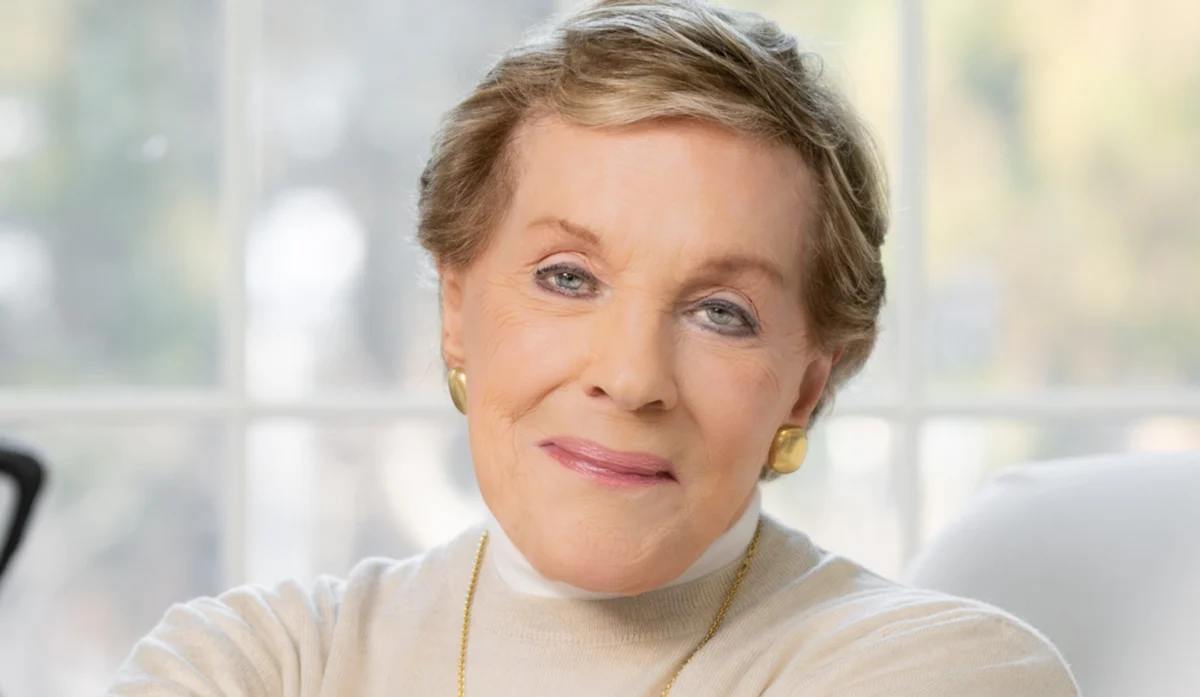
For over seven decades, Dame Julie Andrews has occupied a singular space in the global cultural consciousness. From the rain-slicked streets of London’s West End to the mountaintops of Austria, and eventually to the halls of Genovian royalty, her voice and presence have defined the childhoods and adulthoods of millions. Now, for the first time, the woman behind the "icon" is preparing to peel back the layers of a life defined by unparalleled professional success and profound, often hidden, personal resilience.
In a landmark announcement, Disney+ has confirmed that it will serve as the global home for an upcoming, as-yet-untitled feature documentary chronicling the life and career of Julie Andrews. Helmed by acclaimed director and producer R.J. Cutler—the visionary behind Billie Eilish: The World’s a Little Blurry and Martha—the project promises to be the most comprehensive examination of Andrews’ journey ever committed to film. Scheduled for a 2027 release, the documentary aims to move beyond the glittering surface of her Hollywood legacy to explore the private narrative of a woman who has remained, despite her fame, a figure of mystery and quiet strength.
The Architecture of a Legend: What the Documentary Will Cover
While the public is well-versed in the highlights of Andrews’ career—the Oscar-winning turn in Mary Poppins, the sweeping, career-defining scope of The Sound of Music, and the late-career renaissance found in The Princess Diaries—this documentary seeks to reframe these milestones as mere chapters in a much larger, more complex story.
The film is designed as an intimate portrait, tracing the trajectory of her life from her formative years in British vaudeville to her status as a global superstar. According to early production reports, the documentary will rely on a treasure trove of rare, never-before-seen archival footage. By blending this historical record with candid, contemporary interviews, the film promises to explore the "resilience, heartbreak, and reinvention" that have anchored Andrews’ path.
Crucially, the documentary will pivot away from the "storybook" image often associated with Andrews. It will delve into the challenges she has faced—both professional and personal—including the vocal injury that nearly ended her career and forced her to navigate a total shift in her creative identity. By examining these hurdles, Cutler intends to show not just the entertainer, but the human being who chose to pivot, adapt, and ultimately thrive in an industry known for its volatility.
A Chronological Odyssey: From Vaudeville to Iconography
To understand the weight of this documentary, one must look at the immense span of the life it intends to capture. Andrews’ career is not merely long; it is historical.
- The Early Years (1940s–1950s): The documentary will likely touch upon her beginnings as a child performer in British music halls. It was here that she developed the vocal precision that would eventually become her trademark. Her transition to the stage, specifically her star-making turn in My Fair Lady on Broadway, established her as a force to be reckoned with.
- The Golden Age of Hollywood (1960s): This era remains the most recognized period of her career. The back-to-back success of Mary Poppins (1964) and The Sound of Music (1965) placed her at the pinnacle of global fame. The documentary is expected to provide behind-the-scenes insights into these productions, perhaps offering a glimpse into the pressure of carrying such massive cultural expectations.
- The Years of Reinvention (1970s–1990s): This period represents a more complicated narrative. Andrews sought to break away from the "nanny" archetype, taking on more provocative roles in films like S.O.B. and Victor/Victoria, the latter of which was directed by her husband, Blake Edwards. This era showcases her willingness to take creative risks, a theme that serves as a through-line for the film’s narrative of personal growth.
- The Modern Legacy (2000s–Present): With her resurgence in The Princess Diaries and her iconic voice work in the Shrek franchise, Andrews cemented her status as a multi-generational bridge. The documentary will undoubtedly look at how she managed this longevity, remaining relevant in an industry that often discards its legends.
Behind the Lens: The Creative Team
The project is being shepherded by a production team with a proven track record for depth and nuance. R.J. Cutler, whose work often explores the internal lives of public figures, serves as both director and producer. He is supported by a team of seasoned veterans including Trevor Smith, Elise Pearlstein, Jane Cha Cutler, and Jonathan Ruane. Mark Blatty is attached as executive producer, and the film is being produced by This Machine, a Sony Pictures Television company.

The involvement of Cutler is significant. Having documented the rapid, overwhelming rise of Billie Eilish and the complex, controversial life of Martha Stewart, Cutler possesses a specific skill set: the ability to strip away the "public armor" of his subjects. This is precisely what he intends to do with Andrews.
Official Responses and Creative Vision
The announcement was accompanied by a deeply personal statement from R.J. Cutler, which highlights the reverence he feels for the subject.
"Julie Andrews is not simply a beloved performer," Cutler stated. "She is a cultural touchstone, a figure woven into the fabric of how generations of people understand joy, resilience, and grace."
Cutler’s statement underscores the primary objective of the project: to move past the superficial adoration of the public. "Most people don’t know the extraordinary challenges she’s had to overcome throughout her life, all of which we delve into in this film," he noted. "To sit with Julie, to be allowed into her inner world, to watch her reflect on a life that has shaped so many other lives was an experience I will forever cherish."
Perhaps most tellingly, Cutler remarked on the lack of artifice he encountered during the filming process. "She gave us her full self, without armor, without pretense. And what we found was someone even more extraordinary than the icon. I am humbled by her talent, in awe of her strength, and honored by her trust."
The Implications: Why Now?
The decision to produce a high-budget, definitive documentary on Julie Andrews at this stage in her life carries significant implications for the industry and for her legacy.
First, it marks a shift in how we document the lives of the "Golden Age" stars. Rather than a traditional, celebratory retrospective, the modern documentary format—as exemplified by Cutler’s work—demands a warts-and-all approach. By opting into this project, Andrews is signaling a desire for her legacy to be viewed through a lens of reality rather than myth.

Second, for Disney+, this is a marquee acquisition. In an era of streaming wars, the platform is doubling down on "prestige" documentary content that appeals to multi-generational demographics. A film about Julie Andrews is not just a niche interest; it is a global event that draws in fans from every age bracket, from those who saw her on stage in the 1950s to those who discovered her in the 2000s.
Finally, the film serves as a study on the nature of "stardom." In an age of social media, where celebrities are expected to be constantly accessible, Andrews represents a different model of fame—one built on mystery, craft, and the careful curation of a public persona. The documentary will force a conversation about the costs of such a life and whether the "icon" we see on screen is a fair representation of the person who exists behind the curtain.
Looking Ahead to 2027
As of now, details regarding the specific title and the exact release date remain under wraps, with Disney+ promising more information as the production nears completion. However, the industry expectation is that this film will be a major contender during the awards season following its release, particularly given the pedigree of the director and the stature of the subject.
For the audience, the 2027 release date offers a period of anticipation. We are not merely waiting for a movie; we are waiting for a final, authoritative look at one of the most important figures in the history of entertainment. Whether or not it will change the way we see Mary Poppins or The Sound of Music, it will undoubtedly change the way we see Julie Andrews.
As the production continues, the global community of fans will be watching closely for snippets of what is sure to be an emotional, enlightening, and deeply humanizing document of a legendary life. One thing is certain: when the film finally arrives, the world will be ready to listen to the story that has remained, until now, largely untold.
 Nana Wu
 Iffa Jayyana
 Dwi Wanna
