

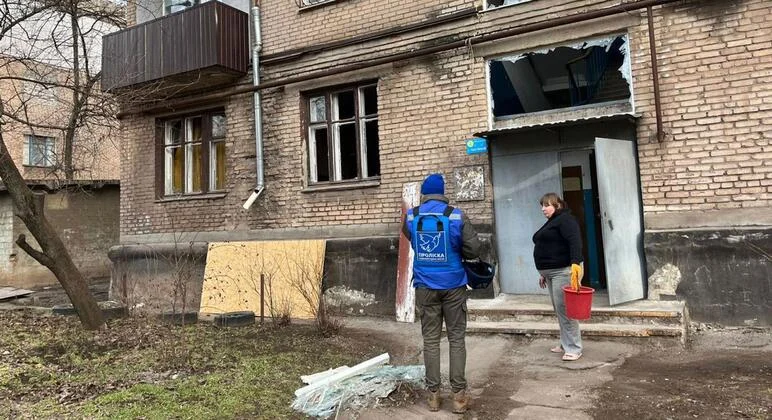
The international community is currently grappling with a cascading series of crises that demand urgent, coordinated intervention. From the looming humanitarian catastrophe in Ukraine as winter approaches to the brutal, ongoing civil war in Sudan and the resurgence of lethal disease in the Democratic Republic of the Congo (DRC), global stability is under severe strain. Simultaneously, new data from the Americas underscores a silent, widespread public health challenge: the rising burden of neurological disorders.
This report synthesizes the latest developments from United Nations agencies and international health organizations, providing a comprehensive overview of the current global situation.
I. Ukraine: Preparing for a "Winter of Survival"
As the conflict in Ukraine persists, the humanitarian community has sounded a clarion call for $358.4 million to forestall a winter disaster. The United Nations Office in Ukraine announced this week that the funds are critical to sustaining life for 2.1 million people who remain trapped in high-risk zones.
The Strategic Importance of Winter Aid
The upcoming winter is viewed as a pivotal period for survival. Humanitarian coordinator for Ukraine, Matthias Schmale, emphasized the lesson learned from previous years: the strategic targeting of energy infrastructure by invading forces left millions without electricity, heating, or clean water during sub-zero temperatures.
"Humanitarian organizations are preparing now so we can reach people before winter arrives," Schmale stated. The proposed aid package is not merely for shelter; it encompasses a multi-layered response including food security, cash assistance for the most impoverished, emergency medical supplies, and the rapid repair of civilian infrastructure. The assistance will be prioritized for residents living in close proximity to the frontline, newly displaced families, and vulnerable groups who lack the mobility to seek refuge elsewhere.
II. Sudan: A Nation Under Siege
The humanitarian situation in Sudan has been classified by the United Nations as the "world’s worst." Recent escalations involving the Rapid Support Forces (RSF) have pushed the country further into a state of total collapse, with at least 59,000 deaths recorded and a staggering 14 million people displaced.
A Chronology of Recent Atrocities
The violence reached a new nadir between Monday and Tuesday of this week, with two separate drone strikes killing at least 27 civilians.
- Monday: A market in Ar Rahad, North Kordofan, was struck by a drone. UNICEF reports that these sites, which are vital for food and economic survival, are increasingly becoming targets of tactical warfare.
- Tuesday: An even more devastating strike hit a critical water source in the Tina region of North Darfur.
These attacks are not isolated incidents but part of a calculated effort by the RSF to tighten their grip on North Kordofan. There is profound international alarm that the provincial capital, El Obeid, may mirror the fate of El Fasher, where thousands were massacred during a prolonged siege earlier this year.
The Impact on the Next Generation
UNICEF Representative Sheldon Yett has been vocal in his condemnation, noting that children are paying the ultimate price. With 33.7 million people—nearly 64% of the nation’s total population—requiring humanitarian aid, the infrastructure for childhood survival has been effectively dismantled. Schools, health facilities, and water networks have been obliterated, leaving a generation not only displaced but devoid of the basic necessities required for human development.
III. DR Congo: Escalating Violence and Public Health Failure
In the eastern regions of the Democratic Republic of the Congo, the convergence of civil conflict and a worsening Ebola outbreak has created a "perfect storm" for aid organizations.
The Impasse in Beni
Between July 13 and July 19, violent attacks in the Beni territory resulted in at least 30 civilian deaths and dozens of injuries. The security situation has deteriorated to such an extent that at least six major international humanitarian organizations have been forced to suspend their operations in the region.
UN Spokesperson Stéphane Dujarric described the situation as an "untenable environment" for aid delivery. The conflict, characterized by clashes between the Congolese security forces and the M23 armed group, has created vast "no-go zones" that are essential for medical outreach.
The Ebola Crisis
The suspension of humanitarian access has severely hindered the response to an ongoing Ebola outbreak. National health authorities have confirmed 2,473 cases across the provinces of Ituri, North Kivu, South Kivu, Haut-Uele, and Tshopo.
The UN is currently working to scale up laboratory testing and community engagement, but these efforts are consistently disrupted by the fighting. Peacekeepers in the region are currently tasked with the dual burden of protecting civilians and securing healthcare facilities, a mission that is being stretched to its absolute breaking point. The UN has issued a renewed call for all parties to respect the sanctity of medical facilities and allow for "safe and unhindered" humanitarian access.
IV. The Americas: A Silent Neurological Crisis
While conflict dominates headlines, a significant public health alert has emerged from the Pan American Health Organization (PAHO). A study published this week reveals that nearly 470 million people—approximately two in five individuals across North and South America—are living with at least one neurological disorder.
Scope of the Burden
The study, which includes conditions such as stroke, epilepsy, Alzheimer’s, and migraines, indicates that neurological disorders are now a leading cause of disability and death. These conditions affect the brain, spinal cord, and peripheral nerves, resulting in profound impacts on movement, memory, communication, and behavior.
Data Disparities and Access Gaps
The report highlights a critical shift in public health: since 1990, death rates have declined, meaning more people are living longer with chronic neurological conditions. However, the systems required to support these individuals are largely failing.
- Regional Inequality: There is a nearly fourfold disparity in the burden of disease between different nations in the Americas. Haiti, Guyana, and Suriname report the highest burden, while Colombia, Peru, and Argentina report the lowest.
- Risk Factors: PAHO researchers noted that a significant percentage of these conditions could be prevented or managed through better control of hypertension, diabetes, obesity, and tobacco use.
- The Care Gap: The disparity in "years of life lost" is largely attributed to systemic gaps in prevention, diagnosis, and long-term rehabilitation. The study calls for an urgent overhaul of health systems to prioritize long-term neurological care, particularly in low-income nations where infrastructure remains woefully underdeveloped.
V. Implications and Future Outlook
The interconnectedness of these events reveals a world in which humanitarian access and public health are increasingly volatile.
- Security and Stability: The situation in Sudan and the DRC suggests that without a political resolution to ongoing conflicts, humanitarian aid will continue to be a "band-aid" solution that fails to address the underlying root causes of displacement and mortality.
- Infrastructure Resilience: The focus on Ukraine’s winter response highlights the growing trend of "infrastructure warfare," where essential civilian services are used as strategic leverage. This necessitates a new international standard for protecting critical civilian infrastructure during wartime.
- Public Health Priorities: The PAHO report serves as a reminder that even in regions not currently devastated by war, healthcare systems are facing a "silent epidemic." The rise of chronic, non-communicable neurological disorders requires a long-term investment in health equity rather than just short-term emergency response.
As the international community looks toward the latter half of the year, the primary challenge remains the mobilization of resources and the political will to protect the most vulnerable. Whether in the frozen homes of Ukraine, the war-torn markets of Sudan, the besieged territories of the DRC, or the clinics of the Americas, the common thread is the desperate need for sustainable, long-term humanitarian and health solutions.
Without immediate intervention, the trends documented this week suggest that 2026 will be defined by a deepening divide between those who have access to safety and health and those who remain trapped in the cycle of global crisis.
 Asro
Asro
 Layla Zulfa
