

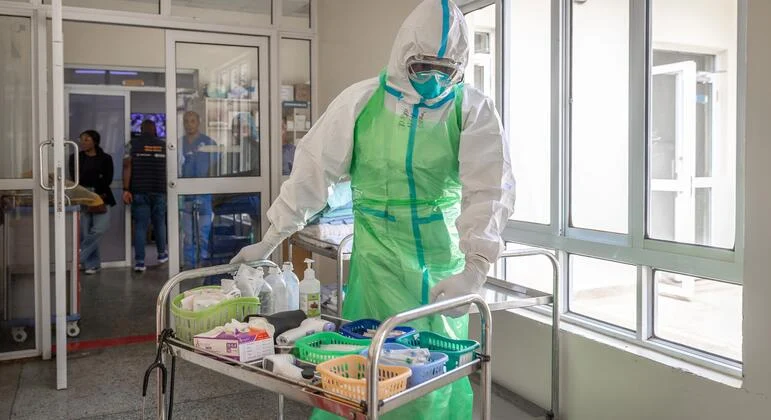
NAIROBI — The World Health Organization (WHO) and Kenyan health authorities have intensified surveillance and containment protocols following the confirmation of a second Ebola case within the country. The development comes as the region continues to grapple with the spillover effects of a protracted and deadly Ebola outbreak in the neighboring Democratic Republic of the Congo (DRC).
The confirmation of this second case—a 39-year-old man who is a relative of Kenya’s first Ebola fatality—has underscored the fragility of regional health security and the critical importance of robust contact tracing. While public health officials maintain that there is no evidence of community-level transmission, the event serves as a stark reminder of the persistent threat posed by the virus.
A Chronology of the Crisis: From DRC to Nairobi
The current situation in Kenya is inextricably linked to the ongoing, record-breaking Ebola epidemic in the eastern provinces of the DRC. The virus, which is highly contagious and often fatal, has proven difficult to contain in the dense, conflict-ridden environments of the Congo.
The timeline of the current alert in Kenya began in early October:
- October 3: A male patient, who had been residing in the DRC, traveled through Uganda before arriving in Nairobi. Upon his arrival, he was already symptomatic.
- October 5: The patient succumbed to the virus in a Nairobi hospital. This marked the first recorded Ebola fatality in Kenya, triggering an immediate and massive public health response.
- October 13: A 39-year-old man, identified as a close relative of the first patient, began exhibiting symptoms consistent with Ebola. Having already been identified as a high-risk contact, he was under quarantine.
- October 14: The Ministry of Health officially confirmed the diagnosis of the second patient, heightening the urgency of the containment effort.
Since the confirmation, the Kenyan government, supported by international agencies, has moved swiftly to isolate the second patient and ensure that all necessary clinical protocols are followed to prevent further spread.
The Strategy of Containment: Casting a Wide Net
In the immediate aftermath of the first fatality, Kenyan health authorities, in coordination with the WHO, initiated an exhaustive "net-casting" exercise. This strategy aims to identify, monitor, and quarantine anyone who could have potentially interacted with the index patient.
The scope of this contact tracing operation is immense. It includes a diverse array of individuals: airline passengers, flight crew, airport maintenance staff, baggage handlers, immigration officers, and family members. According to Dr. Neema Rusibamayila Kimambo, the WHO Representative in Nairobi, more than 40 individuals were identified as contacts.
"I congratulate the Government for taking this important step to ensure that contacts are listed and quarantined," Dr. Kimambo stated in an interview with UN News. "But to defeat this disease, it is not just about the government or international partners; it is about everybody. We all have a role to play, and if each one of us plays our part, then we should be able to contain the disease and stop community spread."
While the vast majority of these individuals are currently in designated quarantine facilities, a small number of low-risk contacts have been permitted to self-quarantine under strict observation by health teams. However, challenges remain. Health officials are currently working to track down six passengers who traveled on the same flight as the index patient. These individuals have proven difficult to reach due to the use of foreign phone numbers, highlighting the logistical hurdles inherent in modern, interconnected travel.
Stepping Up Preparedness: A Proactive Defense
Kenya’s response is not a reactive scramble but rather the culmination of months of sustained preparedness. Since the outbreak in the DRC was declared in May, the Kenyan government and the WHO have been working to fortify the country’s health infrastructure.
These preparations include:
- Surveillance and Contact Tracing: Dedicated teams have been deployed to monitor high-risk areas, particularly ports of entry.
- Expert Integration: The WHO has bolstered the local response by bringing in a senior incident manager who played a critical role in the successful containment of the Ebola scare in Uganda earlier this year.
- Capacity Building: Over 4,000 healthcare workers across Kenya have undergone rigorous training. This includes specialized instruction on screening at airports and land borders, as well as the use of personal protective equipment (PPE).
- Resource Allocation: The WHO has donated approximately $70,000 in supplies, focusing on laboratory diagnostics and infection prevention and control (IPC) items.
"We are building on the work that we started during the preparedness phase," Dr. Kimambo explained. "Case management and infection prevention and control are critical at this time in the quarantine centers."
Addressing the Economic and Social Implications
One of the most delicate aspects of managing an Ebola threat is preventing mass panic and the unnecessary disruption of regional commerce. Despite the proximity of the outbreak, the WHO has explicitly advised against the closure of national borders or the imposition of blanket travel restrictions.
Dr. Kimambo emphasized that travel bans are often counterproductive. Instead, the focus must remain on "smart" screening—identifying high-risk travelers without crippling the movement of people and goods essential to the regional economy.
"There is no need to over-panic or be fearful because we do not have community spread," she said. "But we must be responsible. We need to focus on public education regarding transmission."
Transmission of the Ebola virus occurs through direct contact with the bodily fluids of an infected person. Because the early symptoms of Ebola—fever, vomiting, and diarrhea—are nearly identical to those of malaria and other common tropical diseases, the medical community is urging the public to exercise extreme caution.
The Call to Collective Action
The WHO’s messaging remains clear: individual responsibility is the final, essential line of defense. Public health campaigns are currently emphasizing three core behaviors:
- Strict Hand Hygiene: Regular washing with soap and water or the use of alcohol-based hand sanitizers.
- Contact Avoidance: Minimizing physical contact, specifically shaking hands, which is a common cultural norm in the region.
- Early Medical Consultation: If a person develops symptoms, they must report to a health facility immediately rather than attempting to self-medicate or hiding the condition.
The government’s transparency in reporting the second case is being viewed by international observers as a positive indicator of health governance. By acknowledging the case quickly and providing clear information to the public, officials are attempting to maintain trust and prevent the spread of misinformation, which has plagued past Ebola responses in the region.
Implications for the Future of Public Health in East Africa
The presence of Ebola in Kenya acts as a "stress test" for the East African Community’s health systems. As international travel hubs continue to grow in importance, the ability to rapidly detect and contain imported infectious diseases is becoming a core component of national security.
The success of the current containment efforts will likely serve as a blueprint for future regional health crises. If the virus is contained within the current cluster of identified contacts, it will validate the current strategy of intensive surveillance and early intervention. If the virus manages to bypass these barriers, it will necessitate a fundamental re-evaluation of regional quarantine protocols and border health strategies.
As of now, the situation remains under control, but the coming days are critical. The medical teams on the ground are working around the clock, monitoring every contact and ensuring that the healthcare facilities are prepared for any further developments.
"Let us ensure that we take infection prevention and control measures seriously," Dr. Kimambo concluded. "The key to containing this is vigilance, science-based action, and a unified response from every citizen."
For now, the world watches Nairobi, hoping that this rapid, organized response will successfully prevent the further spread of a disease that has already exacted a devastating toll on the African continent. The lesson for the global community is clear: in an era of globalization, the health of one nation is inextricably linked to the preparedness of its neighbors.
 Asro
 Layla Zulfa
 rifanmuazin
