

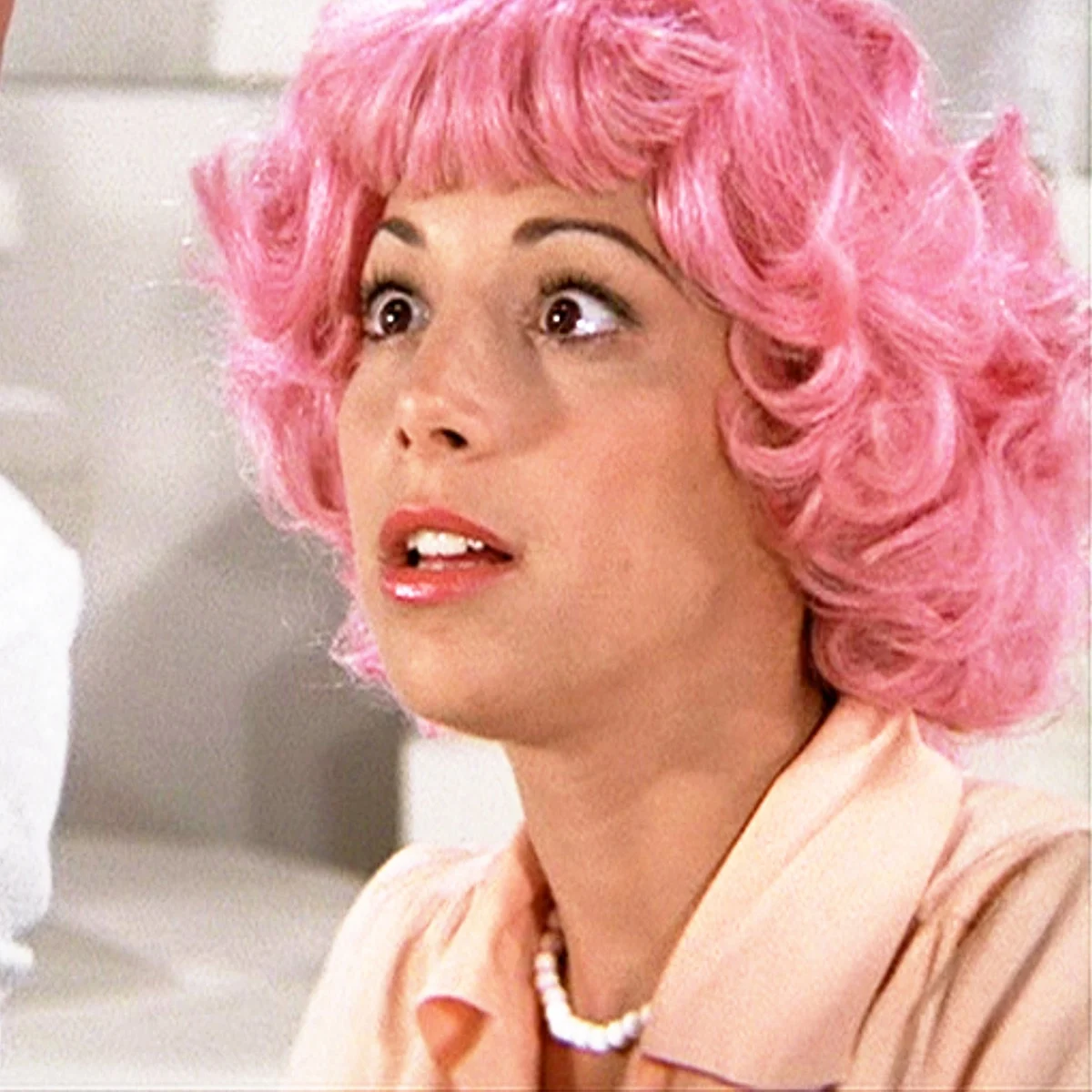
The nostalgia of Rydell High returned to London as actress Didi Conn, who immortalized the role of the pink-haired, well-meaning beauty school dropout Frenchy in the 1978 cinematic masterpiece Grease, made a rare and highly celebrated public appearance. Attending a special screening of Grease: The Immersive Movie Musical at Battersea Park, the 75-year-old actress delighted fans by bridging the gap between Hollywood’s golden age of musicals and the modern era of experiential cinema.
Dressed in a custom pink jacket embroidered with her character’s name—a direct homage to the iconic Pink Ladies satin jackets—Conn’s presence served as a poignant reminder of the film’s enduring multigenerational appeal. Decades after its theatrical debut, Grease remains a cornerstone of pop culture, with its behind-the-scenes history as colorful and dramatic as the musical itself.
Main Facts: The Return of a Pink Lady
The experiential screening in London provided a platform for Conn to share classic production secrets, reflecting on her casting, her deep bond with the late Olivia Newton-John, and the serendipitous moments that defined the film’s creation.
Grease, originally a gritty 1972 Broadway stage musical written by Jim Jacobs and Warren Casey, was transformed by producer Allan Carr and director Randal Kleiser into a glossy, high-energy Hollywood blockbuster. Conn’s portrayal of Frenchy—the empathetic confidante who famously receives life advice from a singing Teen Angel—remains one of the film’s most beloved performances.
At the London event, Conn revealed that her path to securing the role was guided by what felt like cosmic intervention. Acting on advice from her agent to attend the audition dressed as the character, Conn’s preparation took an unexpected turn:
“All I knew was that her name was Frenchy. I did know that she wanted to be a beautician. I’m driving home and what do I see? But Frenchy’s Beauty Parlor.”
Conn immediately stopped at the salon, where the real-life stylist styled her hair using "at least two cans of spray," creating an authentic, towering 1950s hairdo. Armed with firsthand observations of beauty school culture and a striking visual aesthetic, Conn charmed the casting directors, who later confessed they knew she was perfect for the role the moment she spoke.
Chronology of a Hollywood Phenomenon
To understand the cultural weight of Conn’s appearance, it is essential to trace the timeline of Grease from its theatrical development to its modern-day status as an immersive classic:
[1972] Broadway Debut of 'Grease' (originated by Barry Bostwick and Carole Demas)
  │
[March 1977] Personal Tragedy: John Travolta's girlfriend, Diana Hyland, passes away
  │
[Summer 1977] Principal Photography begins in Los Angeles under intense heat
  │
[August 1977] Mid-Production: Elvis Presley passes away; Frankie Avalon cast as Teen Angel
  │
[December 1977] 'Saturday Night Fever' releases, catapulting Travolta to superstardom
  │
[June 16, 1978] 'Grease' premieres in theaters, becoming an instant global sensation
  │
[1982] 'Grease 2' is released to mixed reviews, achieving cult status later
  │
[August 2022] Co-star Olivia Newton-John passes away at age 73
  │
[July 2023] Didi Conn makes her celebrated appearance at Battersea Park, London
Supporting Data: Box Office, Casting Alternatives, and Chart Dominance
The success of Grease was far from guaranteed during its pre-production phase in late 1976. The film’s final composition was the result of high-stakes casting gambles, creative compromises, and chart-topping musical collaborations.
The Battle for Sandy and Danny
Before John Travolta and Olivia Newton-John were locked in as Danny Zuko and Sandy Olsson, the production team considered an entirely different roster of 1970s icons:
- The Search for Sandy: The casting team initially suggested pop stars Linda Ronstadt and Marie Osmond. Other prominent actresses on the shortlist included Carrie Fisher, Susan Dey (The Partridge Family), and Ann-Margret (Bye Bye Birdie). Travolta, however, passionately lobbied for Newton-John, telling producers, "Every guy in the world wants Olivia Newton-John as their girlfriend… If you don’t see this, you guys are nuts."
- The Hesitation of Newton-John: Newton-John, then 29, was highly apprehensive about accepting the role due to a previous film project that had stalled her acting career. To accommodate her, the character of Sandy was famously rewritten from an American high schooler to an Australian expatriate.
- The Zuko That Almost Was: Henry Winkler, famous for playing Arthur "The Fonz" Fonzarelli on Happy Days, was the studio’s first choice for Danny Zuko. Winkler turned down the role to avoid lifelong typecasting—a decision he later jokingly lamented: "John Travolta, who has done the movie, goes home and buys a plane. I go home and have a Diet Coke."
Musical Performance and Awards Data
The Grease soundtrack was a commercial juggernaut, sharing production DNA with the disco era’s other massive hit, Saturday Night Fever. Both films were produced by Robert Stigwood, who leveraged his management of the Bee Gees to shape the musical landscape of the late 1970s.
| Song Title | Writer(s) | Billboard Hot 100 Peak | Key Achievement |
|---|---|---|---|
| "Grease" | Barry Gibb (performed by Frankie Valli) | No. 1 (2 weeks) | Golden Globe Nominee; replaced an original 1950s-style track |
| "You’re the One That I Want" | John Farrar | No. 1 | One of the best-selling singles of all time |
| "Hopelessly Devoted to You" | John Farrar | No. 3 | Only Grease song nominated for an Academy Award (Best Original Song) |
Official Responses and Behind-the-Scenes Recollections
The production of Grease was marked by intense physical demands, creative clashes, and profound personal milestones. Over the years, the cast and crew have shared insights that reveal the human stories behind the cinematic magic.
On-Set Improvisation and Lifelong Friendships
Didi Conn reflected warmly on her immediate connection with Olivia Newton-John, which began during the filming of their very first scene together. Newton-John, anxious about transitioning from pop music to a major film production, found comfort in Conn’s spontaneous acting style.
"She was a little bit nervous about doing this film and her first scene in the movie was with Frenchy," Conn shared. "I started improvising with her. I said, ‘Oh, I’m so happy I have a new neighbor all the way from Australia.’ And Olivia looked at me like, ‘What? Is this in the script?’ She started to play with me. And when our director Randal Kleiser said action, we were right in the mode of the character. Afterwards she gave me the biggest hug and thanked me. And that’s how our friendship began."
This initial bond blossomed into a deep, supportive friendship that lasted until Newton-John’s passing from breast cancer in August 2022.
The "Greased Lightnin’" Controversy
One of the most notable creative shifts from the Broadway production to the screen involved the high-octane musical number "Greased Lightnin’." On stage, the song belonged entirely to Kenickie, the tough-talking leader of the T-Birds played in the film by Jeff Conaway.
However, John Travolta, possessing significant star leverage after filming Saturday Night Fever, successfully campaigned to sing the lead vocals himself. "I have to be completely honest with you," Travolta later admitted. "I wanted the number. And because I had clout, I could get the number."
The decision caused friction on set. Choreographer Patricia Birch voiced her disappointment, stating, "It’s Kenickie’s goddamned number! I was upset with it, because I thought Jeff needed a number… it was Kenickie’s car!" Conaway was reportedly unhappy with the change, though he remained professional throughout the shoot.
Extreme Conditions during the "School Dance"
The iconic high school dance contest, filmed in the gymnasium of Huntington Park High School, was notorious for its grueling shooting conditions. Filmed over five days during a summer heatwave, the windowless gym lacked air conditioning.
Furthermore, the building was situated next to a meatpacking plant, meaning the windows could not be opened due to the overwhelming odor. The combination of heat, physical exertion, and poor ventilation led to several medical emergencies, including T-Bird actor Michael Tucci (Sonny) fainting on set and requiring emergency medical attention.
Implications: The Enduring Legacy of Rydell High
Didi Conn’s appearance at Battersea Park highlights a broader cultural trend: Grease is no longer merely a film, but a living, interactive brand. The transition from traditional theatrical viewings to "immersive movie musicals" reflects a growing desire among audiences for community-driven nostalgia.
The film’s impact remains visible across several areas of the entertainment industry:
The Evolution of the Screen Musical
Grease proved that movie musicals could successfully bridge the gap between classic Hollywood theatricality and contemporary pop music. By mixing Barry Gibb’s disco-infused title track with 1950s rock-and-roll pastiche, the film established a formula for modern soundtrack curation that continues to influence contemporary musical cinema.
Career Trajectories
For Travolta, Grease cemented his status as a versatile leading man capable of carrying both gritty dramas and lighthearted musicals. The film also provided a vital emotional distraction for the actor, who was grieving the loss of his partner Diana Hyland during production.
For Newton-John, the movie transformed her from a successful country-pop singer into a global cinematic icon, paving the way for her highly successful "Physical" era in the 1980s.
Modern Spin-offs and Prequels
The enduring commercial viability of the franchise is evidenced by recent endeavors such as Paramount+’s prequel series, Grease: Rise of the Pink Ladies. This series explores the origins of the high school faction that Frenchy and Sandy made famous, proving that the IP remains a valuable asset in the streaming era.
As Didi Conn stood before the London crowd, clad in her iconic pink jacket, it was clear that the magic of Grease does not lie merely in its catchy melodies or colorful costumes. It resides in the warmth of its performances, the enduring friendships forged on its set, and its unique ability to transport audiences back to a stylized, hopeful vision of youth—where the biggest worry was finding the right shade of hair dye, and where, eventually, everyone went together "like rama lama lama ka dinga da dinga dong."
 Lina Hope
 Asro
Asro
 Raul Delapena Setiawan
