

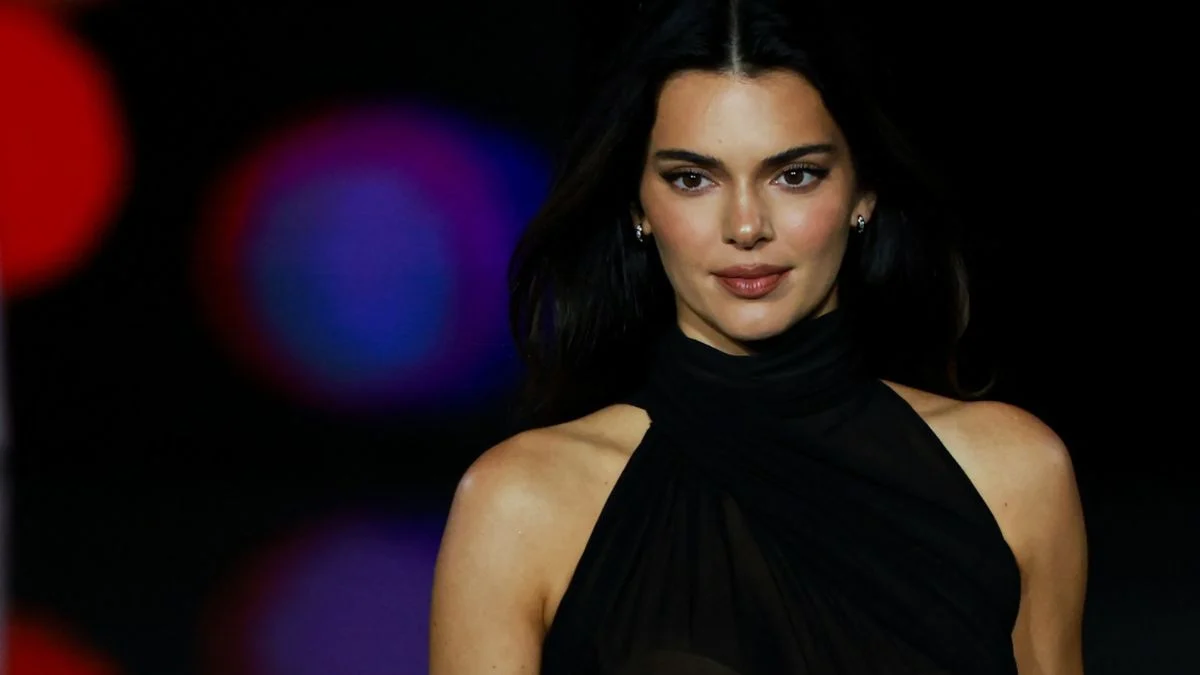
In the fast-paced world of digital fashion and celebrity influence, few figures command the same level of global attention as Kendall Jenner. A supermodel whose career has spanned from the runways of Paris and Milan to the curated feeds of Instagram, Jenner remains a powerhouse in the industry. Her most recent collaboration with Revolve Magazine—specifically, a series of images featuring a daring, architectural black gown—has once again cemented her status as a cultural icon, generating massive engagement and sparking a wider conversation about the evolution of fashion media in the digital age.
The Main Facts: A Masterclass in Viral Fashion
The center of the current buzz is a striking editorial feature in the debut issue of Revolve Magazine. Kendall Jenner, acting as the face of the brand’s new venture into print and high-end editorial, appeared in a dramatic, floor-sweeping black maxi dress. The garment, characterized by its daring double thigh-high slits, was designed to highlight the model’s signature silhouette while maintaining an air of sophisticated, gothic elegance.
The imagery, which was subsequently shared on Jenner’s personal Instagram account to her hundreds of millions of followers, served as the catalyst for a massive surge in online engagement. Within a single day of being posted, the images surpassed the one-million-like threshold—a metric that, while common for Jenner, serves as a testament to the enduring synergy between top-tier models and retail-forward brands like Revolve. The ensemble, which balances high-fashion drama with the provocative aesthetic often associated with the Revolve brand, has been hailed as one of the most memorable looks of the current season.
Chronology: From Concept to Viral Phenomenon
The lifecycle of this viral moment can be mapped across several critical phases, highlighting the speed at which modern fashion narratives travel.
Phase 1: The Editorial Tease
Weeks prior to the official launch, industry insiders and fashion enthusiasts began speculating about the collaboration. Revolve, a brand long associated with influencer marketing and lifestyle-driven retail, sought to pivot into the prestigious world of editorial journalism with the launch of Revolve Magazine. Selecting Kendall Jenner as the inaugural cover star was a strategic maneuver designed to bridge the gap between e-commerce and high-fashion authority.
Phase 2: The Unveiling
Upon the release of the debut issue, the images were disseminated across both Revolve’s digital channels and Jenner’s personal social media platforms. The choice of the black dress—a piece that demanded attention through its structure and daring cut—was intentional. It served as a visual "hook" designed to maximize social media algorithms, which favor high-contrast imagery and dramatic silhouettes.
Phase 3: The Social Media Explosion
Within hours of the post going live, the comment section of Jenner’s Instagram was flooded with fan reactions. By the 24-hour mark, the post had already crossed the million-like threshold, effectively securing its place as a "viral" moment. During this time, the images were picked up by fashion blogs, tabloid outlets, and lifestyle websites, further amplifying the reach of the editorial feature.
Supporting Data: The Power of the "Jenner Effect"
The success of this collaboration is not an outlier; rather, it is a quantifiable result of the "Jenner Effect." In the current retail landscape, data indicates that celebrity-backed editorial campaigns consistently outperform traditional advertising by a significant margin.
- Engagement Metrics: Jenner’s ability to generate over a million likes in 24 hours signifies an engagement rate that remains in the top 0.1% of all celebrity accounts. This level of interaction provides Revolve with a level of brand awareness that would be mathematically impossible to achieve through conventional print advertising alone.
- The Conversion Funnel: While the primary goal of the magazine is brand positioning, the "Revolve ecosystem" is built on direct-to-consumer conversion. Fashion analysts note that when a celebrity of Jenner’s stature wears a specific silhouette, similar styles in the brand’s inventory typically see an immediate uptick in search volume and "add-to-cart" actions.
- Audience Sentiment: Analysis of the comments section reveals a predominantly positive sentiment. Fans described the look as "breathtaking" and "perfect," indicating that the collaboration successfully resonated with the brand’s core demographic—young, fashion-conscious consumers who view Jenner as an aspirational figure.
Official Responses and Industry Context
The collaboration has received significant praise from within the fashion industry, particularly regarding how Revolve is positioning itself as a hybrid between a retailer and a media house.
Raissa Gerona, the President of Brand and Partnerships at Revolve Group, provided insight into the motivation behind selecting Jenner for the cover. In a statement reflecting on the partnership, Gerona remarked: "Kendall embodies the confidence and individuality that have always been at the heart of REVOLVE. She is the perfect representation of the modern woman who balances commercial appeal with an undeniable sense of style."
This statement underscores a strategic shift: Revolve is not merely selling clothing; it is selling an identity. By aligning with Jenner, they are asserting that their brand is no longer just a digital marketplace but a tastemaker in the luxury and high-fashion space.
Industry critics have also weighed in, noting that the dress—a bold, leg-baring design—was a clever choice for a debut issue. It signaled that Revolve Magazine would not be a conservative or traditional publication, but rather one that embraces the "Instagram-first" aesthetic that has defined the brand’s rise to dominance.
Implications: The Future of Fashion Media
The success of Kendall Jenner’s Revolve Magazine feature carries several implications for the future of the fashion industry.
1. The Death of the Traditional Editorial
For decades, high-fashion magazines operated as gatekeepers of style. Today, the power has shifted toward celebrity-led editorial projects. When a brand like Revolve can create its own "magazine" and secure a star of Jenner’s caliber, it diminishes the reliance on third-party publications. We are moving toward a future where brands own their media channels entirely, utilizing their own platforms to define their narrative.
2. The Architecture of Viral Clothing
The black dress featured in the shoot is not just a piece of clothing; it is a piece of "content." Fashion designers are increasingly creating pieces with the "Instagramability" factor in mind. The double thigh-high slit and the sweeping train were designed specifically to look good in static photography and short-form video, ensuring that the garment would be shared repeatedly across social media. This represents a significant shift in fashion design, where aesthetic impact on a screen is becoming just as important as the garment’s construction.
3. The Democratization of Luxury
By blending high-fashion editorial imagery with accessible retail, Revolve is successfully democratizing the "look" of luxury. Consumers who might have previously looked to traditional fashion houses for inspiration are finding that same aspirational quality in brands that offer a more direct, accessible path to purchase. Jenner, as the bridge between these two worlds, proves that the modern consumer values the "vibe" of luxury over the exclusivity of the traditional fashion house.
Conclusion
Kendall Jenner’s latest collaboration with Revolve Magazine is more than just a successful photoshoot; it is a definitive moment in the marriage of digital commerce and celebrity culture. By leveraging her massive social media following, a bold and provocative design, and a clear brand strategy, Revolve has successfully launched its editorial platform into the stratosphere of the fashion world.
As we look toward the future, the success of this shoot serves as a blueprint for other brands looking to capture the attention of a digital-first generation. The power of the image remains, but the medium has changed. Through the lens of Revolve Magazine, Kendall Jenner has once again demonstrated that when the right icon meets the right strategy, the result is nothing short of a global phenomenon. Whether through the millions of likes on her Instagram or the praise from industry executives, the message is clear: the intersection of high fashion and viral media is where the future of the industry lies, and Kendall Jenner is leading the way.
 Neng Nana
 Azzam Bilal Chamdy
 Nana
Nana
