

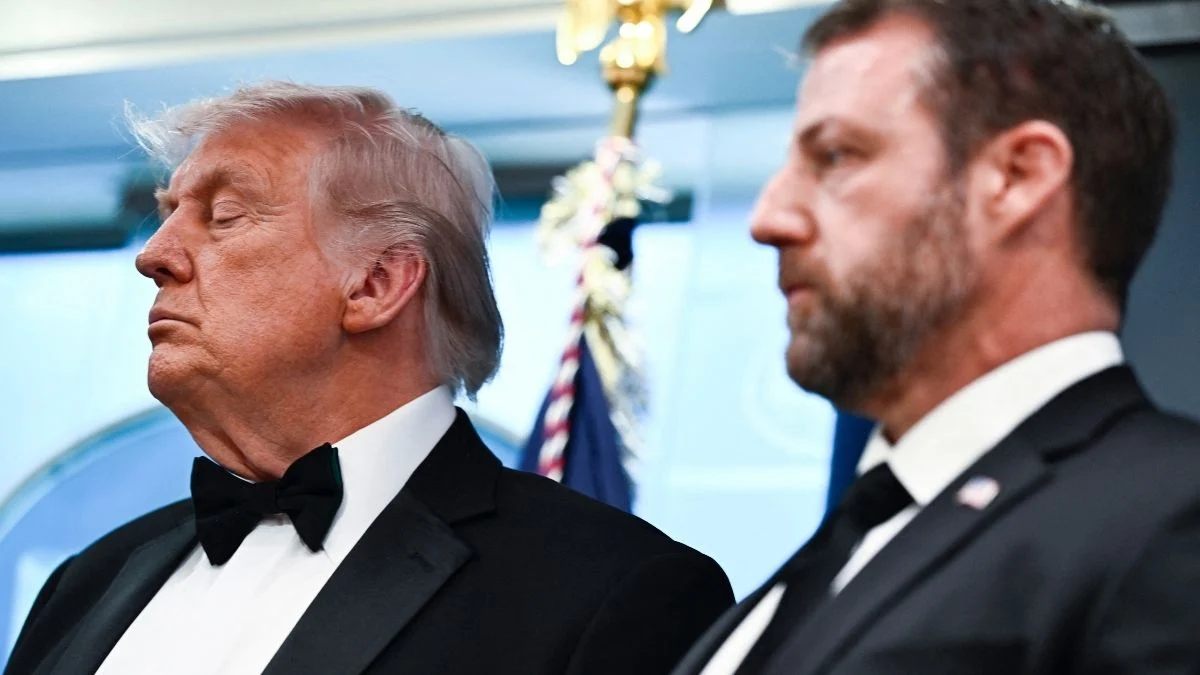
The corridors of the Department of Homeland Security (DHS) have become the latest theater of political volatility within the Trump administration. Recent reports indicate a significant and deepening rift between President Donald Trump and his Homeland Security Secretary, Markwayne Mullin. This burgeoning conflict, characterized by unauthorized policy shifts, questionable personnel appointments, and a perceived disregard for established administrative protocols, has sparked widespread concern regarding the stability of the executive branch’s national security apparatus.
According to sources within both the White House and the DHS, the President’s patience with Mullin has reached a breaking point. The tension, which has been building for several weeks, centers on a fundamental disagreement regarding the trajectory of immigration enforcement and the autonomy afforded to cabinet-level officials.
The Core Conflict: An Unauthorized Policy Shift
The catalyst for the current breakdown in relations was a unilateral decision made by Secretary Mullin to place a temporary moratorium on certain Immigration and Customs Enforcement (ICE) vehicle stops. The move, which reportedly caught the West Wing entirely off guard, followed a series of high-profile, tragic incidents involving immigration officers in Texas and Maine.
A Rapid Chronology of the Standoff
- The Catalyst: In the wake of two deadly shootings involving ICE personnel, Secretary Mullin issued an internal directive halting specific traffic-related enforcement operations to facilitate an internal review of protocols.
- The Oversight Gap: Crucially, this directive was issued without prior consultation or approval from the White House. Both President Trump and his appointed border czar, Tom Homan, were reportedly blindsided by the announcement.
- The Escalation: Within 24 hours of Mullin’s directive, a civilian died during an ICE encounter, further complicating the optics of the situation.
- The Presidential Reversal: President Trump moved swiftly to nullify the moratorium, issuing a direct order for ICE agents to resume all standard traffic stops. The President characterized the initial pause as a sign of institutional weakness, a sentiment echoed by several senior administration officials.
"The decision was, frankly, 100 percent a tactical and political miscalculation," noted one senior administration official familiar with the internal deliberations. For a President who campaigned on a platform of "zero tolerance" and rigorous immigration enforcement, any appearance of hesitation—particularly when not vetted by the Oval Office—is viewed as a direct challenge to his authority.
Questionable Personnel Decisions: The Case of Lance Schroyer
Beyond the immediate policy dispute, the administration’s frustration with Mullin is being compounded by his controversial approach to staffing. The nomination of Lance Schroyer to lead ICE has become a focal point of internal dissent, raising questions about the Secretary’s vetting processes and his willingness to prioritize personal alliances over professional qualifications.
Schroyer, a longtime associate of Mullin, has faced intense scrutiny since his nomination. Critics, including veteran DHS staff and Senate-confirmed officials, have pointed to a distinct lack of federal law enforcement or immigration policy experience in his professional background. Furthermore, the discovery of outstanding allegations regarding the failure to pay child support has transformed a routine appointment into a PR liability for the administration.
"A lot of people took notice of the nomination," a DHS official remarked on condition of anonymity. "The sentiment among the career staff and political appointees alike is that there is a severe lack of confidence in both the nominee and the judgment of the Secretary who put him forward."
Internal Skepticism and the "Performance Gap"
The friction between Mullin and the White House is not occurring in a vacuum. It is symptomatic of a broader dissatisfaction with the Secretary’s performance during his tenure. Sources indicate that a cohort of officials within the administration "aren’t thrilled" with the current direction of the DHS, citing a lack of alignment between the Secretary’s agenda and the broader priorities of the Trump administration.
The professional disconnect appears to be twofold:
- Procedural Non-Compliance: Mullin’s failure to clear major policy shifts through established bureaucratic channels—specifically the White House Chief of Staff and the President’s inner circle—has violated the hierarchical norms of the Trump administration.
- Ideological Drift: There is a growing perception that Mullin’s focus on internal reform and oversight—often viewed as a response to public pressure—diverges from the aggressive, results-oriented enforcement strategy demanded by the White House.
Implications for the Trump Administration
The instability currently characterizing the DHS is emblematic of a larger trend within the second Trump administration. Recent data suggests that the current executive branch is experiencing higher rates of turnover among Senate-confirmed officials than were seen during the first term. This churn creates a vacuum of expertise and continuity, making the implementation of long-term policy goals increasingly difficult.
The Risk of Institutional Instability
The rift with Mullin arrives at a critical juncture for the administration. With immigration remaining a central pillar of the President’s policy agenda, the Department of Homeland Security requires a leader who is not only aligned with the White House but also capable of commanding the respect of the career civil servants who execute daily operations.
The current atmosphere of uncertainty poses several risks:
- Operational Stagnation: When leadership is distracted by internal conflict, the ability to manage complex crises at the border is diminished.
- Erosion of Morale: The combination of shifting policy directives and controversial personnel appointments can lead to low morale among front-line agents who require clear, consistent, and legally sound guidance.
- Political Vulnerability: The optics of a fractured administration are often exploited by political opponents. In the case of immigration, where public perception is highly volatile, the lack of a cohesive strategy between the DHS Secretary and the President provides an opening for critics to paint the administration as disorganized.
The Path Forward: Reform or Removal?
As the President’s frustration continues to mount, observers are questioning whether Secretary Mullin can survive the current storm. In the Trump administration, where loyalty and alignment are the primary currencies of power, the threshold for termination is often lower than in previous administrations.
The Secretary is now in a precarious position. To regain the trust of the White House, he would likely need to demonstrate a commitment to central oversight, potentially reversing his most recent staffing decisions and aligning his policy directives with the President’s specific demands. However, doing so may further alienate the career staff within his own department, who are already wary of the Secretary’s recent maneuvers.
Conclusion
The drama unfolding at the Department of Homeland Security serves as a microcosm of the challenges facing the current administration. As President Trump navigates the complexities of his second term, the balance between delegating authority to cabinet members and maintaining strict control over policy execution remains a point of intense friction.
For Markwayne Mullin, the coming weeks will be decisive. Whether he can rectify the breakdown in communication and satisfy the President’s expectations for enforcement, or whether he will become the latest casualty of the administration’s high-stakes political environment, remains to be seen. What is clear, however, is that the current status quo is unsustainable. In the high-pressure world of federal immigration enforcement, the luxury of internal dissent is rarely afforded, and the cost of misalignment is, more often than not, the loss of one’s post.
This article is based on reporting by Devanshi Basu and additional insights from recent documentation regarding the internal operations of the Department of Homeland Security.
 Nana Wu
 Dwi Wanna
 Iffa Jayyana
