

The Edinburgh International Film Festival (EIFF) has set a new benchmark for industry discourse, announcing a formidable lineup for its 2026 industry program. Running from August 14 to 18 at the festival’s hub in Central Hall, the event is anchored by the inaugural U.K. Film Conference—a high-stakes, five-day “state-of-the-nation” summit designed to dissect the current realities, challenges, and future prospects of British independent cinema.
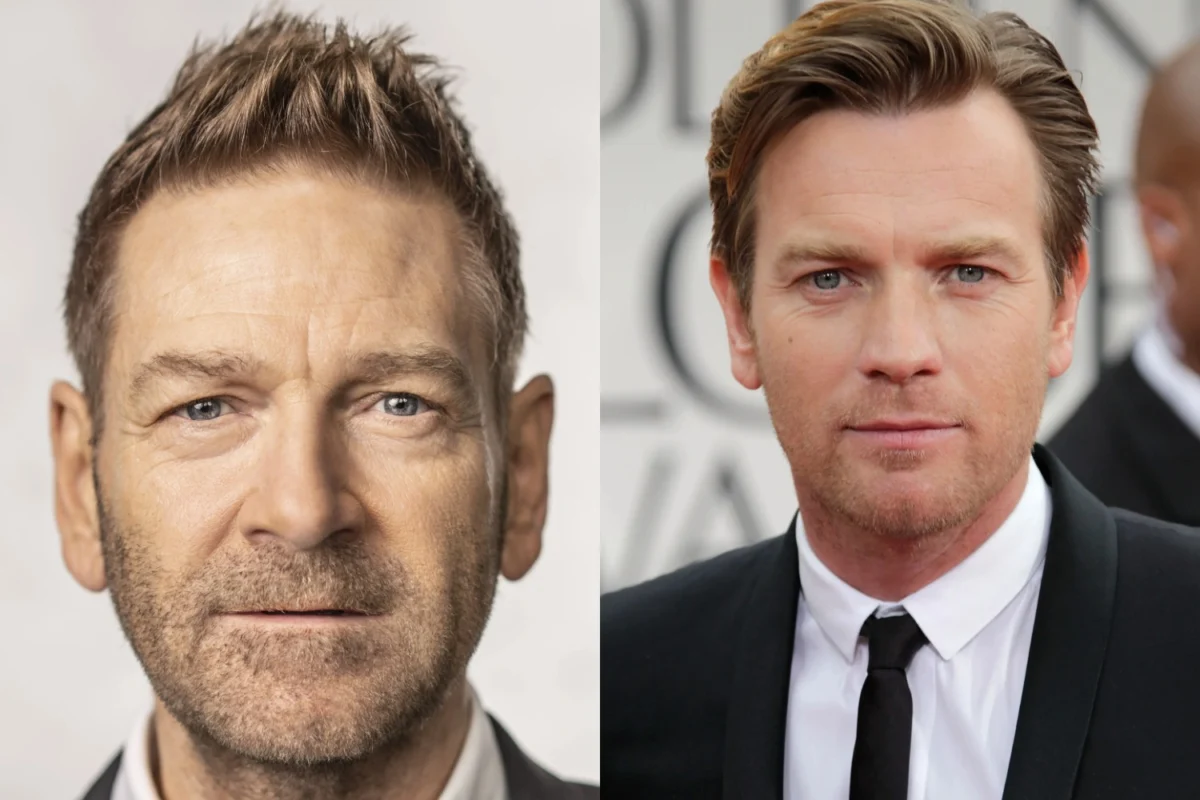
With a roster featuring heavyweights such as Ewan McGregor, Kenneth Branagh, Ken Burns, Christine Vachon, and Bruce Dern, the festival is positioning itself as the primary crucible for debating the survival and evolution of the U.K. film sector.
The U.K. Film Conference: A Strategic Stress Test
The centerpiece of the industry program, the U.K. Film Conference, serves as an analytical deep-dive into the volatile environment currently facing British producers. As the industry grapples with the dual pressures of compressed production budgets and the increasing difficulty of securing traditional financing, the conference aims to act as a “stress test” for the current model.
The opening day, August 15, sets the tone for the entire summit. BFI CEO Ben Roberts will engage in a keynote conversation with Picturehouse creative director Clare Binns. Their discussion, focusing on the future of U.K. independent film, is expected to address the growing necessity for producers to prove audience appetite earlier in the development cycle—a requirement that is fundamentally changing how stories are selected and greenlit in the modern market.
"Would This Get Made?"
Perhaps the most provocative session of the summit, "Would This Get Made?" invites a panel of industry veterans—including Killer Films co-founder Christine Vachon, Film4’s Stefanie Fahrion, BBC Film’s Alice Ojha, Altitude’s Laura Wilson, and talent agent Simon Renshaw—to apply 2026 financial and distribution standards to legendary British successes. By analyzing how films like Trainspotting, Four Weddings and a Funeral, If…, and Whisky Galore! would fare under today’s fiscal scrutiny, the panel intends to highlight exactly what has changed—and what has been lost—in the transition to the modern, data-driven development landscape.
Chronology: Five Days of Industry Insight
The five-day program is meticulously structured to provide both high-level career reflections and practical, actionable business strategies.
August 14: Laying the Foundation
The festival opens with a standalone talk by industry titan Christine Vachon, whose career as an independent producer has defined the aesthetic of modern American indie cinema. This is followed by a masterclass session with documentary legend Ken Burns. In conversation with journalist Dave Calhoun, Burns will discuss his decades-long career of creating expansive, sweeping histories of the American experience, offering lessons on narrative structure and long-form storytelling that resonate across both documentary and narrative film.
August 15: Celebrating Icons and Future Trajectories
Beyond the U.K. Film Conference launch, the day features a poignant career celebration for Kenneth Branagh, who will receive the festival’s inaugural Outstanding Contribution to Cinema Award. Following this, the program shifts toward emerging talent with "Beyond the Debut," a session hosted in partnership with BIFA Springboard. This session directly addresses the "sophomore slump"—the notoriously difficult transition from a successful first feature to a sustainable, long-term filmmaking career.
August 16: Literary Adaptation and Cultural Legacies
The focus shifts to the page-to-screen pipeline. A panel featuring Sarah Brocklehurst, Miriam Battye, Jay Parini, and Marc Turtletaub will explore the intricacies of literary adaptation, using current EIFF selections like Extra Geography and Borges and Me as case studies for adapting complex source material.
Later in the day, the festival marks a cultural milestone: the 30th anniversary of Danny Boyle’s Trainspotting. Ewan McGregor will participate in a BAFTA Scotland-backed conversation, reflecting on how a gritty, hyper-local Scottish story became a global phenomenon—a rare feat that many modern producers are currently struggling to replicate.
August 17: The Legends and the Genre Landscape
The weekend brings a rare opportunity for attendees to hear from Hollywood legend Bruce Dern. In a career-spanning conversation with Variety chief film critic Guy Lodge, Dern will recount his work with some of the most influential directors in history, including Alfred Hitchcock, Hal Ashby, and Quentin Tarantino.
Simultaneously, the genre-film sector takes center stage with "New Nightmares." This snapshot of the current genre landscape features actor-helmer Max Minghella alongside directors Prano Bailey-Bond, Chee Keong Cheung, and Joby Stephens. The session will explore how low-budget horror and thriller productions continue to find unique, creative ways to push boundaries despite limited financial resources.
August 18: Capital and Colonialism
The closing day is dedicated to the economic and ethical future of the industry. "Lights, Camera, Capital," a Screen Scotland-backed pilot, will connect angel investor Lynne Cadenhead with producers and private investors, emphasizing the growing importance of private equity in an era of tightening public funds. The program concludes with a vital session led by Paul Sng, "Unmaking the Colonial Gaze in Cinema," which will challenge filmmakers to address historical biases in representation and storytelling.
Supporting Data: The Current Industry Landscape
The urgency behind the EIFF 2026 program is rooted in shifting market metrics. According to recent industry reports, the cost of distribution and marketing has risen exponentially, while the theatrical window for independent films has shrunk, leaving many producers reliant on pre-sales and streaming acquisitions that are increasingly difficult to secure.
The conference’s focus on "Low Budget, High Ambition" reflects a survival tactic. With the median budget for independent British films fluctuating under significant inflationary pressure, producers are being forced to innovate in the development phase. The summit aims to provide these producers with the intellectual capital required to navigate a landscape where "demonstrating audience appetite" is now a prerequisite for any significant investment.
Official Responses and Strategic Vision
Paul Ridd, CEO and Festival Director of the EIFF, has framed this year’s industry program as the crown jewel of the festival. "Our inaugural U.K. Film Conference is something of the jewel in our crown," Ridd noted, emphasizing that the goal is not merely to host a gathering, but to create a permanent, evolving forum for the British industry.
The decision to involve figures like Ben Roberts (BFI) and high-profile international producers suggests that EIFF is positioning itself as a bridge between the creative grassroots of British film and the global market. By folding star-studded onstage conversations into granular, “nuts-and-bolts” workshops, the festival is attempting to break down the walls between the "glamour" of the film festival circuit and the stark reality of the office desks where independent cinema is actually built.
Implications: A New Era for British Cinema?
The implications of this summit are significant. If the EIFF successfully facilitates a bridge between private investors, emerging directors, and established industry veterans, it could catalyze a new wave of British production that is more resilient to market fluctuations.
However, the questions being asked—such as whether the current system can truly support the breadth of stories it once did—suggest a period of profound transition. By confronting the "colonial gaze," the difficulty of the "second feature," and the shifting economics of "low-budget ambition," the 2026 Edinburgh International Film Festival is not just showcasing films; it is attempting to write the manual for the next decade of independent cinema.
For the filmmakers and industry professionals gathering in Edinburgh this August, the summit represents more than a networking opportunity—it is a collective effort to define what it means to make a British film in a world that is becoming increasingly skeptical of the independent model. Whether the industry emerges with new solutions or simply a clearer understanding of its own limitations, the Edinburgh International Film Festival has solidified its place as the vital center of that conversation.
 Layla Zulfa
 Neng Nana
 Asro
Asro
