

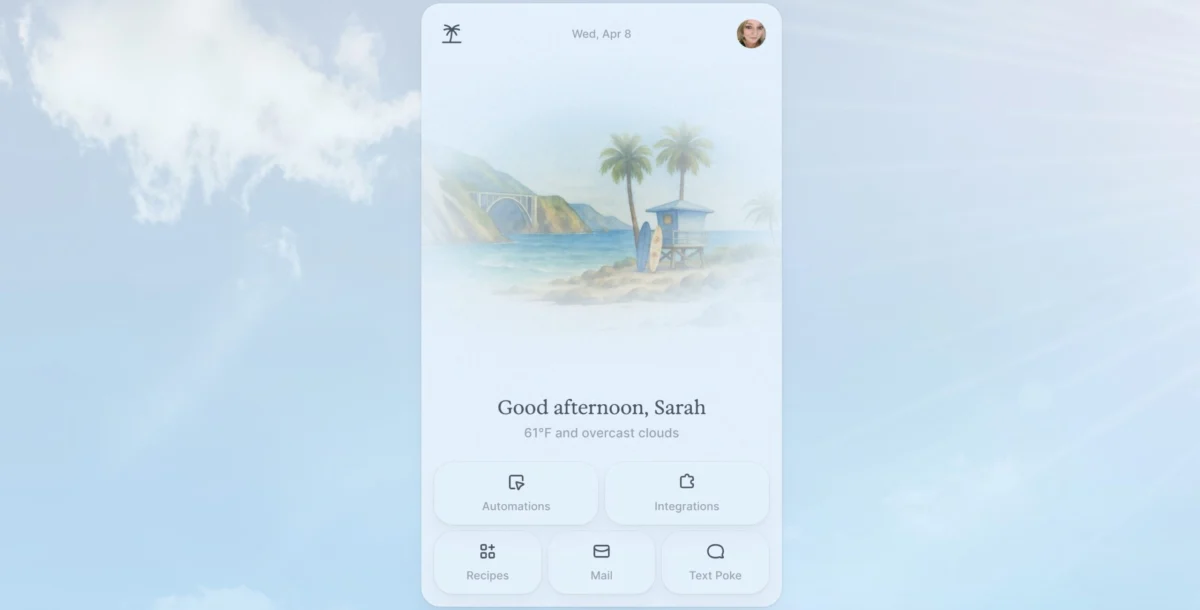
In a landmark consolidation within the rapidly evolving artificial intelligence sector, Cognition—the startup behind the industry-leading AI coding assistant, Devin—has announced the acquisition of The Interaction Company of California. The company is the developer of "Poke," an innovative AI assistant that has garnered a loyal following for its ability to function less like a piece of cold, utilitarian software and more like a conversational friend.
While the financial terms of the deal were not disclosed in full, sources familiar with the transaction indicate that the acquisition was finalized at a valuation in the "low nine figures." This strategic maneuver marks a significant pivot in the AI arms race, moving beyond raw compute power and model performance to focus on the nuance of human-computer interaction.
The Intersection of Personality and Productivity
The primary appeal of Poke, which launched in March 2026, lies in its distinct design philosophy. While most AI assistants are built to serve as command-line tools—rigid, literal, and purely functional—Poke was engineered to inhabit the messaging platforms users already frequent, such as iMessage, Telegram, and SMS.
By utilizing a conversational interface that embraces slang, humor, and casual rapport, Poke bridged the gap between human social behavior and digital task management. Users have utilized the platform to handle a wide range of logistics, including travel planning, health tracking, financial oversight, and complex scheduling. According to co-founder Marvin von Hagen, productivity-focused tasks—such as managing overflowing inboxes and juggling to-do lists—consistently topped the list of user requests.
For Cognition, this acquisition is not merely about gaining a product; it is about acquiring a methodology. By integrating Poke’s interaction model into Devin, Cognition intends to transform its coding agent from a specialized utility into a persistent, personality-driven teammate.
Chronology: From Messaging App to Enterprise Asset
The trajectory of The Interaction Company has been nothing short of meteoric. Since its inception in early 2026, the company rapidly scaled its user base, facilitating over 100 million messages in just three months.
The Path to Acquisition
- March 2026: The Interaction Company launches "Poke," positioning it as an AI agent accessible via standard text messaging interfaces.
- Spring 2026: Usage surges as hundreds of thousands of users adopt Poke for daily productivity, though the company faces significant operational costs that hinder immediate profitability.
- June 2026: In a major milestone, Apple approves Poke as the first AI agent to operate on the "Messages for Business" platform, signaling institutional recognition of the company’s safety and design standards.
- Late 2026: Cognition, having previously served as an angel investor in The Interaction Company, moves to acquire the entity to bolster its internal AI development efforts.
Supporting Data and Economic Realities
The acquisition highlights a persistent tension in the current AI startup landscape: the disconnect between massive user engagement and the high overhead of running LLM-powered services.
Despite boasting a user base in the hundreds of thousands, The Interaction Company found itself in a precarious financial position. The compute costs associated with maintaining a low-latency, conversational AI agent that "remembers" context across millions of threads proved to be a heavy burden. Marvin von Hagen noted that while the product was a consumer favorite, the operational expenses made achieving a sustainable profit margin a daunting prospect as an independent entity.
By folding into Cognition, Poke gains access to robust infrastructure and the latest in specialized engineering models. Conversely, Cognition gains a proven interface layer that has already survived the rigors of Apple’s stringent business messaging ecosystem—a massive competitive advantage for a company looking to scale its enterprise reach.
Official Responses: A Shared Vision for the "Persistent Co-worker"
The leadership teams at both companies have characterized this deal as a meeting of minds. Scott Wu, co-founder of Cognition, expressed his enthusiasm in a company blog post, emphasizing the "fun" factor as a core metric for future success.

"The Interaction team has built an agent that people love: it’s proactive, it knows you, and it’s fun to talk to," Wu wrote. "That’s exactly how working with Devin should feel, and now we get to build it together."
Marvin von Hagen, who will join the Cognition ecosystem, echoed this sentiment in an interview with TechCrunch, framing the move as a necessary evolution for the modern workplace.
"You probably prefer it if you have co-workers that have personality, rather than if you have co-workers that are just robots," von Hagen explained. "When you have co-workers that are also software engineers, they can also make a joke. And you’ll find it funny and enjoyable."
Implications for the Future of AI Development
The acquisition of Poke by Cognition signals a broader shift in the artificial intelligence industry: the "humanization" of the agent. As models like GPT-4, Claude, and SWE-1.7 continue to narrow the gap in raw capability, the market is beginning to prioritize "agentic behavior" and "relational intelligence."
1. The Rise of the "Persistent Teammate"
Currently, most AI coding agents are stateless or session-based; they solve a specific problem and then reset. By applying Poke’s conversational memory to Devin, Cognition aims to create a "persistent co-worker." This assistant would theoretically remember previous project constraints, team preferences, and even the specific "flavor" of a user’s coding style, leading to more cohesive long-term project management.
2. Orchestration over Execution
Von Hagen noted that current AI agents are often limited to single-task execution—such as writing a single pull request. A significant part of the post-acquisition roadmap involves using Poke’s architecture to "orchestrate" different Devin sessions. In this model, Poke acts as the project manager, assigning tasks to Devin, checking for code quality, and ensuring that multiple coding tasks are synchronized across a larger development lifecycle.
3. The Institutionalization of "Casual" AI
The fact that Apple approved Poke for its "Messages for Business" platform provides a roadmap for other startups. It suggests that the future of enterprise software may not live in dedicated, complex dashboards, but rather in the messaging apps where employees already spend their time. Cognition’s move to acquire this expertise suggests that they intend to bring Devin out of the code editor and into the team’s Slack, iMessage, or email threads.
What Lies Ahead: A 2027 Roadmap
For the remainder of the current year, users of Poke are unlikely to see significant changes. The service will continue to operate as a standalone, allowing the integration teams at Cognition to study user behavior and backend efficiency.
However, 2027 is expected to be a year of rapid transition. The team plans to begin integrating Cognition’s powerful SWE-1.7 software engineering model into the Poke backend to improve the agent’s reliability in handling technical requests. As the lines between the two products blur, the industry may see a singular, highly capable agent that can handle anything from ordering lunch to debugging a complex production database—all while maintaining the conversational wit that made Poke a hit in the first place.
This acquisition is a definitive statement that in the era of Artificial Intelligence, personality is not just a feature—it is a competitive necessity. As AI continues to integrate into our workflows, the most successful companies will be those that can transform silicon-based logic into a collaborative, relatable, and, above all, human-centric partnership.
 rifanmuazin
 Nana Muazin
